Beyond Seat: 5 Catalan car brands that have disappeared throughout history
We make a brief historical review of the main automobile manufacturers established in Catalonia and that have disappeared with the passing of the years
-
CAT -
CAST
A couple of weeks ago, the CEO of Seat and Cupra, the German Markus Haupt, admitted during the inauguration of the Paris Motor Show that “Seat could disappear” depending on the evolution of emission regulations governed by the European Union and the volume of vehicles that the brand can register. For some years now, however, the Volkswagen Group's leadership roadmap has been to strengthen the aspirational subsidiary Cupra, now converted into an independent brand that generates more operating margin, instead of the traditional Seat, a brand with little associated value and a complicated positioning within the Volkswagen Group universe.
The announcement of the potential closure of Seat caused a significant upheaval, and the mere idea of potentially endangering the jobs at the Martorell plant makes workers, unions, and institutions tremble. It must be said that this announcement also has an important dimension in a context of job cuts and incentivized layoffs in Germany, while also becoming a pressure tool for management to negotiate lower conditions for the workers at the Baix Llobregat plant.
However, if Seat finally ends up disappearing (or fully mutating into Cupra), it would open a scenario known to the history of the Catalan automotive industry. Over the last 125 years, Catalonia has seen many automobile manufacturers emerge and disappear, among which stand out historical names such as Hispano-Suiza, Pegaso, Elizalde, or Ebro, among others.
Automòbils La Cuadra (1898-1901)
The first cars manufactured in the Spanish state were the electric vehicles of La Cuadra, a company founded by the former military officer Emilio de La Cuadra and a young Swiss engineer named Mark Birkigt. Problems with the range of the electric vehicles (they would stop working after four or five kilometers) and the scarce interest of an incipient market in the demand for vehicles –especially electric ones– caused the company to go bankrupt in 1901.

Hispano-Suiza (1904-1938)
The experience accumulated by Mark Birgit with La Cuadra automobiles added to the capital of the industrialist Damià Mateu led to the founding in 1904 in Barcelona of the prestigious brand Hispano-Suiza, a manufacturer of luxury cars capable of competing with and surpassing the cars of Rolls-Royce, Bentley, or other luxury brands of its time.
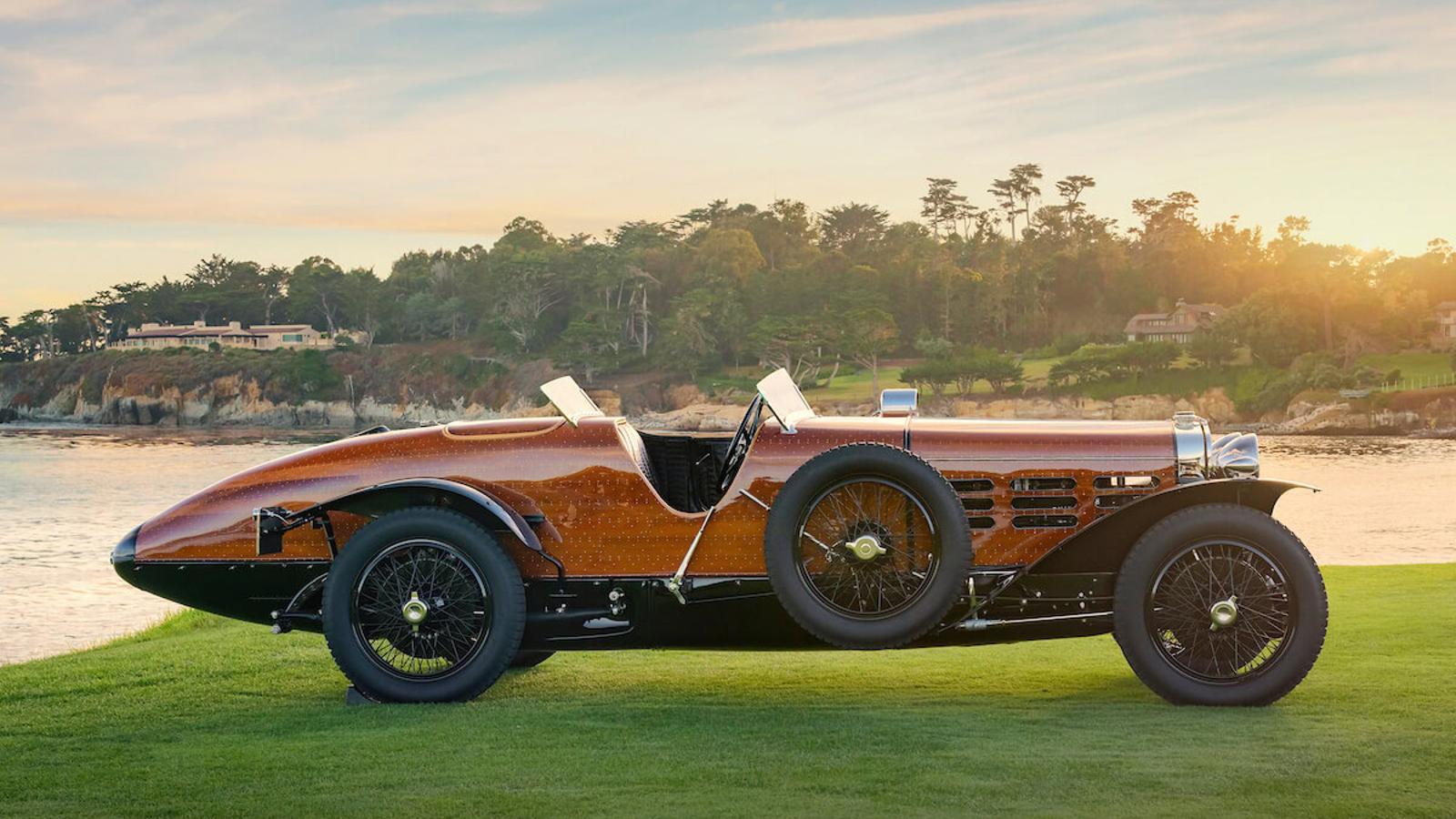
Unlike the luxury car manufacturers of its time, Hispano-Suiza opted for inline six-cylinder engines that introduced aluminum alloys instead of heavy iron engines. Hispano-Suiza's other great contribution to the automotive world was the invention and patent of the mechanical servo-brake system, which Rolls-Royce bought and used until 1968. The other distinguishing element of the Hispano-Suiza cars was their fantastic design: in fact, not long ago a Hispano-Suiza 6C Torpedo was crowned "the most beautiful car in the world" at the Pebble Beach Concours d'Elegance in California.
The support of King Alfonso XIII (passionate about cars and speed) and the good sporting results of the Hispano-Suiza cars contributed to skyrocketing the popularity and vehicle orders, and the brand inaugurated the first large automobile factory in the country in La Sagrera. But the outbreak of the 1929 crash, the political instability of the 30s, the Civil War, and the impoverishment of the Francoist autarky represented a series of obstacles that Hispano-Suiza could not overcome.
The French subsidiary dedicated to aviation had special relevance, and many of the French fighters and bombers that served during the First World War used a Hispano-Suiza engine. Finally, it is worth noting that in 2019 there was an attempt to resurrect the brand by the hand of Miquel Suqué Mateu, the founder's great-grandson, through the electric supercar Hispano-Suiza Carmen, designed and manufactured in Catalonia.
Elizalde (1908-1951)
Elizalde was the other great Catalan and Spanish manufacturer of the first third of the 20th century. Unlike Hispano-Suiza, however, this car brand manufactured all the elements of its automobile in Barcelona, from the engines to the suspension, including the gearboxes, brakes, or transmission.

From the factory on Passeig de Sant Joan in Barcelona came iconic models such as the Tipo 20, the Reina Victoria Eugenia, or the Tipo 48, a true 180 hp racing car, but the death of its founder, Arturo Elizalde, in 1925 marked the beginning of the end for the company, which moved into the aviation sector before being collectivized during the outbreak of the Civil War and later nationalized by the Franco regime and integrated into the INI (Instituto Nacional de Industria) conglomerate of companies in 1951.
Automòbils David (1913-1923)
David was an automobile manufacturer active between the years 1913 and 1923 based on Aribau Street in Barcelona, which under the drive of founder Josep Maria Armangué manufactured cyclecars with two and four-cylinder motorcycle engines on a wooden chassis with independent suspensions. The death of the founder, in 1917, caused the brand to reorient its activity towards the Barcelona taxi segment (the characteristic black and yellow color of Barcelona taxis is due to David) and during the postwar period, towards the microcar and urban tricycle segment with motorcycle engines, until the total cessation of activities in 1957.
Pegaso (1946-1994)
Once the Civil War ended, the new Francoist regime wanted to take advantage of the knowledge and experience of Hispano-Suiza through the creation of a new brand, a subsidiary of ENASA and the INI (National Institute of Industry). Franco's regime, lacking knowledge and talent, decided to put the Catalan engineer Wifredo Ricart –with years of experience at Alfa Romeo and aligned with the new regime– at the head of Pegaso with the goal of making high-performance sports vehicles. The fact is that during his years in Italy, Ricart feuded with Enzo Ferrari, and the rivalry reached the point of naming the new brand after the mythological flying horse, since who would want to have a prancing horse (in reference to the Ferrari emblem) when they could have one that flies (Pegaso)?
Between 1951 and 1958 at the Pegaso factory in La Sagrera (where the Hispano-Suiza factory had previously been) and under the supervision of Wifredo Ricart, a total of 86 units of the Pegaso Z-102 were manufactured, the best car ever made in Catalonia. The Z-102 was a race car capable of breaking the world speed record of its time and becoming a Catalan automotive legend.
But the regime was losing money with every unit of the Pegaso Z-102 it manufactured, and once the desired propaganda effect had been achieved, Pegaso, no longer led by Ricart, specialized in the manufacturing of buses and trucks. In 1991, Pegaso was sold to Iveco, which absorbed it and shut it down permanently in 1994.
Conclusion: a historical constant
We can still cite other cases of Catalan automobile manufacturers that had to close, such as Ebro (1954-1987) and Nacional Pescara (1929-1932), but in general we can state that there is a common thread between the different brands that have manufactured automobiles in Catalonia. Thus, Hispano-Suiza grew from the ashes of Automóviles La Cuadra, and Pegaso took advantage of the facilities and specialized labor of Hispano-Suiza to occupy its space. It is not strange, therefore, to think that if one day Seat disappears, Cupra will take up the common thread, thus guaranteeing the historical continuity of the automotive industry in Catalonia.
