The great epic to be the first Catalan to climb all the eight thousand meter peaks
A decade after the milestone of Ferran Latorre and Òscar Cadiach, the two climbers meet again in a documentary
-
CAT -
CAST
BarcelonaOn September 14, 1985, thousands of Catalans gathered at El Prat airport to welcome the expedition that was returning home after reaching the summit. For the first time, the Catalan flag had flown atop the highest mountain in the world, Everest. Two weeks earlier, Òscar Cadiach, Toni Sors, and Carles Vallès had made history, and Cadiach had been responsible for delivering the good news via a precarious radio connection: “Catalonia has reached the roof of the world”. Curiously, many people still believe that the words were "We have reached the summit", but that was not the case. The Tarragona native, who had climbed without the help of oxygen bottles, arrived with so much energy at the top of Everest that he had time to read the Sextine Ode to some intrepid Catalans that the poet Joan Brossa had dedicated to those brave men.
In the Poble-sec neighborhood of Barcelona, a fifteen-year-old boy listened to it with excitement. He dreamed of being a mountaineer, and two years earlier –in 1983–, he had climbed a mountain over 3,000 meters for the first time in the Aigüestortes National Park, and he left a written message in the guestbook of the Ventosa i Calvell refuge that said: "One day I want to climb Everest", with a drawing of a Catalan flag. That young man was Ferran Latorre, who went to welcome the expedition at the airport and was moved to see Òscar Cadiach among the crowd.

Many years later, in 2017, Cadiach and Latorre wrote the most glorious page in Catalan mountaineering. A few days apart, they became the first Catalans to reach the summits of the fourteen mountains over 8,000 meters on the planet. For years, both were involved in a duel to see who would be the first to achieve it, which thrilled mountain enthusiasts and the media. Finally, the first was Ferran Latorre, on May 27, 2017, precisely on that Everest he dreamed of crowning when he was a boy. He did it with the help of an oxygen bottle. A few weeks later, Cadiach reached his last eight-thousander peak, when on July 27, 2017, he climbed Broad Peak. Without oxygen assistance. "The first to do the 14 eight-thousanders is Ferran. The first to do them without oxygen assistance, me," says Cadiach. "We can say that we tied," adds the Tarragona native. And Latorre smiles.

The man from Barcelona will always be remembered as the first, but within the mountaineering community, many value the feat of the man from Tarragona more. "For me, Òscar's achievement has more merit," says the Basque Juanito Oiarzabal, the first Spaniard to reach this milestone. And no one can accuse Oiarzabal of bias, since Latorre saved him in 2004 when he was left alone and disoriented during a storm on K2, at over 8,000 meters. "Without Ferran, I would be dead," he admits. But he still values what Cadiach did more.
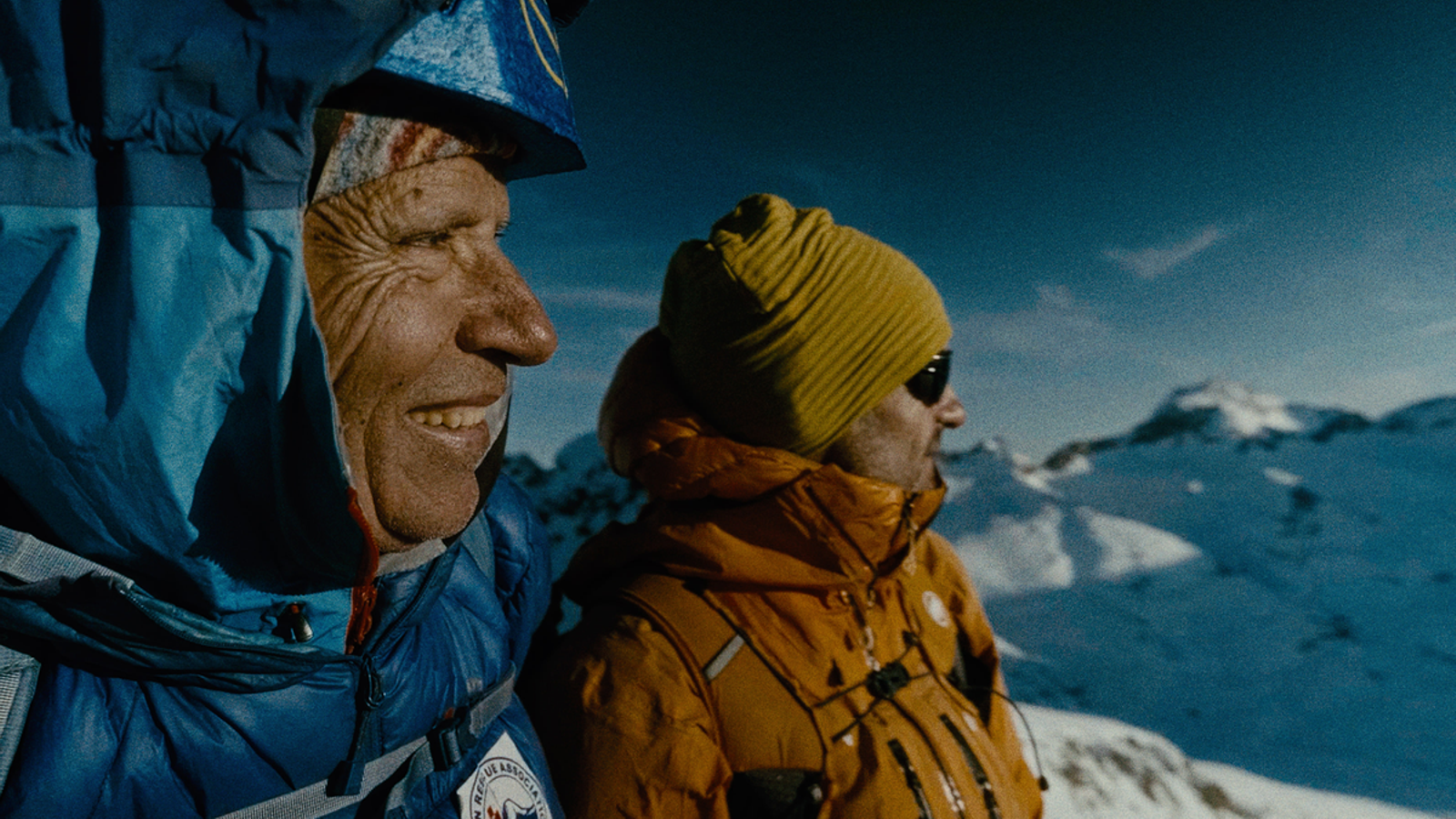
The duel to see who would arrive first gave way to the debate over who had more merit. Both protagonists speak about it openly, without any issues. A few months ago, they were proposed to recall those days in the documentary Duel at 8,000 meters, by the production company NSN. A documentary premiered on La Xarxa+, which will be available soon on the platforms of La Xarxa+, Televisió de Catalunya, and TVE, directed by Raül Llimós and Àlvaro Sanz. "The documentary arises from the desire to remember their story; a tribute to both," says Llimós. And both agreed to appear together in the documentary and attend its presentation in Barcelona amidst jokes.
"I wanted to climb all the peaks without the help of oxygen and that's how I did them all, but on the last one, Everest, I reached the top very narrowly," admits Latorre. "Would I have done the same as Ferran? No, because I never carry oxygen bottles, so I wouldn't have been able to," says Cadiach.
Their story seems written by a screenwriter. The last two peaks that Latorre climbed are, curiously, the first two that Cadiach climbed. They both actually met at a base camp in the Himalayas when they were heading to different peaks. Both symbolize two different eras, but they coincided. "In my youth, I got to know the purer mountaineering that Òscar experienced. But it is true that everything has modernized and become commercialized. Now there are too many people climbing Everest, although if you look for it, you can be alone," points out Latorre.
Sometimes, chasing a goal can take you too far. It also happens in mountaineering. Friendships that seemed strong have broken, and members of the same expedition have ended up fighting and denouncing each other, as happened with the Italians who were the first to summit K2. Cadiach and Latorre, on the other hand, can chat together without any problems. "Logically, I was aware of what Ferran was doing, but only to be informed, nothing more. Being first or second is not important either. The key is facing your challenges," says Cadiach. "When I saw that I had already done a few summits, I was encouraged to do the fourteen. I needed a new challenge. I knew that Òscar already had many, so from the beginning, I thought he would be the first. Later I saw that I had options, and of course, I wanted to be the first," admits Latorre.

Fate would have it that at a specific moment both arrived at having conquered thirteen peaks, a fact that caused everyone to wonder who would be the first to do the fourteen. Cadiach, more veteran, had started the race much earlier. "My father was a ship's captain, and since my mother suffered with the nights he spent at sea, he started taking me to the mountains," recalls the Tarragona native. In the seventies he already had experience and, in fact, he started climbing great peaks at 38 years old, when he climbed Nanga Parbat in 1984. Back then Latorre was just fourteen years old and he became fond of climbing very quickly. He became part of the team of Al filo de lo imposible, a TVE television program very respected during the eighties and nineties. This would allow him to start doing the first eight-thousanders of his career when he was just twenty years old.
Cadiach prolonged the challenge more, in part also because for a good while he did not want to return to those peaks, since he had lost a good friend, Manel de la Matta, during the descent of K2. Both have seen tragedies and have saved lives. Latorre saved Oiarzabal's life, and Cadiach, that of a Chinese mountaineer he found when he was trying to summit Broad Peak, the last one he had left. "In 2014 I stayed 20 meters from the summit. A year later I returned, but we had to rescue Luo Jing, the Chinese mountaineer who encountered an avalanche. If I hadn't helped her I would have done the fourteen peaks sooner, but I did what was right," he defends.
In total, fewer than eighty people have done the fourteen peaks. And those who have done it without the help of oxygen are fewer than thirty. All have tried to follow in the footsteps of the Italian Reinhold Messner, considered the father of modern mountaineering, who was the first to achieve this milestone, which has since been achieved by four Basques, among whom is the first woman, Edurne Pasaban. “The mountain has taught me to be humble and a better person –defends Latorre–. There you suffer, you cry, you understand that not everything depends on you," adds the Barcelona native, who has been living in Osona for years. "In the end, what we have left is that both of us have achieved it and we must congratulate each other for this fact," concludes Latorre.
