Space race: the battle for the Moon
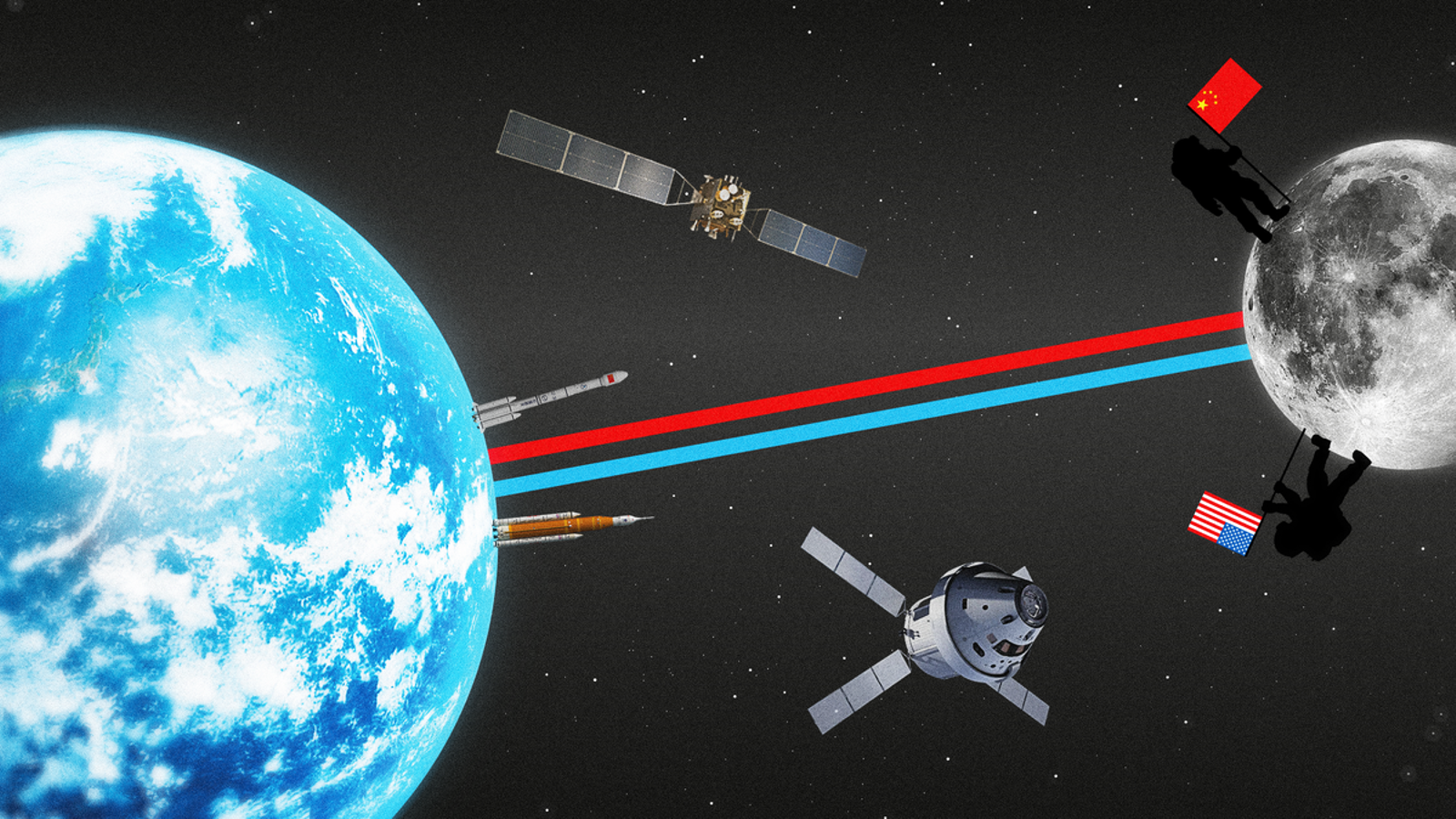
The duel for the natural satellite is the first step of a new space race that now pits the United States against China
20/04/2026 - 07:02 h
-
CAT -
CAST
Humanity returns to the Moon 50 years later. NASA's Artemis program, which made history this April by breaking the record for the furthest manned space voyage, responds to an openly declared objective by Donald Trump himself: “Get to the Moon before China”.

The Asian giant has been developing an ambitious space program since the beginning of the century, highlighting the Chang'e missions (named after the Chinese goddess of the Moon) to create a scientific station there and set foot on its surface by 2030. Now, the United States has set its sights on returning there in 2028.

The duel for the Moon is the first step ofa new space race that now pits Washington against Beijing, instead of Moscow. Our natural satellite will be the base for going to Mars next and continuing to explore the Solar System. Who will win?
The Chang'e program to date
The future of the Chang'e program
Chang’e 7 (~2026)
Probe and explorer robot to the lunar south pole to search for ice water and resourcesChang’e 8 (~2028)
Tests of in situ resource utilization (ISRU) technologies at the Moon's south pole and basic elements for creating a lunar scientific research station (ILRS)Objective
First Chinese manned landing around 2030
The future of the Artemis program
Artemis III (2027)
Manned mission for testing docking with the lander module (in low Earth orbit)Artemis IV (Early 2028)
First human landing since 1972Artemis V (Late 2028)
New manned mission to the Moon, and from here on, landings every six monthsObjective
Construction of a permanent lunar base in 3 phases:• Phase 1 (2026-27): Build, test, learn• Phase 2 (2028-29): Establish initial functional infrastructure• Phase 3 (2029-30): Enable long-term human presence
Infographic in the paper of ARA Diumenge


