Barcelona pays tribute to Samaranch: "Without him this city would not be all that it has become"
The mayor, Jaume Collboni, remarks that "the city had owed him a tribute for a long time" to the former president of the IOC
-
CAT -
CAST
BarcelonaThe spirit of Barcelona 92 never dies. It is always special when the notes of the songs that people learned by heart that very special summer are played. Notes that have sounded again at the tribute and remembrance event for Joan Antoni Samaranch, the president of the International Olympic Committee who, a few years earlier, in 1986, uttered those words “A la ville... de Barcelona”.“A la ville... de Barcelona”. The name of his native city. 16 years after the death of the Barcelonian who achieved the greatest international sporting success, an event was held at the Palauet Albéniz that brought together many of the faces who, together with Samaranch, made Barcelona Olympic. It was a day of reunions and greetings among those who wanted to vindicate a figure who was capable of modernizing the Olympic movement and, by extension, the Catalan capital.
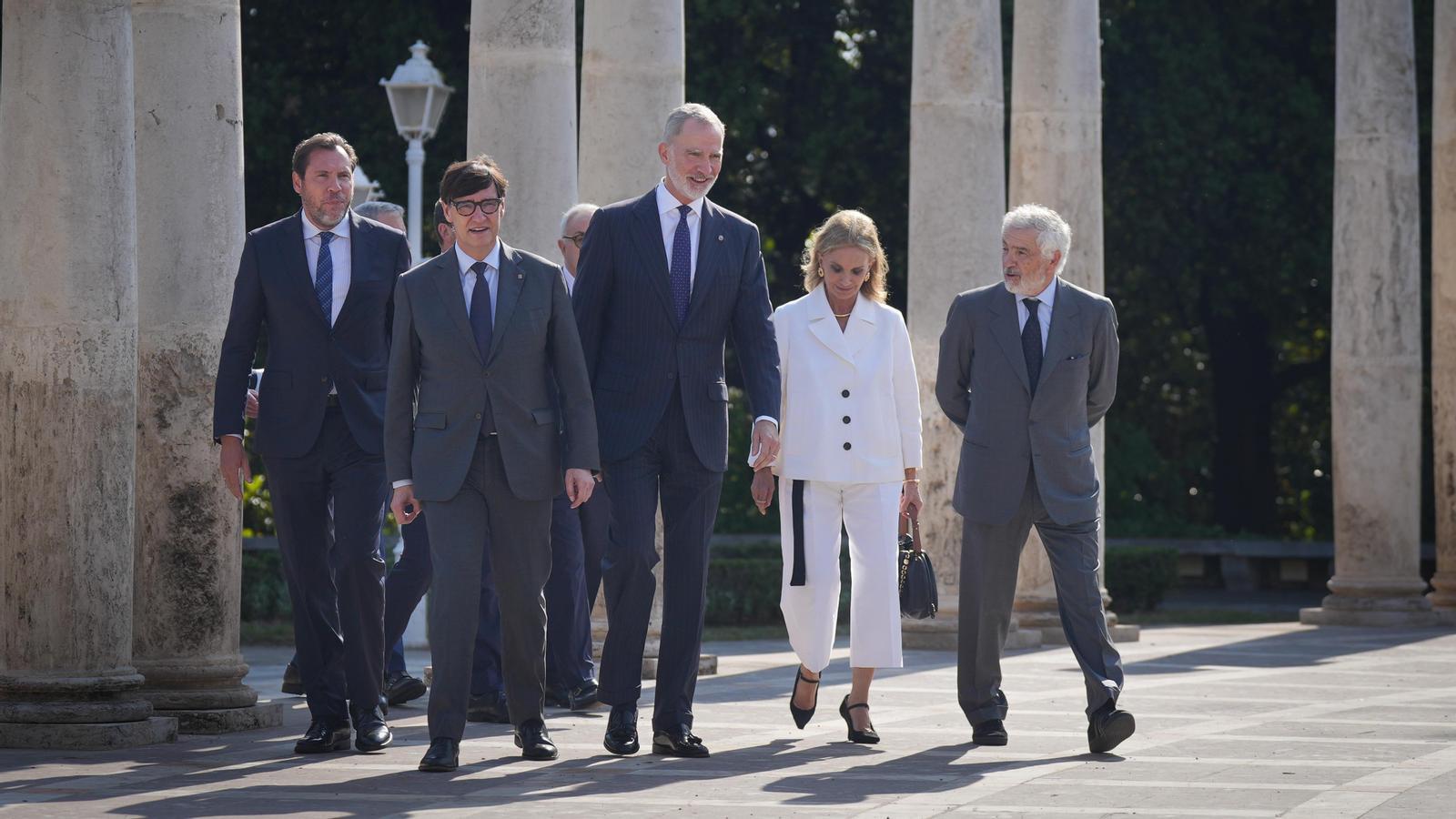
The event was presided over by the King of Spain, Felipe VI, and various authorities, both Catalan and Spanish, as Samaranch already had this ability: to be the king of diplomacy, getting along with people from all corners of the planet and different ideas. With the presence of the President of the Generalitat, Salvador Illa, the Minister of Public Works, Óscar Puente, and the president of the Spanish Olympic Committee (COE), Alejandro Blanco, the event served to “pay him a tribute that this city owed Samaranch for a long time,” in the words of Jaume Collboni. The mayor explained that “when Samaranch was elected president of the IOC, the city's history began to change,” and he supported this by reading a copy of the telegram he sent a day after the elections to the then mayor, Narcís Serra, in which he already announced his intention to help his city: "To which I have always strived to serve.” Adding that he hoped his management “could help the Olympic vocation that Barcelona has always had.” Just 24 hours after being elected in 1980, Samaranch was already talking about an Olympic Barcelona, recalling those candidacies from 1924 or 1936 that did not succeed. “Without him, this city would not be all it has become,” Collboni concluded.

Modernization of Olympism
Samaranch became president of the International Olympic Committee in 1980, and began the task of modernizing the Olympic movement to which he dedicated his whole life. An IOC where his son also held a position, present at the event along with his sister, grandchildren and great-grandchildren of the leader. "This event is special, but I hope there will be more to continue vindicating him," said the president of the COE, Alejandro Blanco. Born in 1920 on Bailèn street in Barcelona, he was president of the IOC between 1980 and 2001, being the second president to hold the position for more years, only behind Baron Pierre de Coubertin, who held it between 1896 and 1925. Son of a family that owned a textile company, he practiced boxing as a young man and especially roller hockey, a sport he discovered in the Bonanova neighborhood, where he lived. A sport where he would be a player and Spanish coach. He actively participated in the organization of two Roller Hockey World Championships, which opened the door for him to hold positions within Francoist sport. After a brief period as a sports journalist, he entered the world of politics and held many positions in Spain while joining the International Olympic Committee in 1960. With the arrival of democracy, he left Barcelona and was chosen as the first Spanish ambassador to the Soviet Union. This first part of his life still generates debate in Barcelona, the city that in 1992 finally left behind the greyness of Francoism, a regime in which Samaranch held positions, which caused a proposal to name a street in the city after him to fail years ago.

During his 21-year term at the IOC, Samaranch increased the range of Olympic sports, doubled the female presence at the Games, promoted the fight against doping, managed to multiply revenues thanks to television rights and merchandising, gave greater relevance to the Paralympic Games and fostered the Special Olympics for people with intellectual disabilities. And he was key in seeing Barcelona chosen as the host city for the Games, the great dream of the entire city since the 1920s. The 1992 Games were like a midsummer night's dream that lasted for weeks. "Samaranch bet on Barcelona in the 80s out of patriotism, vision, and responsibility. A city that had a mayor prepared for the challenge, Pasqual Maragall. And the city rose to the occasion," explained the President of the Generalitat, Salvador Illa. The King of Spain described him as a "loyal friend," highlighting some anecdotes, such as the one about Nelson Mandela, who was impressed by the opening ceremony of the 1992 Games, which would inspire him "to unite his society through sport, to close open wounds."
Neither Barcelona nor sport would be the same without Samaranch. And in fact, when the event presenter Jordi Basté asked the Samaranch family to come up on stage, his children María Teresa and Juan Antonio asked a group of present athletes such as Mari Pau Corominas or Manolo Orantes to also join them on stage, as they "always shared it with their second family, the sporting one," according to María Teresa. His descendants have argued that the legacy of this "universal Catalan who knew how to unite people of different ideologies through sport" must be kept alive, as his son recalled.

