'Smiles and tears': the novice who makes the reverse journey to Rosalía

-
CAT -
CAST
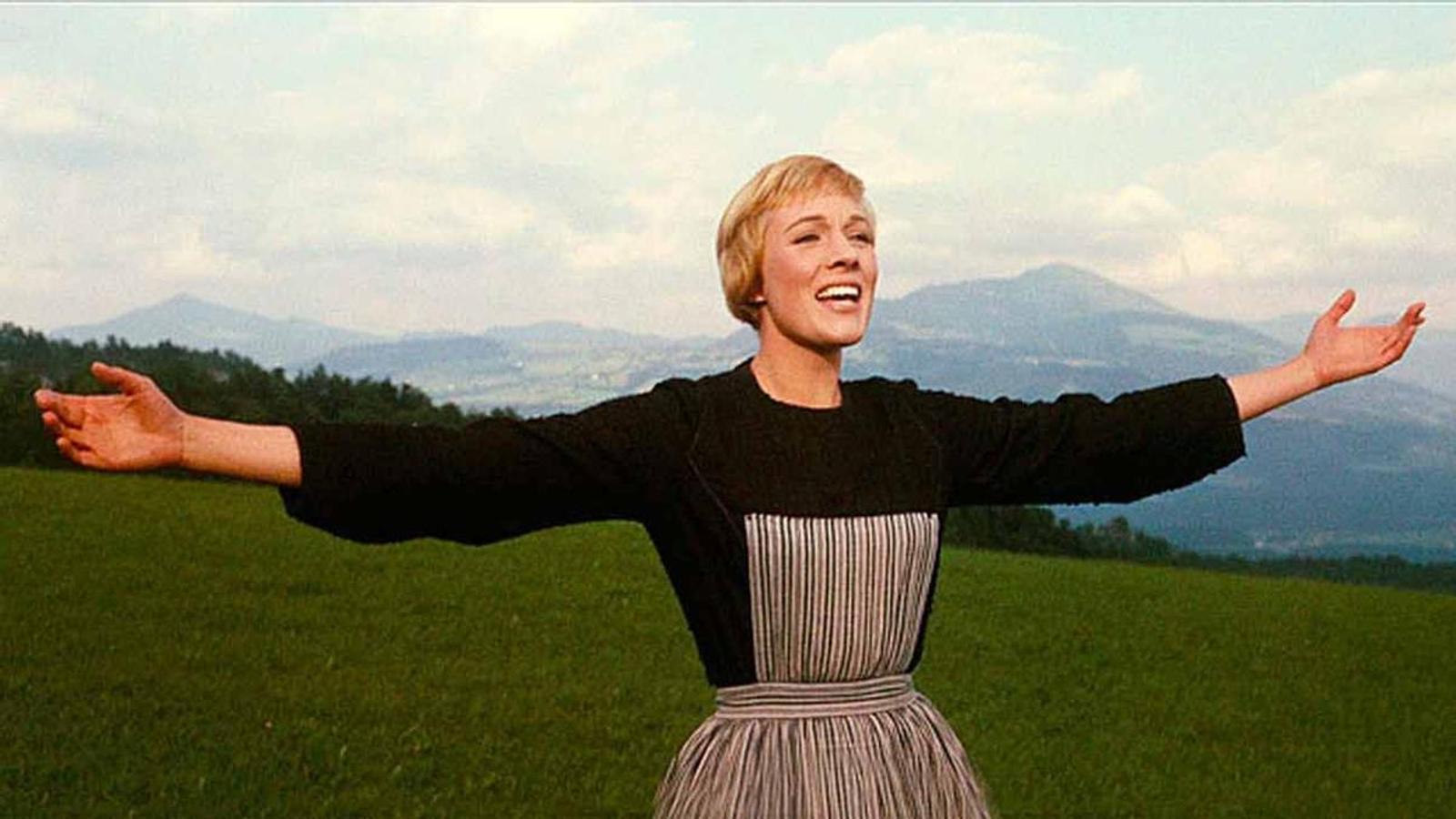
There are many movies I haven't seen. To give you an idea of the magnitude of the tragedy, until the lockdown I hadn't seen Dirty dancing (what a marvel) nor Pretty woman. I have wanted to take advantage of this series of articles to efficiently fill some of my cinematic gaps. In an era of massive audiovisual supply and absolute channel atomization, I cure my FOMO retrospectively. And after seeing for the first timeBen-hur, Blade runner,E.T.,A very legal redhead,Terminator,Dancing with Wolves and Alien (and alsoThe Odyssey of Nolan, bonus track of current events), I close this series with a classic of the proportions of Smiles and tears, a fresh movie from 1965:
- Maria is a novice who takes the opposite journey to Rosalía: from nun to singer. It is possible that Maria doesn't quite fit in at the abbey, and we begin to suspect this when we hear the other nuns singing a song about the fact that Maria doesn't fit in at the abbey. They say things like 'She's an enigma / she's an angel / how do you catch a cloud / how do you catch a moonbeam in your hand / when I'm with her I'm confused, off-balance and bewildered, and I never know quite where I am' (perhaps you're in love with her, Sister Margaretta, it happens sometimes).
- But Julie Andrews doesn't stay to discover new paths for the nuns because she is sent to be Mary Poppins avant la lettre for the seven children of a widower, Captain Von Trapp. Good trap, yes. I suspect his wife died so she could have a little peace and quiet. The youngest daughter is 5 years old and the eldest is 16. The latter claims she doesn't need a governess, and she certainly doesn't: the actress playing her, Charmain Carr, was 21 at the time, and looked it. Since there are seven children, when Maria arrives she can make them sing by giving each one a musical note; the late Mrs. Von Trapp's osteoporosis was not in vain. The young company also performs a puppet show far beyond childish capabilities, but of course, no one would want to see a puppet show really performed by unknown children in a movie.
- It's 1965 and it shows, because people don't change clothes to go to the mountains. A pleasant contrast to the city dwellers who, when they step outside the metropolitan area, dress from head to toe in Colonel Tapioca. To walk three hundred meters and buy cured meats, you have to be well-equipped.
- It's a film that, like so many, requires a bit of a suspension of disbelief: neither those curtains are enough to dress so many people nor is it possible to take children to the mountains without them automatically starting to throw stones. And if you walk from Salzburg and cross the Alps, you don't end up in Switzerland, but in Nazi Germany. Perhaps they were preparing the sequel, Tears and Tears.
- The sound of music has many other names besides the daring Somriures i llàgrimes: La novicia rebelde in Latin America and Tutti insieme appassionatamente in Italian. The lead actor, Christopher Plummer, hated it so much that he referred to it as The sound of mucus. I snorted coffee through my nose when I read that.
Verdict: a film that teaches creatures that it is good to sing, ride bicycles, and climb trees, and that it is important not to get involved with a Nazi, a lesson very relevant today. Good propaganda.
