Sex Pistols: 50 years of the band that made English morality shudder
The publication of ‘Anarchy in the U.K.’, their first single, marked not only the history of one of the most exciting groups in the history of rock, but also that of a decisive movement to understand the popular culture of the last half century
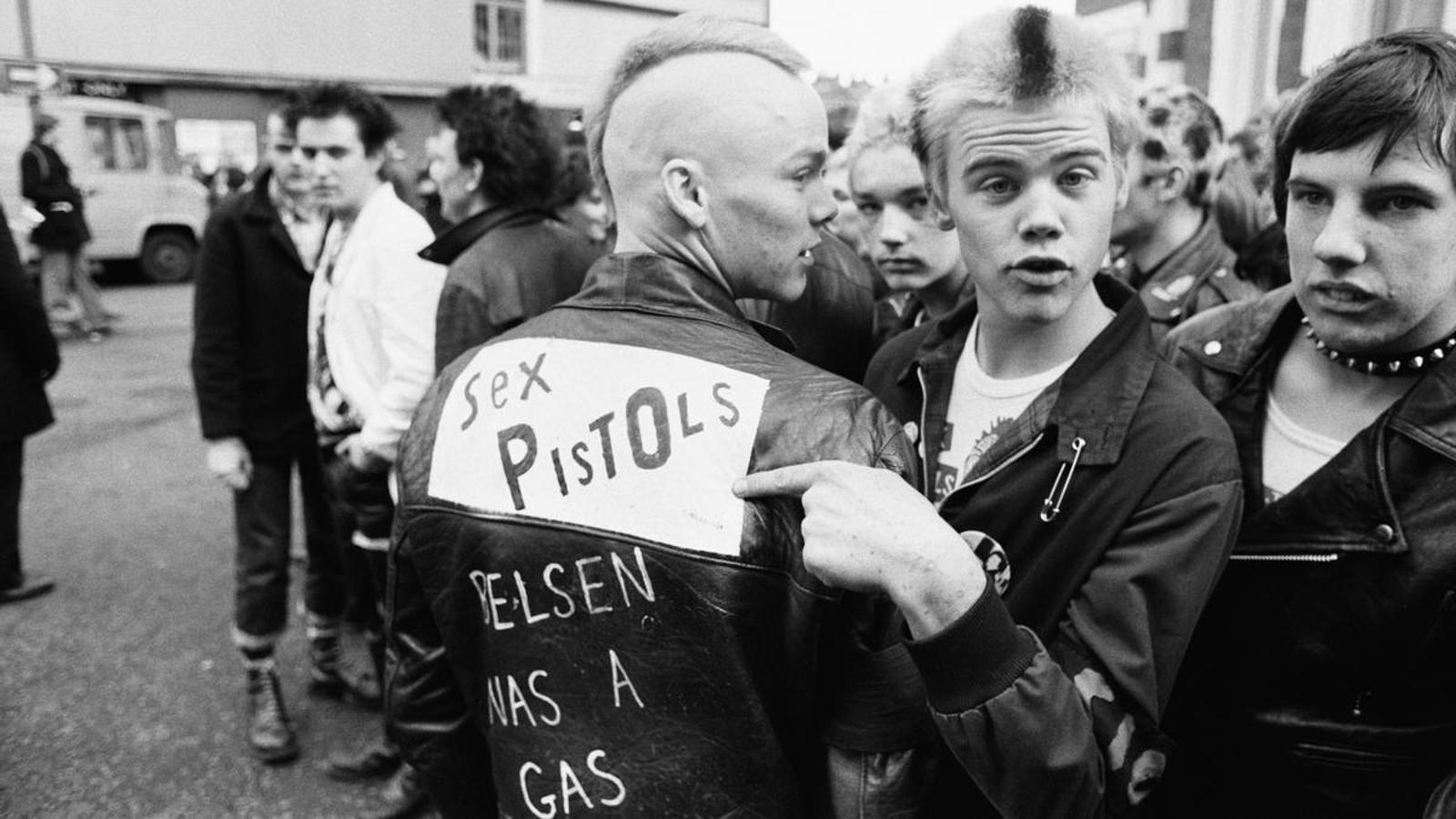

-
CAT -
CAST
Is it possible to mark a start date for the most impactful and influential subculture of the last 25 years of the 20th century? Is it possible to do so with any precision? And the place where it all began, can we know it? Did punk really originate in London, in a small shop in the Chelsea neighborhood in the late seventies? Or was it in New York, with the Ramones roaming around CBGB? But perhaps we should go back to the Stooges, or the New York Dolls? And what if the first ones, as some claim, were the Peruvian band Los Saicos? Was The Velvet Underground already punk in the late sixties? And the Kinks beating up journalists in Los Angeles in 1965... that was absolutely punk! Really, it doesn't matter. It is not important who or when, but what and why. In any case, although we could argue for hours and hours about when punk began, the release of Anarchy in the U.K., the first single by the Sex Pistols, on November 26, 1976, 50 years ago, is a symbolic enough date to remember what happened after the United Kingdom, and the world in general, heard that song.
Cultural historian Jon Savage explains in the introduction to the book England’s dreaming, the bible of British punk, that it was all an “international aesthetic for misfits: dark, tribal, alienated, alien and full of black humor” that spread throughout the world starting in 1975. According to Savage, any English person who felt marginalized due to issues of class, sexuality, or gender, who saw themselves as useless, unworthy, or ashamed, found in that subculture, and in the Sex Pistols in particular, an “attraction device.” If it is complicated to hit the exact date of birth, it is even more so to find a Wikipedia-style definition that encompasses it. Punk has been such a broad movement that it has never been closed off to anything, not to a music, nor to an aesthetic. Not even to a specific ideology. In fact, for fifty years it has navigated between anarchism and nihilism, with all the -isms you can imagine in between.

Traditionally, it has been associated with terms related to the left: anticlericalism, opposition to monarchy and authority, rejection of consumerism, and the pursuit of the maximum of individual freedom. But if one word can try to define punk, if there is anything that has united all trends for fifty years, it is the attitude, always and above all, defiant: punk was, is, and will be, an uninhibited and provocative response of working-class youth to adult, supposedly correct and traditional, morality.
The response to a crisis
If we look at the context of the beginning of the English punk scene as a youth subculture, coinciding with bands such as The Clash, The Damned, Buzzcocks, The Slits, Crass or Generation X, it must be kept in mind that it emerged from England, a country that was immersed in blatant economic, political, and cultural exhaustion. The triumphant optimism of the postwar period was long gone and the Labour Party's promises of prosperity had remained just that: promises. With out-of-control inflation and youth unemployment growing unstoppably, the ideal landscape for two scenarios was created: the rise of the most recalcitrant political conservatism, embodied in the figure of Margaret Thatcher, who won the election for Prime Minister in 1979, and the maxim of the “no future”, which punk and the Sex Pistols in particular embodied. Hence why in the song God Save the Queen, John Lydon—then Johnny Rotten, its leader and singer—tore his throat out shouting that No future for you, no future for me. In other words: nothing suggested there would be a very hopeful tomorrow, but there was a today in which to sow chaos and destroy everything. “We came from the council estates and boredom. We weren't art school theorists playing at revolution; we lived that disaster,” Lydon himself explained many years later in an interview with The Guardian.

Viv Albertine, guitarist of the Slits, published a kind of autobiography of her years of punk militancy in the seventies. Clothes, Clothes, Clothes. Boys, Boys, Boys. Music, Music, Music., available in Spanish in the Anagrama catalog, became a small international bestseller and described what she felt for the first time upon seeing the Sex Pistols live, and Lydon in particular: “They made a lot of noise and their sound was strident. Johnny Rotten doesn't dance at all and doesn't try to entertain us or make us like him. His look is vulgar, he is not a rock star singer like Marc Bolan or David Bowie. In fact, he is nothing more than a guy from Finsbury Park, in London, very angry”. If I was previously trying to find a precise definition of what it is to be punk, well this is what it is to be punk.
The Sex Pistols myth
But how did that band that shocked English morals begin? At 430 King’s Road, in the Chelsea neighborhood, Vivienne Westwood and Malcolm McLaren ran a small Teddy Boy clothing store called Let It Rock. The door was presided over by a pirate flag with an iconic inscription: “Too fast to live, too young to die” (Too fast to live, too young to die). Fed up with fights and thefts, the couple decided to change the aesthetics of the place in 1974, which went on to be called Sex and to sell bondage clothing. One of the clerks was a certain Glen Matlock, and among the entourage that hung around the store there would be future stars, such as Chrissie Hynde, Siouxsie Sioux, and Billy Idol. In addition to Steve Jones and Paul Cook, two working-class youths in love with the Faces and T-Rex, who spent their afternoons roaming around the store. Jones, Cook, and Matlock already had the idea of forming a group in mind, but it wasn’t until Malcolm McLaren saw a possible business in it that it started to take off.

“One night I took Malcom to a concert and as soon as we entered the venue he started doing the math. If there were 3,000 people there paying 1 pound... that was a lot of money,” recalled Glen Matlock, the first bassist of the Sex Pistols, in the documentary I was a teenage Sex Pistol. They were missing a singer, and John Lydon appeared, who, as he has always acknowledged, gave a terrible audition. It didn't matter. McLaren often traveled to the United States to buy clothes for Sex and, on a visit to New York, he discovered the New York Dolls. It was a revelation: “The music was very bad, but they were very good at being bad. It reaffirmed something I had suspected: what really mattered was the stage presence and the attitude,” he explained years later in a television interview. Stage presence and attitude: that was exactly what the Sex Pistols were.
The Swankers, The Strand, Crème de la Crème, The Damned. Several possible names were put on the table, but Sex Pistols was chosen, thought up, of course, by Malcom McLaren, who had become their manager de facto. They performed their first concert at an art school on November 6, 1975. And, of course, it was a disaster: they played on the same level as the audience and it only lasted 15 minutes. Johnny Rotten started destroying the equipment when they had only played three songs. And then, chaos.
That is how punk began
Once debuted, the band reached cruising speed until they reached the song that changed their lives: “I am an Antichrist, I am an anarchist. Don’t know what I want, but I know how to get it” (I am an Antichrist, I am an anarchist. I don’t know what I want, but I know how to get it). The beginning of Anarchy in the U.K. is one of the most iconic and memorable in the history of rock. In a country that was still dragging along a few moral complexes, like the England of the 70s, calling yourself Sex Pistols was seen as a provocation, the group's looks added fuel to the fire... but the act of making a song like that was outright unthinkable. Mind you, even though it was provocative and genuinely rebellious, that whole movement, and the group in particular, was adopted by the music industry, with the big multinationals at the forefront. In 1976 it was unthinkable that a network of independent labels as we know it today could exist. In fact, independent self-management would begin with punk and the do-it-yourself ethos, but back then the big corporations adopted the phenomenon with a certain joy. If young people were buying the records, they would manufacture them: Columbia Records had the Clash, United Artists had the Buzzcocks... and the Sex Pistols signed with EMI, the record label that published the Beatles, the Beach Boys, and Frank Sinatra.

The peak of the band's rise was their appearance on Bill Grundy's show on Thames Television. EMI sent them there after Queen cancelled a visit at the last minute. The four Pistols, all in their twenties, showed up to the set accompanied by other friends, visibly drunk, and ended up deliberately insulting the presenter. It all blew up after Grundy, a forty-year-old man, made an inappropriate comment to one of the girls who accompanied them, Siouxsie Sioux, another punk icon. The news hit every national newspaper the next day. The Sex Pistols had become a sensation and punk was news everywhere. John Peel, a BBC music journalism legend, justified it: “If you take a group of four boys, fill them with beer in the dressing room and provoke them... well, they will offend you. What do you expect? I would have insulted him too! To be scandalized by what they did is hypocritical,” said Peel, as recounted in Dios salve a los Sex Pistols, by Fred and Judy Vermorel.

Half a year later, and already being popular, the Sex Pistols released God save the Queen, which was a direct attack on the monarchy. The cover of the single, the work of Jamie Reid, contained an image of Elizabeth II with her eyes and mouth covered by the group's name and the title of the song in cut-out letters, as in a ransom note. To present it, McLaren, an absolute marketing visionary, had an idea as wonderful as it was scandalous: they took advantage of the day of the official jubilee celebration, the party commemorating the queen's accession to the throne, to rent the boat Queen Elizabeth and sail along the Thames. Just as they were passing the Palace of Westminster, they played God save the Queen at full volume. The police intercepted the vessel and arrested everyone. The Pistols had been tabloid fodder for some time.
The end in California
Beyond aesthetics and transgression, punk fled headlong from the virtuous progressive rock: everything sounded like fast, wild, immediate, and direct rock. They didn't need to play particularly well, nor tune academically, nor sound precisely like angels. Everything was a matter of attitude and, if good songs were made, even better. And that is what the Sex Pistols and everyone who has followed them over the course of fifty years did, with their stylistic differences, be they Joy Division, La Polla Records, NOFX, Bikini Kill, Black Flag, Eskorbuto, Subterranean Kids, Green Day, Bad Brains, Inadaptats, Vulpes, Fugazi, Amyl and The Sniffers and an almost infinite etcetera.

But returning to the Sex Pistols, they only released one album, Never mind the bollocks, which appeared at the end of 1977, the official year of the birth of English punk. Along the way, they had replaced Glen Matlock—"he liked the Beatles too much," the manager justified—with Sid Vicious, a kid with much more of a penchant for heroin than skill playing the bass; they had been kicked out of EMI and signed by Virgin. Furthermore, they had done approximately 130 concerts. On January 14, 1978, they performed their last one at the Winterland Ballroom in San Francisco. Malcolm McLaren, the villain of this story, organized a tour in the United States far from the big cities of the East, which were more prone to punk. He was looking for hostile places to provoke riots so that the press would take notice. At that moment, the band was already internally dead: Sid Vicious was a zombie devoured by the horse, Johnny Rotten hated the rest, and Steve Jones and Paul Cook remained aligned with McLaren's plans.
That night, the singer waited for the encores and, after performing a long and listless version of the Stooges' No fun, he leaned down on the stage and spat out a phrase that would go down in history: “Ever get the feeling you’ve been cheated? Good night” (Ever get the feeling you’ve been cheated? Good night). Rotten dropped the microphone to the floor, and the Sex Pistols were finished. A year later, in February 1979, Sid Vicious died from an overdose. The group would not perform again for twenty years.
The importance of the legacy
Beyond the work, which was short, there is the footprint, the transmission. The Pistols, the English punk of '77 and the rest of the precursors, wherever they came from, opened the door to one of the most exciting social, political and cultural movements of the 20th century. Those London brats planted a seed that went on to develop until it reached our days and that entered everywhere: in music, in politics, in fashion, in cinema, in literature and in art in general. But above all in the street.
The list of words and actions that now seem normal and that would not exist without punk is extraordinary. Especially, everything that has to do with self-management, collectivity, and doing the things you believe in without waiting for anyone else to do them for you. From popular festivals, to a fanzine, from an independent music label, to a social center. Far beyond a certain aesthetic that has accompanied them as a cliché, that of mohawks and safety pins, punk has left scenes spread across the world and time that have awakened consciences and have resulted in a school of life for millions of people: the hardcore of Washington D.C. around the Dischord label, the Basque Radical Rock, the Riot Grrrl of Olympia, or the British Oi!. And all this, naturally, watered with memorable songs. God save the Sex Pistols and punk.
Before the arrival of English punk in Barcelona, there were already young people with the same attitude, although no one labeled them as punks. The breeding ground existed; it just lacked the spark to ignite it. Oriol Tramvia and La Banda Trapera del Río, among others, were the first symptoms of what would arrive shortly after. In fact, on December 4, 1977, the first punk festival was held at the Aliança del Poblenou, with Marxa, Peligro, Mortimer, Ramoncín & WC, and La Banda Trapera del Río. Among the attendees was Silvia Escario, who would soon form Último Resorte, an unavoidable reference for understanding the city's early scene. “We were young people who weren't very politicized, but we had good ideas: we did everything in an independent and self-managed way, it wasn't just an aesthetic issue,” recalled Escario in a 2021 interview.
Punk historians point to the images of the Sex Pistols arriving on television as the starting point: they spread like wildfire among the city's youth. Two years later, in 1979, punks were a common part of the city's landscape, viewed with a mixture of sarcasm and violence by the rest of the population. Quickly, the first music groups emerged in the image of Generation X, The Clash, Crass, and company: Frenopaticss, Attak, Desechables, and Último Resorte, the latter two with women as singers.
The gateway for boys and girls into punk was identical: the aesthetics. In Barcelona, there was Informe de Modos y Modas, a reference shop and a homemade version of Sex, the London establishment owned by Malcolm McLaren and Vivienne Westwood. The looks that arrived in British photographs were analyzed under a magnifying glass and copied as best as possible. By the 80s, a stable scene of bands had established itself, which grew with the arrival of hardcore and groups like Odi Social, Kangrena, or Subterranean Kids, bands directly linked to the city's squatting movement.
