Microplastics are activated with water and that makes them even more dangerous
The most abundant polymers on Catalan beaches (polyethylene and polypropylene) are those that produce the most harmful free radicals in contact with the sea or blood

-
CAT -
CAST
For decades, the safety of everyday synthetic plastics has been based on a comfortable premise: that they are chemically inert materials and, therefore, harmless to living organisms. Now, a research led by Columbia University and the University of California at Berkeley, and published in the journal Nature, has overturned this paradigm. The work demonstrates that, when they come into contact with an aqueous medium, microplastics and nanoplastics cease to be passive and become highly reactive.
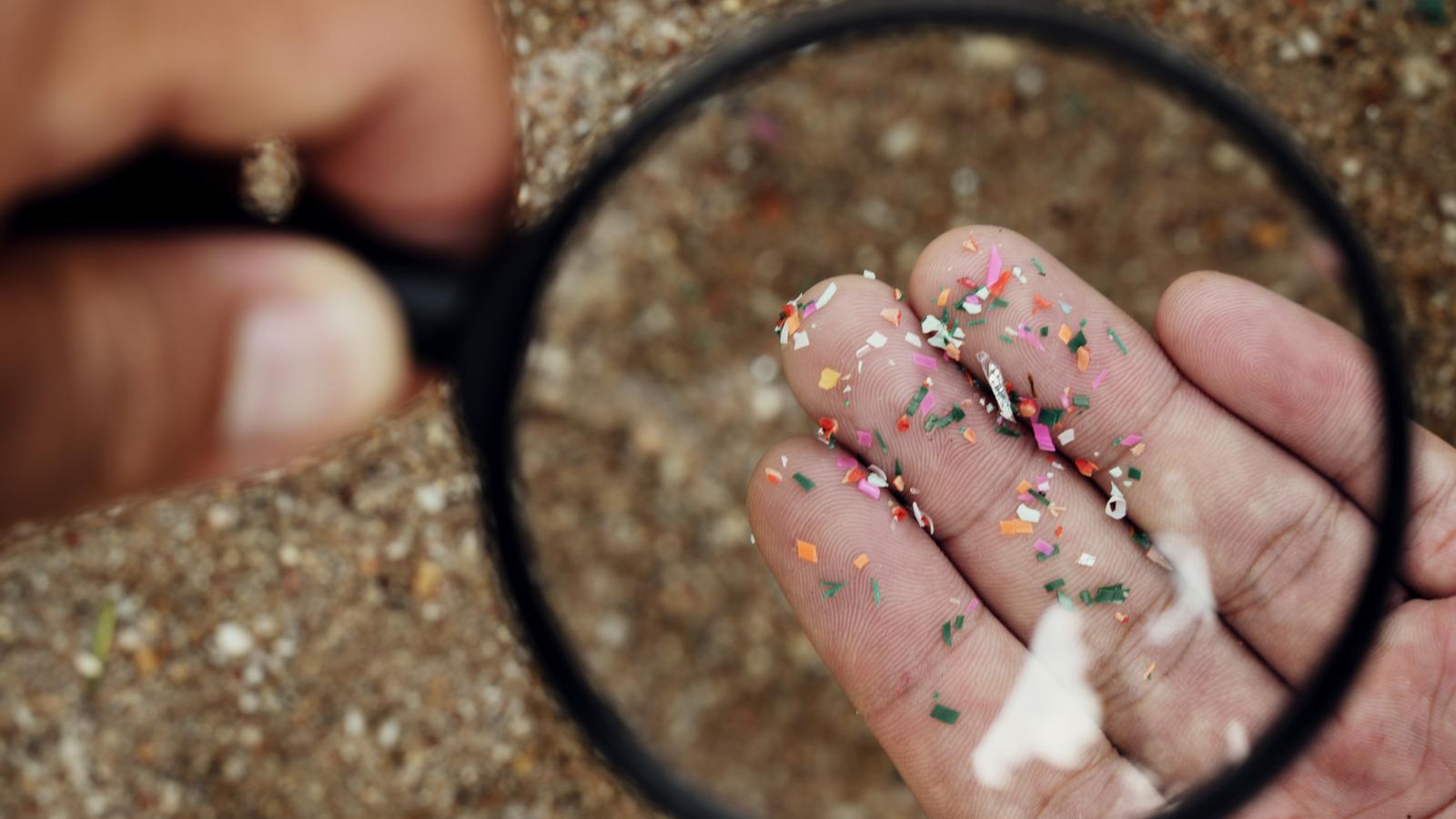
The key to this toxicity is not the amount of plastic, but the size. When a piece of plastic crumbles into millions of microscopic or nanometric particles, the amount of matter is the same, but the surface area that remains in contact with the environment multiplies exponentially. Upon immersion in water, the plastic's surface repels the liquid. This friction at the molecular scale destabilizes the water and triggers a spontaneous exchange of electrons. The result is the formation of reactive oxygen species (ROS) and free radicals: molecules that are very unstable because they lack an electron.
To regain balance, these radicals act as molecular thieves: they snatch electrons from any organic molecule they find in their path, be it proteins, DNA strands, platelets, or cell membranes. This continued theft alters the structure of the biomolecules, causes proteins to collapse, and ends up causing a progressive destruction of the organism's tissues.

In the case of humans, the finding acquires a critical dimension because blood is mostly water. When these tiny particles manage to enter the bloodstream or cells, the body's aqueous environment does not act as a simple passive vehicle, but as a catalyst: it keeps the plastic chemically active and continuously generating harmful radicals. This dynamic provides the missing piece to explain the clinical evidence linking the presence of microplastics in the organism to a higher risk of suffering myocardial infarction, stroke, dementia, or certain types of tumors. Despitethese signs, the new scenario also makes us wonder if we are facing a major unknown regarding the real and long-term effects on our health.
Alert for the Catalan coast
The discovery has an immediate reading on the Catalan coasts. The Mediterranean is one of the seas with the highest concentration of microplastics in the world, comparable to oceanic gyres (large circular current systems that trap waste). In this scenario, research on plastic pollution led by Anna Sanchez Vidal, professor at the Faculty of Earth Sciences of the University of Barcelona (UB), has confirmed that the two most abundant polymers in the bathing areas of Catalonia are, precisely, polyethylene and polypropylene.
“This is explained by two main reasons: on one hand, they are the two polymers most manufactured worldwide for single-use products; on the other, since they have a lower density than seawater, they float and accumulate on the surface of our beaches,” explains the researcher. The coincidence is especially concerning, as the Nature study points to these two materials as the most hydrophobic (those that repel water the most) and, therefore, those that generate a higher rate of free radicals when they touch water.
The sampling promoted by the UB group through citizen science networks from Cap de Creus to the Ebro Delta has also helped solve the great enigma of missing plastic: a good part of the waste does not end up in the large ocean gyres, but rather remains trapped in the coastal strip. On some Catalan beaches, up to 45 microplastic fragments per square meter have been counted, a concentration ten times higher than that of the open sea.
For Sanchez Vidal, we are at a scientific turning point: “Until now we assumed that plastics only caused physical damage through ingestion or chemical damage due to the additives they carry, such as bisphenols or phthalates. Now science shows us that the very surface of the plastic is chemically active and destabilizes water, creating a direct threat to marine biodiversity and human health.”

From the lunchbox to the microwave: the risk at home
Despite the focus on the sea and the consumption of fish and seafood, the main gateway for these reactive particles into the human body is much more prosaic: domestic habits. Most of the microplastics we ingest or inhale come from everyday objects made of polyethylene and polypropylene, such as food containers, cling film, bottle caps, food packaging, and cleaning products. Routine actions such as heating lunch in the microwave in a plastic container, screwing and unscrewing a bottle, or leaving packaging exposed to sunlight release a constant trickle of microscopic fragments that pass directly into food and, from there, into the organism.
This new evidence reveals the shortcomings of current environmental and health policies. “A good part of the regulation is based on the obsolete idea that plastic is an inert, stable, and safe material,” recalls the UB professor. Until now, most strategies have focused on improving recycling and final waste management, an approach that overlooks the chemical activity of the material once it crumbles and penetrates the natural environment or the human body. The problem, science emphasizes, is no longer just one of trash, but of toxicology and public health.
Having confirmed that these microparticles do not disappear, but remain active and relentlessly produce free radicals in aqueous media, the margin for action points towards the origin of the cycle. As Sanchez Vidal concludes, the question is no longer where the plastic is. “The question is whether, knowing this, we are capable of turning off the tap”.
