Ferran Martínez: "Many athletes surround themselves with toxic people who only want them for their money"
Ex-basketball player and businessman
-
CAT -
CAST
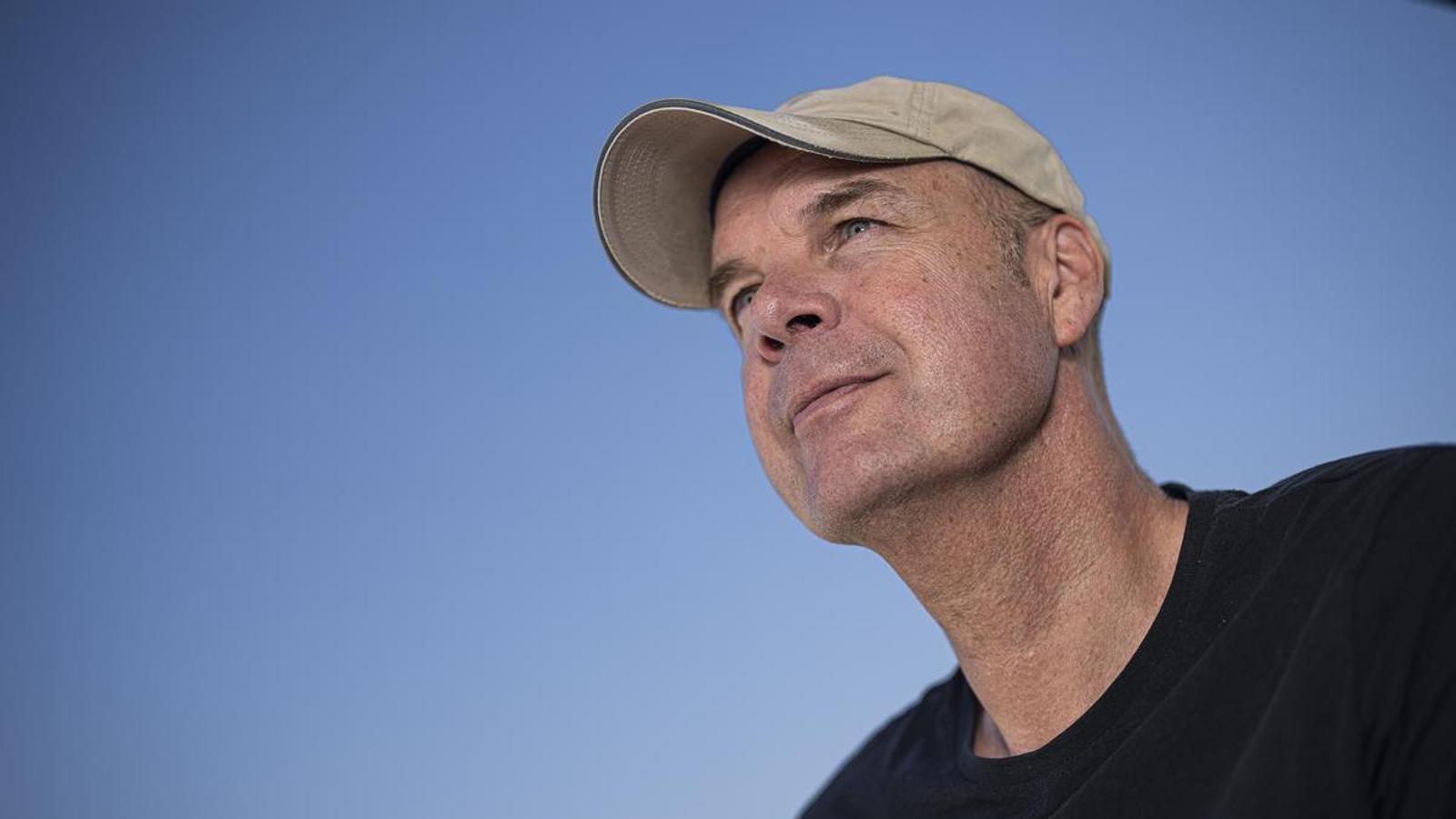
BarcelonaFerran Martínez (Barcelona, 1968) shone with Barça, Penya, the Spanish national team, and Panathinaikos during the 80s and 90s. But even then, he was preparing for a new life as an entrepreneur and financial advisor. Martínez meets with ARA on a Barcelona terrace, where for over an hour he talks about businesses, quantum computing, and AI. And about basketball, of course. He now publishes The Algorithm of Success (EmpreBooks), a book where he uses his sporting experience to understand the business world.
He has lived two successful lives. One sporting and one, one might say, business-related.
— Yes, that's why I always explain that we are very fortunate, right? In the life of a professional athlete, you have social recognition, you travel all over the world, you make friends, you compete..., but you are in a kind of bubble. A very beautiful but slightly unreal life. And then it ends. And real life arrives. If during this first life you haven't prepared yourself in some way for the second, you can have problems. Many suffer from depression. Others lose money. And you ask yourself who you really are, once you are no longer competing.
Didn't it happen to him/her?
— I saw clearly that a sports career is not very long. Perhaps because I've always been very curious. I joined Barça at 12 years old, at 16 I was already in the first team dynamic... I was lucky. But I wanted to study. I had always really liked technology. It was the time when the first computers were starting to arrive in Spain, like the first one I had, a 16K Sinclair Spectrum. The other young people played video games and I started programming things. I trained in programming languages by carrying that computer that weighed many kilos on trips with Barça. I was already creating spreadsheets with expenses and income before the existence of Excel (smiles). When we played in Japan or Los Angeles with the national team, I looked for the most modern devices that couldn't be bought in Barcelona. Before the internet arrived, I had already connected to a network called Telnet, which you connected to with one of those old phones. I programmed my first website in '95. That was when I went to play in Greece, at Panathinaikos, and I explained what my life was like there. Like a blog before blogs.
I already had a different look.
— It was then that I saw I had to start investing. As an athlete, you have agents and advisors around you, but I saw clearly that the more knowledge I had, the more control I would have over the situation. Once I retired, I started to have free time for the first time. And I used it to train myself more. I studied finance, I did an MBA, I was learning. In 2014 I discovered blockchain and I was already reading about artificial intelligence. It's fascinating. And the part I really like, which I've been involved in for almost ten years, is quantum computing, which are the computers of the future, with unlimited calculation power, capable of doing things that seem like science fiction right now.
He advised athletes on how to manage their assets and take care of their careers, where does this desire to help come from?
— It all started because from 1999 to 2002 there was the burst of the technological bubble. I had some savings that I lost precisely because they were products that invested 50% in fixed income and 50% in variable income. I decided to try to be positive. I went to study at the Centre d'Estudis Finances in Barcelona, to train myself and recover the money. And I did. At that time I worked at Media Sports Marketing, a company in the Mediapro group, and a Swiss bank came and proposed me the management of assets for athletes who earn a lot of money in a very concentrated time. Or artists. In parallel, we also set up a company called Global Sports Advisors, which was the representation of footballers. I was in charge of a part of image rights contracts and the first client we had was Messi. We closed a deal with Banc Sabadell when he was 18 years old. And because of that, Banc Sabadell also signed me. We were the first bank in Spain to create a department solely for athletes and artists. My life is about creating companies, staying there for a few years and opening new ones.
And now what?
— What I like most is trying to surround myself with people better than me, from whom I can learn. I am now working with Rental, in the real estate tokenization sector, which is using blockchain technology with real estate. You buy shares in buildings and the profits they generate are shared. And with Iñaki Urdangarin, we have created the consultancy firm Bevolutive to accompany executives and professional athletes, with the added value of coaching. We use our experience in sports to bring value to companies. Iñaki and I met at the Blume residence, when we were 18 years old. We have had different lives.

How was your retirement?
— I retire at 35 years old when I had an offer to go play in Rome, Italy. I injure myself warming up before a Catalonia-Croatia match at the Palau Sant Jordi. I had already taken blows in my life. Injuries that made me change the way I played. And I missed the Barcelona Games, my home games, due to injury. Fortunately, I had gone to the 1988 Games, but not being in Barcelona was not easy.
Sometimes it seems that an athlete, once retired, is no longer good for anything.
— And it is not so. In many countries they value what we have learned. Teamwork, working under pressure. I had the good fortune to meet Magic Johnson. And everyone wanted to listen to him, wanted to work with him. He was such a positive person that he didn't lose his smile even with AIDS, associating himself with companies willing to use part of their profits to research the disease. Magic Johnson was an inspiration: he helped to improve the world, but he was also a successful businessman with a holding of more than a billion.
Not all athletes, as happens in all sectors, have values that allow them to maintain a balance between earning money and helping. Many are selfish.
— It is like that. When I talk about success, I don't mean money. I mean having your balance, your way of living. I don't know how businessmen without values, who harm others to make money, can sleep. I believe you can have business success and help society, at the same time. Nowadays, false needs are generated in society. People always want more, they want to show off. It is full of very rich people who have a poor soul inside.
You speak of technology, but also of people. Of being human.
— If many athletes let themselves be advised, it was surely because I understood them. I knew how they felt. 95% of professional athletes cannot save properly when they compete. Olympic athletes who end up without a cushion. Rich footballers and basketball players are an exception. And they also need advice, because they don't always make the right choice about who they surround themselves with. Many, unfortunately, make mistakes. You have to know how to distinguish people who truly appreciate you from toxic people who only want your money. That's why I always recommend athletes to educate themselves. The more knowledge, the fewer chances of being fooled. I always advise that no one invest in anything they don't understand.
Many footballers now invest in football clubs...
— They have an idea in mind, I guess they want to help young footballers. They want to give something back to society, for sure. And they also want to win, competitive as they are.
Why isn't he in the basketball world?
— Well, it's a question that I also ask myself. But it doesn't depend on me. I would like to be contributing all this experience in favor of, for example, Barça. Why am I not doing it? I don't know. But I'm not complaining, because I really like what I do. But I'm not closing doors to anything, because you never know how you'll end up.

