Marta Garcia: "Just when I became a mother I knew that my sport would be Olympic"
Mountain skier
-
CAT -
CAST
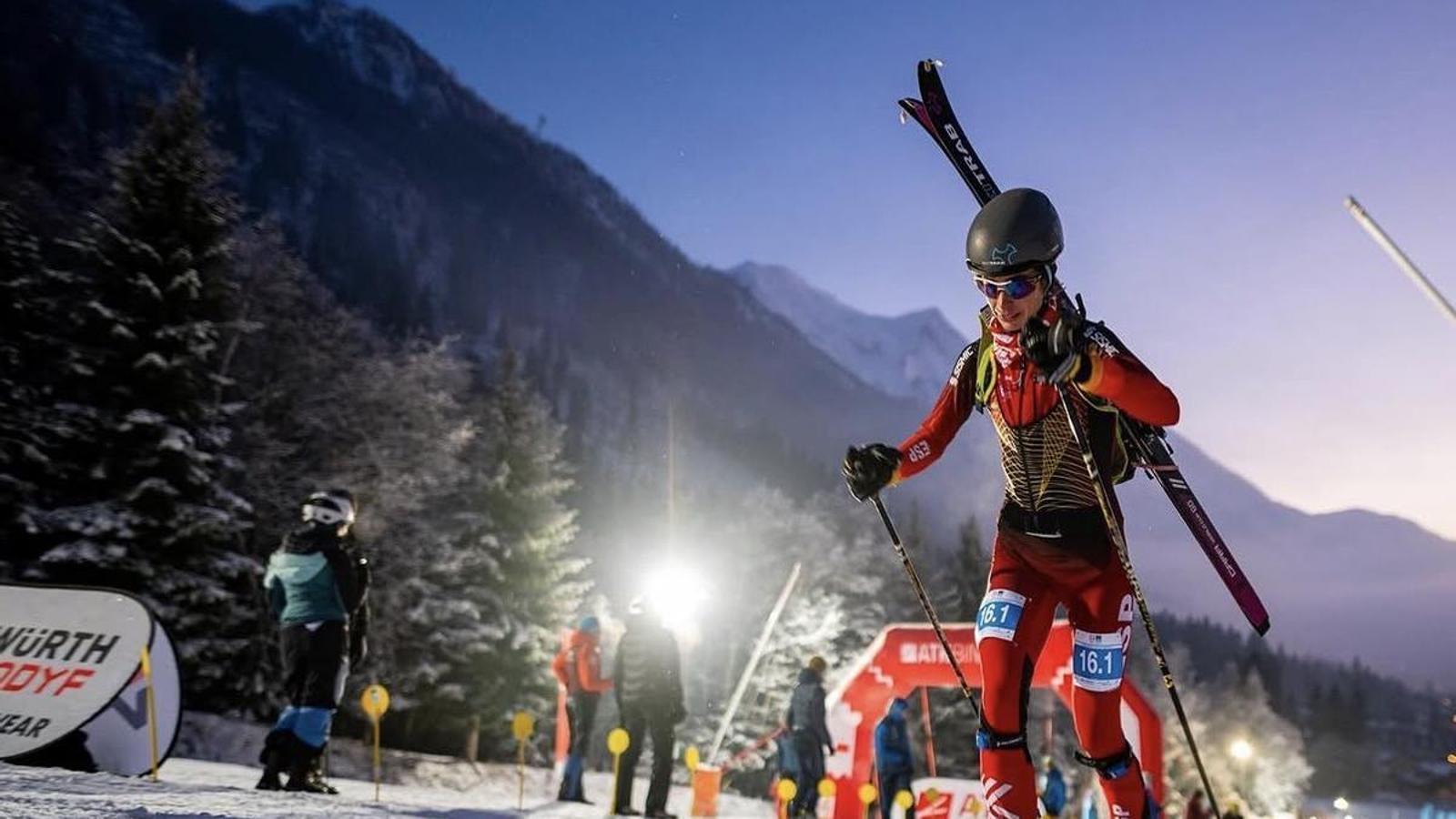
BarcelonaMarta Garcia Farrés (Calldetenes, 1992) has written the history of Catalan ski mountaineering. For the last 15 years, this woman from Osona who has put down roots in Puigcerdà has shone in World Championships and European Championships in a sport that underwent a revolution once it entered the Olympic program of the last Games, when Oriol Cardona reached the sky. Garcia narrowly failed to qualify for the Olympic event and recently announced that she is bringing her career to an end.
Has it been a long career, before and after becoming a mother. Has it been complicated to make the decision to quit?
— It has been difficult. Doing it was like a small grief. One has to get used to the idea of all that it entails. I have decided to do it now because we have closed a period, that of the Olympic cycle. These last four years have been marked by the decision that mountain skiing would be Olympic for the first time. Two years ago the classifications began and I finally missed out. These two years have been very intense, I have strived a lot and dedicated more energy than before to try to reach the Games. Trying to be an Olympian, I even lost the balance I had achieved. So I realized I needed a break. I asked myself if I wanted to start a new Olympic cycle and I have seen that it is time to stop. I have already lived a lot. I have lived to see how a sport that nobody knows becomes Olympic.
You used the word grief. Other athletes also say it: retiring is like going through a grief.
— Yes, yes, the feeling is indeed a bit like that. My sports psychologist told me so when I told her I was thinking of quitting. And I explained to her that my feelings, how I felt, the sadness I felt after competing at a high level for so many years... Well, it's a grief that needs to be overcome. Now I'm looking forward to being able to dedicate this time that I've spent training to other motivations.

You say you have reached the point of losing your balance in order to be an Olympian. That ski mountaineering is Olympic has revolutionized everything in your sport.
— Yes, yes, being Olympic has brought us many good things. It has led to it being better known, that more young people want to do this sport, and above all, it has led to those of us who were doing this sport being able to dedicate ourselves professionally to the sport, something that before we dedicated many hours to but did not have a professional return. It will surely continue to improve if, as they say, it remains on the Olympic calendar, which remains to be seen. And in what format it continues.
You entered the world of ski mountaineering relatively late...
— Yes, unlike how they train now that they are already competing at 14 years old, I started doing it around 17 years old. I started when I was already a junior. I used to go to the mountains with the Calldetenes hiking club and my parents. We did mountaineering, routes, climbing... and one day we decided to try ski mountaineering. And I liked this new way of climbing the mountain. And look, I haven't stopped since. Every weekend we would go up to the mountains with skis until, at 16 or 17 years old, Arnau Anguera, from Osona like me, proposed that I join the ski mountaineering training center. I had no idea what races were like! But I liked seeing so many young people competing. Until then, I always went to the mountains with older people. And look, until now.
—
Races have also changed. Now the bet is on short, explosive races, lasting a few minutes, to make them attractive on television as seen in the Games.
— Right. It was created for this, seeking for ski mountaineering to be Olympic. At first it was an individual long-distance modality, where you spent hours competing by climbing mountains in the snow. It seems that many people didn't like it. In the Alps region, especially, they didn't seem very interested. But it has been evolving, they have created relays and it has changed completely. Before they were long races and now it is explosive and happens in a few minutes.
Enjoy a privileged view of how ski mountaineering has evolved, where are we now?
— Very good work has been done at the training center. Many good athletes have come out, such as Kilian Jornet, Mireia Miró, Oriol Cardona, and many of us who have been at the forefront were trained at the center. Obviously, there is still a lot of work to do, but the evolution is good.
She made the decision to be a mother and keep competing. How has it been?
— Just when I became a mother, I knew that my sport would be olympic. Just the year I wouldn't compete. And when I returned, I noticed a big difference, more than any other year, because being olympic, many people were already starting to get their act together. Everyone had going to the Games in mind. It hasn't been easy, but I would tell you that I've managed to combine it quite well. I have received help and facilities from the Federation. They let me do the whole World Cup with my son and my partner, which was key to being able to continue because if it hadn't been like that, I wouldn't have continued. I think there is more awareness of the issue now and many cases have been seen of athletes who have taken a break to be mothers and have returned at a good level. It is now normal to see a pregnant woman doing sports, it wasn't before. I have felt very supported.
What moments would you keep from your career?
— I have been very consistent. I haven't had major victories, but I have been constant. I especially remember the 2016 European Championships where I came second in the sprint. And then I remember a World Cup in Boí Taüll with my people present, my son, my parents, and my partner, it was beautiful.
And what awaits him now?
— I am not bored. 8 years ago, my partner and I started a specialty coffee business in the Plaça dels Herois in Puigcerdà. I will dedicate myself to it more. But I will continue training, but more calmly. And if the opportunity arises, I can sign up for races with a different spirit. Sign up for a Pierra Menta, for example. It can be nice to race without the pressure of the result. Or not follow a day-to-day training plan, which can be very draining.
