In the hands of Mohammed VI
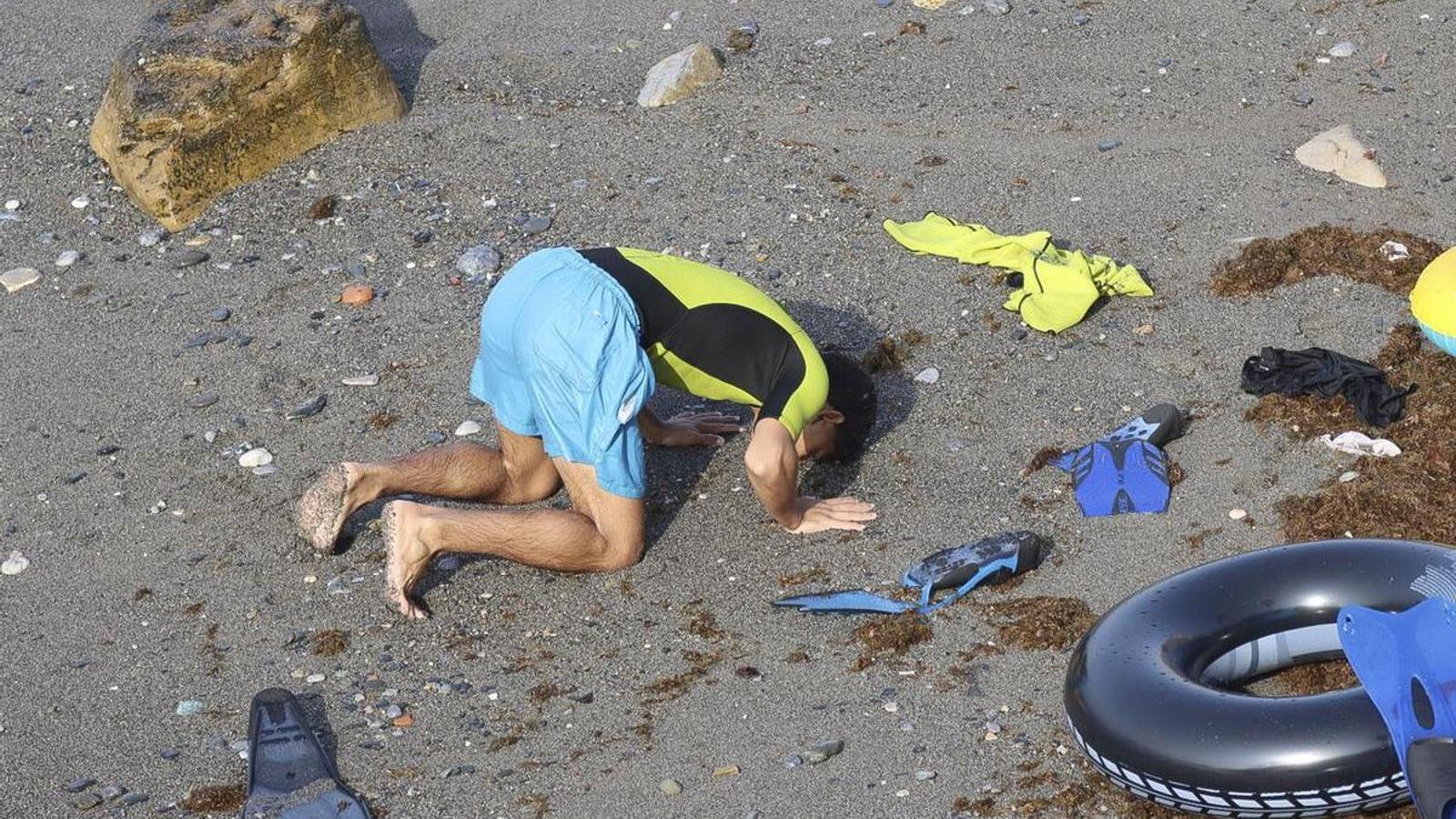

It is opportune to recall that Morocco, as a political regime, is an authoritarian monarchy – a dictatorship – and that the current monarch, Mohamed VI, besides being an eccentric millionaire, has also proven to be a business shark, much more ambitious and greedy, and also more skillful, than his father, Hassan II, a bon vivant who got along very well with Juan Carlos I. Mohamed VI (and now also his heir, Mulai Hassan, who each day assumes more power, due to the absences and health problems of his father) has gotten down to business, and possesses a fortune that Forbes calculates to be over 5,000 million euros, the first in Morocco and the fifth on the African continent. The Alaouite monarch is richer, for example, than the British one. Just in terms of known official residences, Mohamed VI owns twelve palaces with more than a thousand servants that cost more than a million euros each day. Needless to say, these are, from his perspective, merely current expenses. With all this, it means that we are talking about a deeply corrupt regime that intends to perpetuate itself. A royal lineage from which hangs the vast and powerful investment fund Al Mada, which controls key sectors such as banking, mining, agriculture, telecommunications, and distribution.The Alawite regime uses its country's resources for its own benefit, starting with its geostrategic situation and the Moroccan population itself (more than eighty deaths in this latest crisis in Ceuta). It should not be forgotten that the geopolitical maneuvers of this regime are directly linked to the enrichment of the royal family and its extensive network of partners, accomplices, propagandists, and flatterers. For this reason, as Tesh Sidi (a Sumar deputy born in a Sahrawi refugee camp) has recalled, migratory crises like the current one or the one in 2021 cannot be understood without the triangulation of interests between Morocco, Israel, and the US. With Spain playing the role of a pawn that goes from colonization to the recognition of the Moroccan autonomy plan for Western Sahara, the hardest and lowest moment of Pedro Sánchez's foreign policy.Even harder and lower because it has served no purpose. Morocco continues to use migratory crises as a tool to destabilize Europe through Spain whenever it suits them, which strengthens xenophobic or populist discourses such as those advocated by Vox and, in their own way, the PP. One only needs to see a recent interview with Abascal in which he emphasizes that Morocco “is not the enemy,” contrary to what has been traditionally preached. Solutions? Few. As diplomat Joan Manuel López Nadal has said, one possibility for the Spanish state, in the long run, is to decolonize Ceuta and Melilla (and ask, in return, for the decolonization of the Sahara by Morocco), but this, indeed, would be major words. A lesson? As Cristina Mas wrote in an analysis in this newspaper, “we have known for a long time that it is not a good idea to subcontract a regime without democratic guarantees to monitor your borders, and now it is being demonstrated again”.

