Remove citizenship from criminals? The Berlin attack gives more wings to the far-right
Alternative for Germany leads the polls and manages to impose its narrative, also on the center parties

-
CAT -
CAST
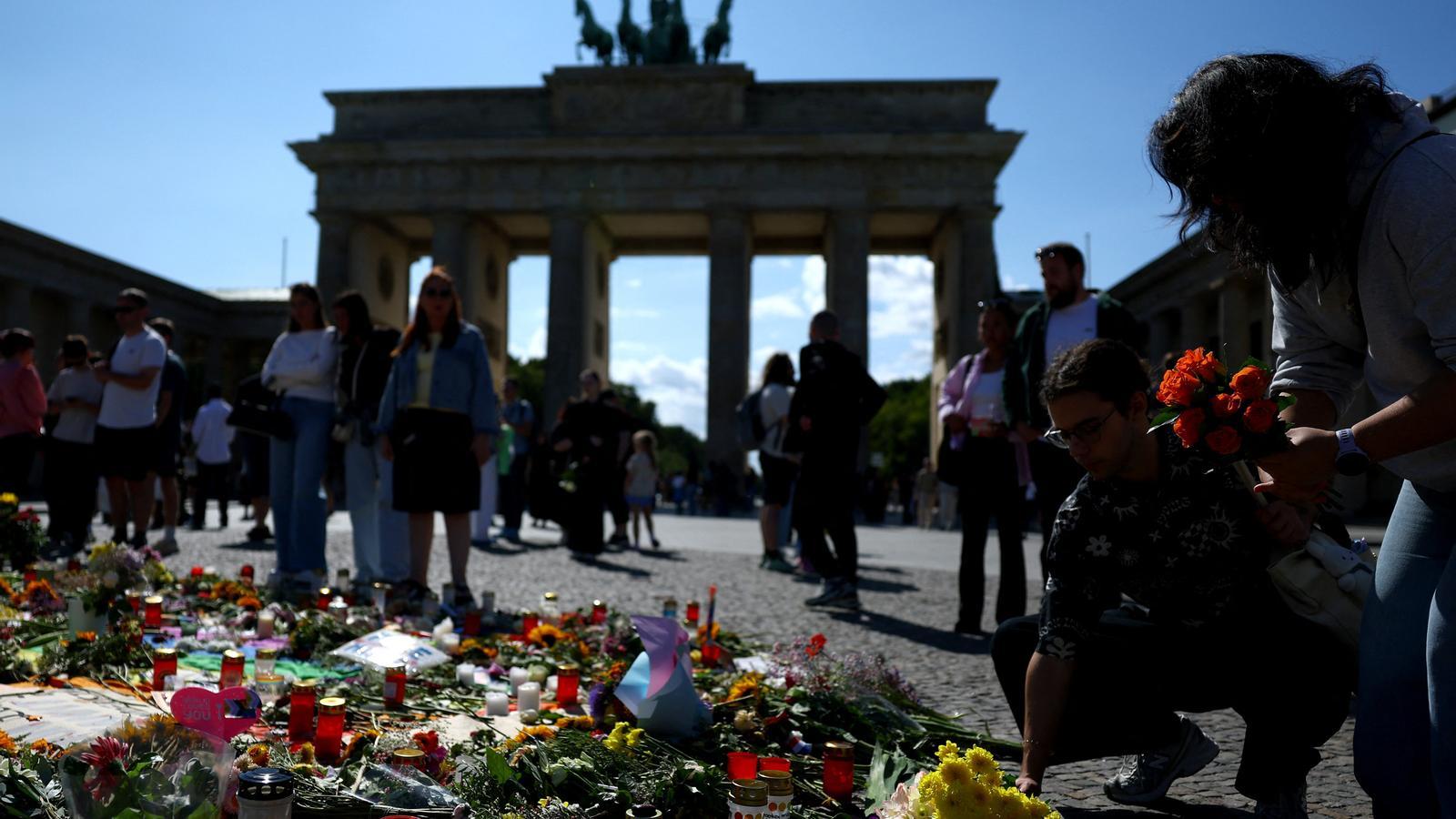
BarcelonaGermany continues to be shaken by the terrorist attack that last Saturday left one woman dead and around thirty injured during the LGBTI Pride celebrations in Berlin. The perpetrator of the attack, who was shot dead by police the following day, turned out to be a 21-year-old young man radicalized by Islamist ideas who had just been released from a detention center and was under police surveillance. With less than two months to go until the regional elections, the incident has emboldened the far-right, which could achieve its best results in history in the three states where the government is being contested.
Alternative for Germany (AfD) has deployed the entire discourse mechanism on which it has grown. It has taken advantage of the attacker's profile to keep immigration and public safety on the agenda and has emphasized the supposed "failure" of justice and the integration system. In various statements and messages on social media, the party leader, Alice Weidel, has directly accused the chancellor and the executive of not taking "the problem of Islamist extremism and immigrant violence" seriously. "A sad testament to the devastating failure of open borders and justice," she wrote.
"What happened does not change the discourse of the far-right in Germany, but rather confirms it," points out Héctor Sánchez Margalef, principal investigator at Cidob. He insists that Weidel's party had already managed to impose this framework before the attack and that the debate on "border controls or family reunification was already being discussed." But the incident, which has put Merz's unpopular executive in the spotlight, has pushed the chancellor to make strong proposals. The German leader has proposed expelling foreigners who have committed two crimes and revoking the German nationality of criminals with dual nationality. The measure, for Sánchez, shows that "center parties are adopting the discourses of the far-right"; a recipe that, he assures, almost never works.
All this amounts to a perfect storm for Merz's government, mired in a credibility crisis. The executive has been shaken by the scandal of a minister who had a child through surrogacy and has been forced to reorganize some portfolios this July. The far-right has never won in any of the three states facing regional elections this September. But polls predict this will change. Even before the attack, polls predicted an overwhelming victory for Alternative for Germany in two of the three states where elections are being held.
In Saxony-Anhalt, the cradle of the Protestant Reformation and a former industrial state, the AfD is close to an absolute majority in the polls and the CDU would lose the regional government. The far-right also tops the polls in Mecklenburg-Western Pomerania, a rather rural region in the northeast dominated by tourism. Although here the surveys do not predict such an overwhelming victory, they do attribute a comfortable 35-36% intention of vote that would force the SPD to seek support from across the political spectrum. "The official version is that the sanitary cordon is still in place," maintains Sánchez. But what would happen if, as in the case of Saxony, the AfD's victory is very decisive? In this scenario, it could not be ruled out that the CDU would abstain to let them govern, he opines. On the other hand, he rules out that there can be any shared government with Alternative for Germany.
The other territory in dispute in September is the state of Berlin. Although the left-wing Die Linke tops the polls at a very short distance from the rest of the parties, the far-right is expected to achieve the best results in its history.
Effect for the LGBT community
The shock generated by a terrorist attack can lead undecided voters to opt for a more radical vote. This is according to a study published in 2025 by the University of Frankfurt, which shows that in the regions where attacks of this kind took place, the AfD obtained 4.5 percentage points more than in the rest between 2010 and 2016. Even when the attackers were citizens of German nationality and the target was immigrants, the far-right capitalized on the unrest.
How will the LGBT community react to the elections, then? This will be one of the variables that political scientists will focus on the day after the elections. For now, however, Alice Weidel, openly lesbian, does not seem to have any intention of leading a fight alongside the community. The day after the attack, the AfD leader issued a statement in which she did not mention homosexuals: "Protect Berliners from violent Islamists!", the declaration began. Sánchez explains that the far-right has manufactured the idea that the common enemy is Muslims and that their way of approaching them has been to argue that Islam wants to eliminate them.
The largest organization for LGBT rights, Hirschfeld Eddy Foundation, has called for the community not to be instrumentalized to "foment racist hatred". In a statement they provided to ARA, they claim that "people who on any other occasion do not miss the opportunity to attack us, the LGBTIQ+ community, and discredit our struggle [...], now feign solidarity".
