Catalonia stops paying for hearing aids from the age of 26: "This doesn't happen with any other prosthesis"
Deaf people demand to end age limits and to stop discriminating against hearing problems

-
CAT -
CAST
BarcelonaIt is only a few months until Tania Galián turns 26, the age after which the public health system stops paying for hearing aids. These prostheses cost between 2,500 and 7,000 euros, depending on the degree of deafness and, like any electronic device, on the quality of the sound it captures and amplifies. "It's money we could use for a mortgage, a car, or to save up," complains Galián, who was born with profound deafness in both ears.
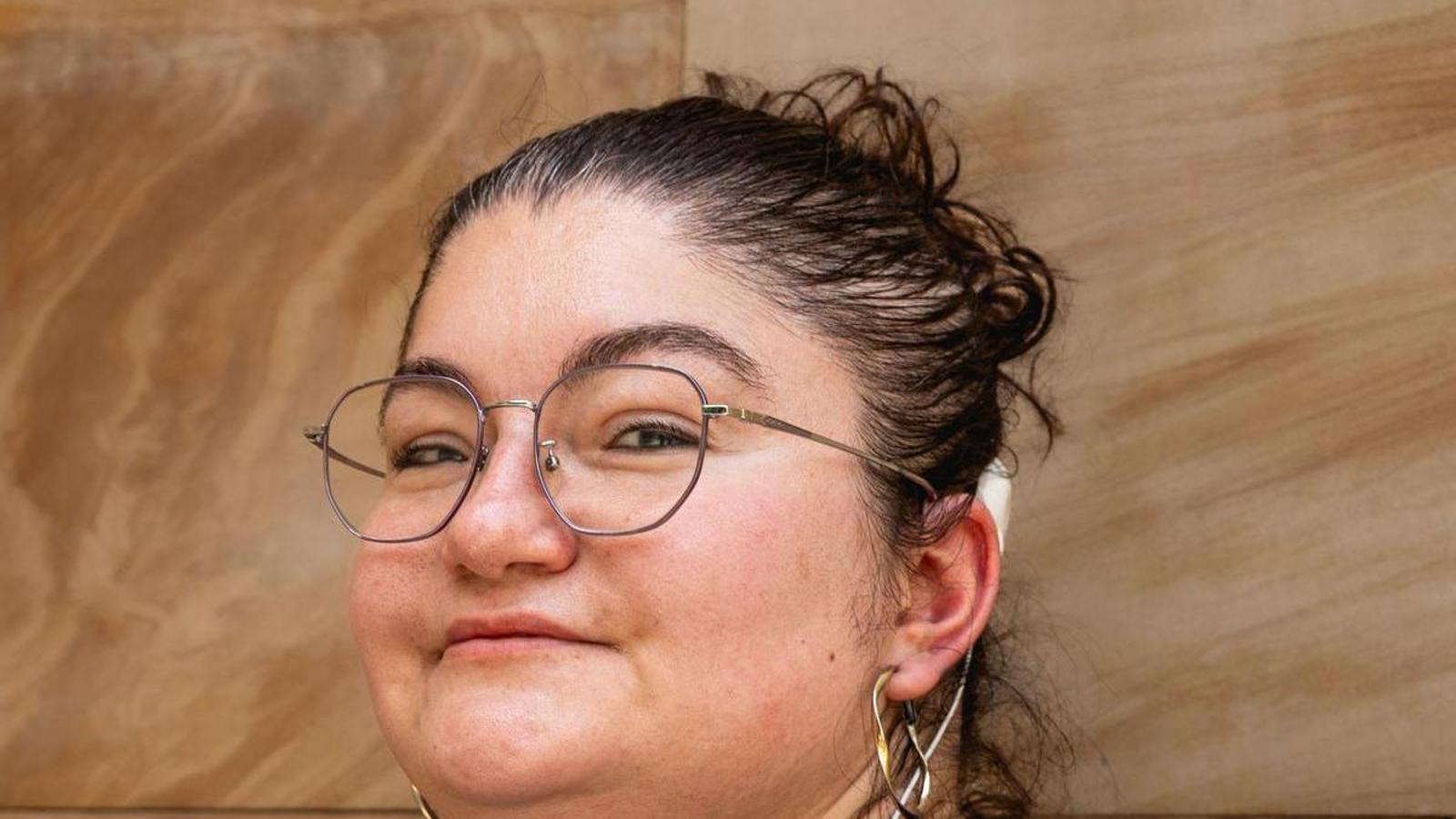
She normally uses a hearing aid for her left ear, which is currently being repaired, and although she doesn't know how much it will cost, she knows the expense will come out of her own pocket. So now she only hears with her left ear, thanks to a white cochlear implant [an electric device], which intentionally stands out against her dark hair tied up in a bun. It's her way of provoking questions from strangers, of "making deafness visible", the "most hidden and discriminated-against disability", she states. She has decided to customize her next implant to make it a "fashion accessory".
In Catalonia, 35,786 people have recognized hearing loss, but an INE survey indicates that more than 174,000 Catalans over the age of six report having hearing problems. Aging and overexposure to noise will accelerate an increase in hearing loss among the population in the coming years.
"It is unheard ofthat the health system abandons people who need a hearing aid when they turn 26; this doesn't happen with any other prosthesis," denounces Raimon Jané, president of the Catalan Federation of Associations of Families and People with Deafness (ACAPPS), who this week has asked Parliament to put an end to this "historical discrimination and violation of rights" of the group.

In fact, it's not that hearing aids are always free. Until the age of 26, the Department of Health includes them in a catalog of orthopedic benefits and covers the price of a model between 1,200 and 2,250 euros, but if the user wants to improve its benefits – for example, sound quality – they have to bear the difference. Health has financed 769 hearing aids.
"It's not a benefit, it's health"
From the age of 26, it is no longer a universal benefit and it is the Department of Social Rights that offers financial assistance of around 1,000 euros. However, as it is governed by a public call, there are delays in payment. In the case of those over 65 years of age, they are required to have had their hearing capacity recognized before this age and only low incomes can benefit.
The head of ACAPPS does not agree that hearing aids should be treated as a "social benefit" because they are a "health" item, prescribed by an otorhinolaryngology service, nor that one should have to wait each year to see if there is a budget allocation. The difference between wearing one and not wearing one "is being isolated, hearing nothing but silence or not hearing well enough," complains Galián.

L'ACCAPS demands "a profound change" in the system so that deafness and hearing aids receive the same treatment as other disabilities and prosthetics. "Can anyone imagine that someone with a hip problem has to pay for the prosthesis before entering the operating room?", asks Jané.
The Spanish and Catalan model is not the usual one in neighboring countries. In France and the United Kingdom, the administration finances 100% of the cost of the device, while in the Netherlands and Germany, the administration assumes 75%. However, in none of these countries is there an age limit and everyone receives the same treatment.
Few implants
Another complaint from the collective is that, although the technology to improve the hearing of deaf people has advanced a lot, public financial aid is "stagnant", which condemns a large number of people to use low-end hearing aids or, when they have exceeded the limit of 26 years, to have to use the same device beyond the recommended four years. "There are people who cannot afford them and in families with several members who need hearing aids it is a drama," points out Jané. Thus, credit companies that advertise special loans for these users are common.
Unlike hearing aids, cochlear implants are completely free. They consist of a visible part that is placed on the skull and another inside the ear. It is the specialist who determines, based on clinical criteria, who is a candidate for surgery in the few public hospitals that perform the intervention. "The problem is that so few operations are performed that the waiting list is more than a year, too long for someone who cannot hear," points out Jané, who also criticizes that Catalonia is one of the communities with the lowest rate of these implants.
Galián explains that many young people are unaware that there is an age limit, but those who do know are eager to obtain devices that are useful for them to have clearer and sharper hearing. The young woman uses a microphone for the phone and another to amplify the sound of her interlocutor. "You know those on TikTok who ask how much the dress you're wearing costs? I'd tell them I'm wearing 20,000 euros," she laughs. In addition to devices, deaf people are also not guaranteed speech therapy.
