"When healthcare becomes a refuge": the reception in Catalonia of children from Gaza
The Palau Robert hosts, until August 30, Sergi Cámara's exhibition on the impact of war on the local health system and the solidarity response of welcome in Catalonia
-
CAT -
CAST
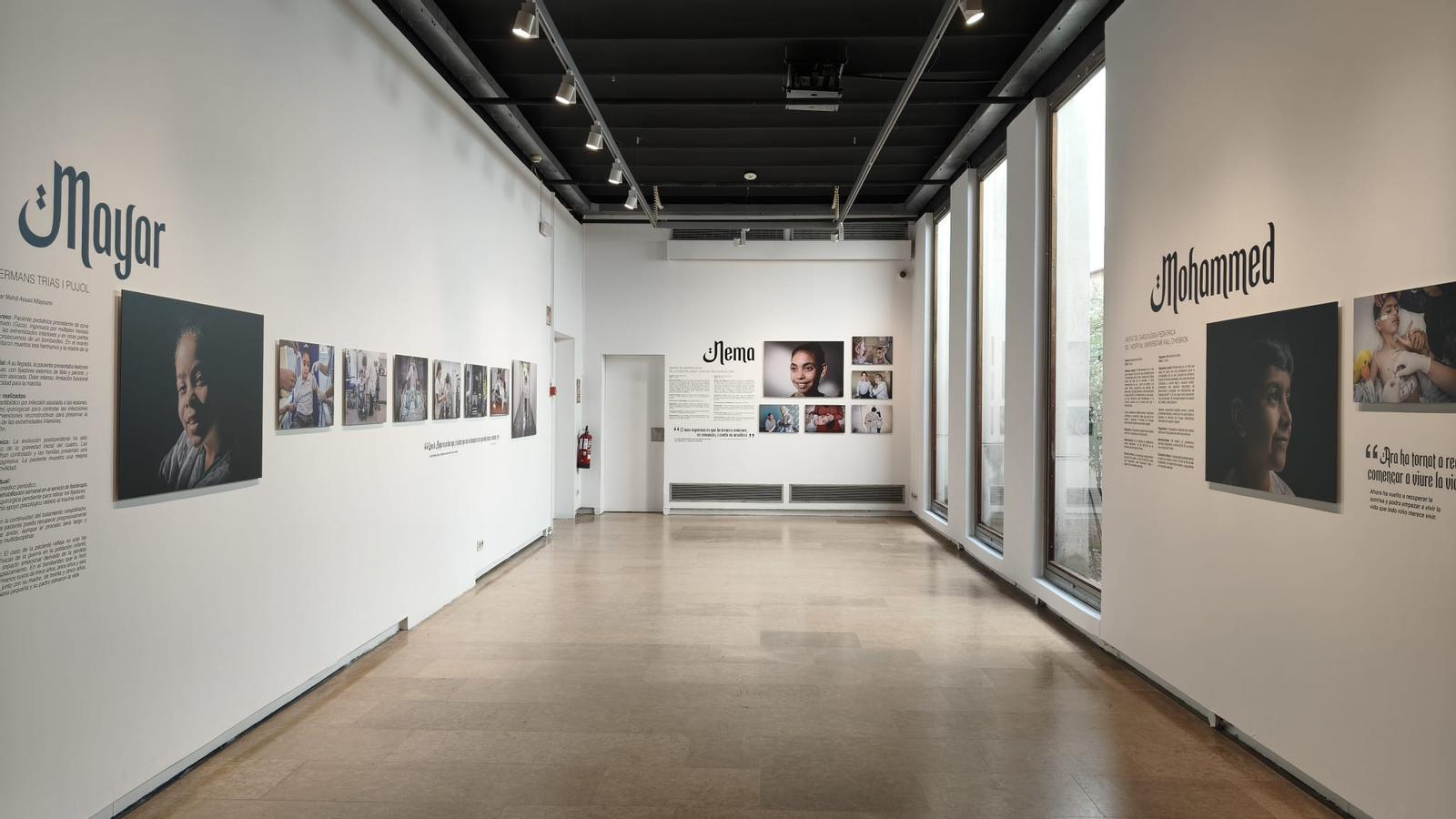
The exhibition When healthcare becomes a refuge builds a visual and documentary narrative through two connected realities: on the one hand, the impact of the war on the healthcare system in Gaza and its consequences on children, and on the other, the healthcare reception initiatives that allow some of these children to be treated in hospitals in Catalonia.
With this objective, the exhibition When healthcare becomes a refuge explains, through images, data, and testimonies, the reality experienced by the children of Gaza from an informative and profoundly human perspective, through the work of photojournalist and curator of the exhibition, Sergi Cámara. The exhibition can be visited from this Monday until August 30th in Room 4 of the Palau Robert and is free and open to the public.

The exhibition starts from the idea that health is a universal right, but that in contexts of war this right is severely limited. The exhibition project seeks to make visible the impact of armed conflicts on health systems, show the human consequences of the destruction of hospitals and medical infrastructure, and publicize health reception initiatives for patients from war zones. All this is done through a linear and narrative route, differentiated into two areas.
Two spaces, two realities
With a careful exhibition narrative, When healthcare becomes a refuge shows the visitor two realities in two different areas. The visitor enters a first section that presents the context of the destruction of the healthcare system in Gaza. In the space, with a dark ambiance, data is displayed, an image by Palestinian photojournalist Abdalhkem Abu Riash – internationally recognized for his work documenting the humanitarian crisis, starvation, and conflict in the Gaza Strip – and there is also a sound installation with some real recordings of bombings.
The second area covers the medical response through healthcare reception in Catalonia. This space presents a brighter and more open ambiance and focuses on the human dimension of medicine and healthcare cooperation initiatives. With the photographs by Sergi Cámara, we learn about the cases of Mayar, Nema, and Mohammed, who were treated at the Germans Trias i Pujol Hospital, Sant Joan de Déu Hospital, and Vall d’Hebron Hospital.
Guided tours
The exhibition offers a series of guided tours led by its curator and author of the photographs, Sergi Cámara. The tours will take place on August 10, 11, 18, and 25, at 11 a.m., with an approximate duration of 40 minutes. This activity offers visitors the opportunity to learn firsthand about the creation process of the exhibition, as well as the context and stories behind the images. Registrations will be made through this email address: palaurobert@gencat.cat.
The international cooperation of the Catalan healthcare system
In coordination with the Ministry of Health and with the involvement of Catalan hospitals, the Catalan healthcare system assisted a total of 146 people during 2025 with temporary access to healthcare for humanitarian reasons and international health cooperation from regions such as Palestine, Ukraine, and Western Sahara, among others.
Since 2001, more than 8,600 applicants for international protection registered in the RCA (Registry of Insured Persons) have received medical assistance within the Catalan healthcare system.
