Rosa Romà: “There is one thing that we cannot automate, and it is editorial responsibility”
President of 3Cat
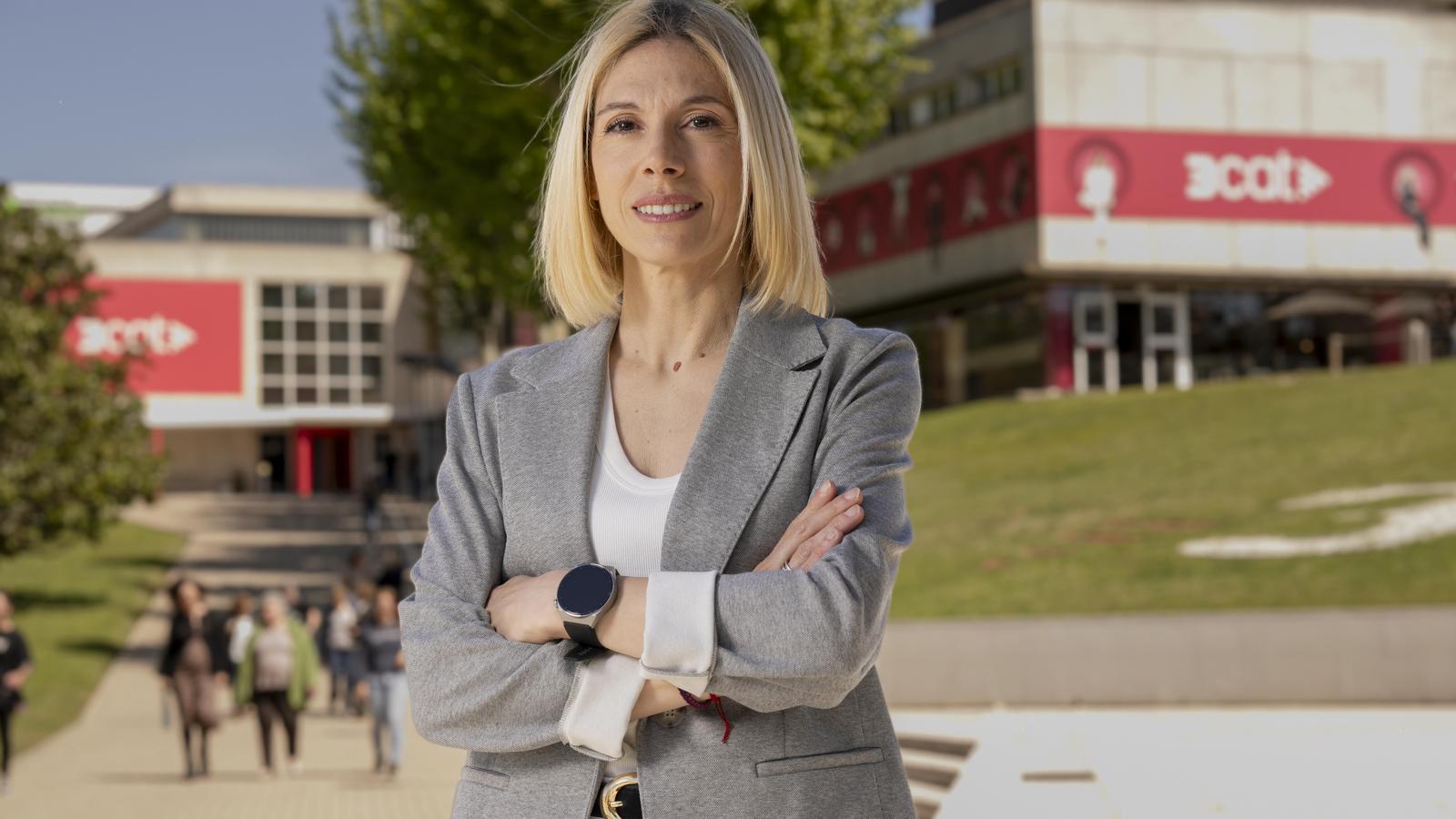
Rosa Romà, president of 3Cat, defends informational sovereignty in the face of algorithms. Therefore, a democracy does not only need infrastructures that transport energy, data, or people. It also needs truthful news.
What role should public media play regarding disinformation and the impact of AI?
— We are living in a moment of high complexity. Disinformation, polarization, audience fragmentation, and the emergence of generative AI are deeply transforming the information ecosystem and audiovisual consumption. We no longer compete only among media outlets to capture attention. We compete with a practically unlimited volume of content, some of which may have been generated or distributed without any editorial responsibility.
It is in this context that public media acquire even more value. Not only as content producers, but as infrastructures of trust.
— In a world where generating content will be practically unlimited, the differential value will be the ability to establish trust: knowing where information comes from, who produced it, with what criteria, and who assumes responsibility for it. Behind 3Cat information there is an editorial team, authorship, sources, verification procedures, editorial criteria, and, above all, someone who publicly stands behind what they publish. Technology will allow us to be more efficient, accessible, and personalized. But there is one thing we cannot automate: editorial responsibility. A democracy does not only need infrastructures that transport energy, data, or people.
What does digital sovereignty mean today?
— When we talk about digital sovereignty, we tend to think about infrastructure, data, cloud, computing, or cybersecurity. All of this is fundamental, but we must expand the concept: we also need informational sovereignty. And I would add, also, cultural sovereignty. Increasingly, our access to the world is mediated by algorithms, search engines, recommendation systems, and AI assistants. These systems do not only distribute information: they select it, rank it, and condition what we discover and what we see. For Catalonia, this also has a cultural and linguistic dimension. It is not enough for us to get AI to speak Catalan. We need it to understand our culture, our history, our references, and our way of interpreting the world.
What is the great challenge for public media in the new digital ecosystem?
— For decades, public media occupied a perfectly recognizable space: a frequency, a channel, a position on the remote control. Now this visibility is no longer guaranteed. Discovery is progressively moving through operating systems, connected televisions, platforms, search engines, recommenders, and AI assistants. Therefore, in Europe, there is an important debate about the prominence of public service content as a democratic guarantee. From 3Cat, together with the EBU and European public media, we must work to ensure the prominence of rigorous and valuable content as a guarantee of our democracy.
What relationship should 3Cat have with the Catalan technology sector?
— I firmly believe in alliances and public-private collaboration to face the challenges ahead. The country's audiovisual and technology sectors must work hand in hand. We have a strong and benchmark technology sector, with an extraordinary ecosystem of universities, research centers, companies, and talent. The next step is to better connect these assets. At 3Cat, we are working with the ICT sector to become a testing ground for solutions to current challenges. 3Cat can contribute something especially valuable: real production environments, innovative capacity, and scale of use. And, therefore, capacity for knowledge transfer.
How will AI change companies and professionals?
— We can incorporate AI, automation, cloud, or new production systems. But, if we do not simultaneously transform capabilities, processes, culture, and leadership, we will only be modernizing technology. I believe that technological change is always accompanied by organizational change and also by a change in corporate culture. The important question will not be how many AI assistants we have deployed, but which process we have transformed and, above all, how we serve the needs of the citizenry more and better. Technology is the necessary condition. Purpose is what transforms.
How will 3Cat's relationship with the public be in the digital age?
— We must maintain the capacity to connect and reach society as a whole while, at the same time, engaging individually with each user in their consumption spaces. This is, in fact, the transformation model we have promoted at 3Cat: placing citizens at the center, understanding content as an element of connection, and distributing it wherever people are. We no longer think only in terms of channels, but rather in terms of content that must live and be relevant across multiple windows: television, radio, the 3Cat platform, social networks, YouTube, digital environments, video games, or experiences. Our model is to connect people with content. Technology gives us greater capacity to make this connection relevant and personal, but the goal remains the same: to reach, connect, and generate bonds and cohesion.
What does it really mean to innovate with purpose?
— This first great phase of technological development has been marked above all by the evolution of technology itself: more computing capacity, more speed, more data, more possibilities. And this has brought us very far. But I believe that we are now entering a moment in which we must place much more focus on how this technology is incorporated into people's lives. The incorporation of technology cannot be considered only from the technological aspect. Before, we must have understood the need that we want to solve. For this reason, I believe that the next stage of technological transformation must have much more to do with humanizing the experience.
