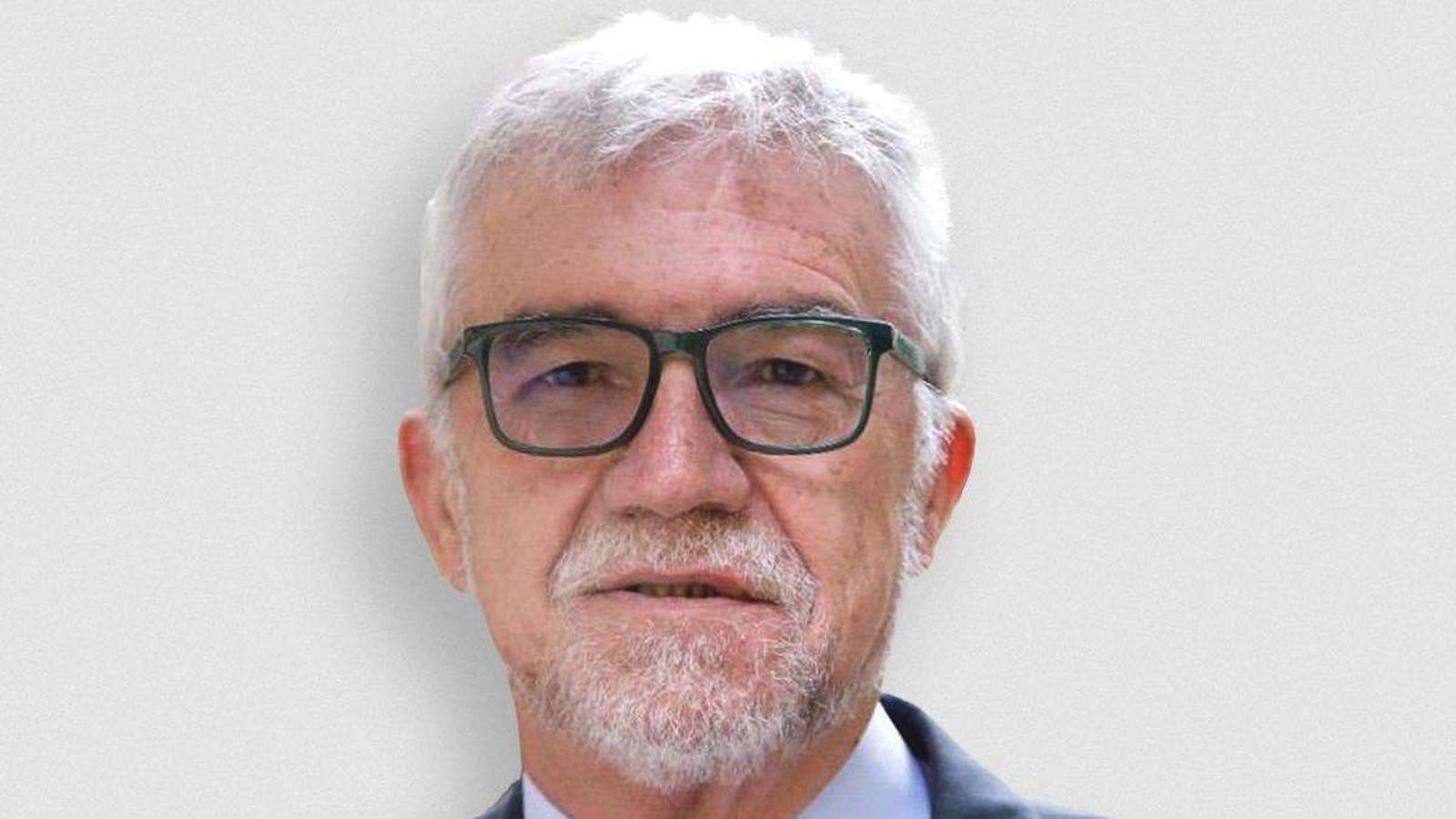
Mateo Valero: “We need ambitious projects to attract and train talent”
Director of the Barcelona Supercomputing Center
-
CAT -
CAST
Mateo Valero has directed the Barcelona Supercomputing Center (BSC) since its creation in 2004. He says that AI and supercomputing can help our lives. Great challenges await us in health, climate, energy, and science, and Catalonia can play a relevant role with sustained investment and the attraction and training of talent.
What role is Catalonia playing in the global technological revolution and, especially, in the fields of supercomputing and artificial intelligence?
— We are at a moment of convergence between supercomputing and artificial intelligence. Catalonia has the capacity to contribute to defining the next generation of AI, from the MareNostrum 5 infrastructure and the BSC AI Factory to models and applications in health, climate, or industry. With initiatives such as AINA and ALIA, we are promoting models that incorporate Catalan and other languages. This helps us to preserve linguistic diversity and to strengthen European technological autonomy.
Supercomputing capacity is increasingly important for developing artificial intelligence and conducting research. How can AI gigafactories and these large infrastructures change the European technological landscape? What does Catalonia need to play a relevant role in it?
— Gigafactories can provide European science and industry with the computing power necessary to train advanced models and develop their own applications. They must also allow for the auditing of energy and water consumption. For Catalonia to play a relevant role, we need sustained investments with a ten-year vision, ambitious projects to attract and train talent, and a close connection with industry.
How can we transform the scientific and technological advances developed in Catalonia into real opportunities for companies, especially for small and medium-sized ones?
— With the BSC AI Factory, SMEs can access computing power, data, and expert support to validate their ideas. Licenses and spin-offs bring research to the market. With BSC Connects, companies can define a three-year research agenda with us.
Which applications of artificial intelligence and supercomputing do you believe will have the greatest impact on people's well-being and the resolution of society's major challenges?
— I would highlight four. In health, we can accelerate drug discovery and advance early diagnosis and personalized medicine. In climate and energy, we can improve predictions and optimize electrical grids. In industry, AI and robotics can improve manufacturing and infrastructure management. And in science, AI can help us formulate hypotheses, design experiments, and simulate complex phenomena.
How can we ensure that advances in supercomputing and artificial intelligence translate into concrete benefits for society and that their development takes into account energy consumption and environmental impact?
— We must start with the problems we want to solve and make computing power available to those who work on them. We must also incorporate efficiency from the design stage, optimizing algorithms, hardware usage, and cooling. In many cases, a smaller and more specialized model can yield better results at a fraction of the computational cost.
Semiconductors are a strategic technology for industry and technological sovereignty. What capabilities should Europe – and Catalonia in particular – develop to have more weight in this field?
— Without chips there is no paradise. Europe must act together to develop its own technology and reduce external dependence. Projects like Airbus, Galileo or CERN show what we can achieve when we share a long-term strategy. Catalonia can contribute with its experience in computer architecture and supercomputing.
How can entities like GRAUSTIC contribute to connecting research, scientific talent, and the Catalan business fabric to accelerate knowledge transfer and innovation?
— Entities like GRAUSTIC can connect universities and research centers with companies, especially SMEs, and administrations. This allows researchers to better understand the problems that need to be solved and companies to find the knowledge and talent to address them.
Which great challenge of humanity would you like the technology developed here to help solve?
— I would like the technology we create here to help people live longer and better. I would like it to allow us to anticipate and treat diseases like cancer and better understand how to protect the planet against climate change. Above all, I would like this progress to reach everyone.
