Nothing is by chance in a campaign: the strategic route of Sánchez and Feijóo to scrape the last seat
The parties adapt the agenda depending on where they have more possibilities to maximize their representation

-
CAT -
CAST
MadridTuesday, November 17th. Albacete Fair Pavilion. There are about six thousand people inside and outside the venue who have come to see Pedro Sánchez's show, who is unleashed dancing, singing, and interacting with all the militants he can in a campaign designed to mobilize the vote. However, why does the PSOE choose Albacete to hold the rally? Or why does the PP have such a presence in Catalonia in this election campaign? Beyond the fact that campaign teams try to visit the most representative places in the State, the specific locations where they land have strategic importance for them and, even, they vary the agenda depending on how the trackings are going internally. A week before the 29-N elections, the two major parties are optimizing efforts to reach the Moncloa after a head-to-head in which the PP feels like the clear winner of the night.
“It was a historic victory,” they describe from Génova, while from the PSOE they justify that Sánchez did not engage in head-to-head confrontation: “The public is fed up with tension.” Public opinion leans toward placing Feijóo as the winner –according to the poll by El País and SER, with a ten-point lead–. The PP, even from X, allowed itself to post a photo of its candidate walking his dog, in allusion to “Perro Sanxe,” while Ada Colau (Front Ampli) has accused Sánchez of “giving up.” However, from the Moncloa they defend the chosen non-confrontation strategy, and from Ferraz they warn: “They do not have the majority,” they maintain regarding the polls, and they encourage a final mobilization of the progressive vote to achieve a comeback.
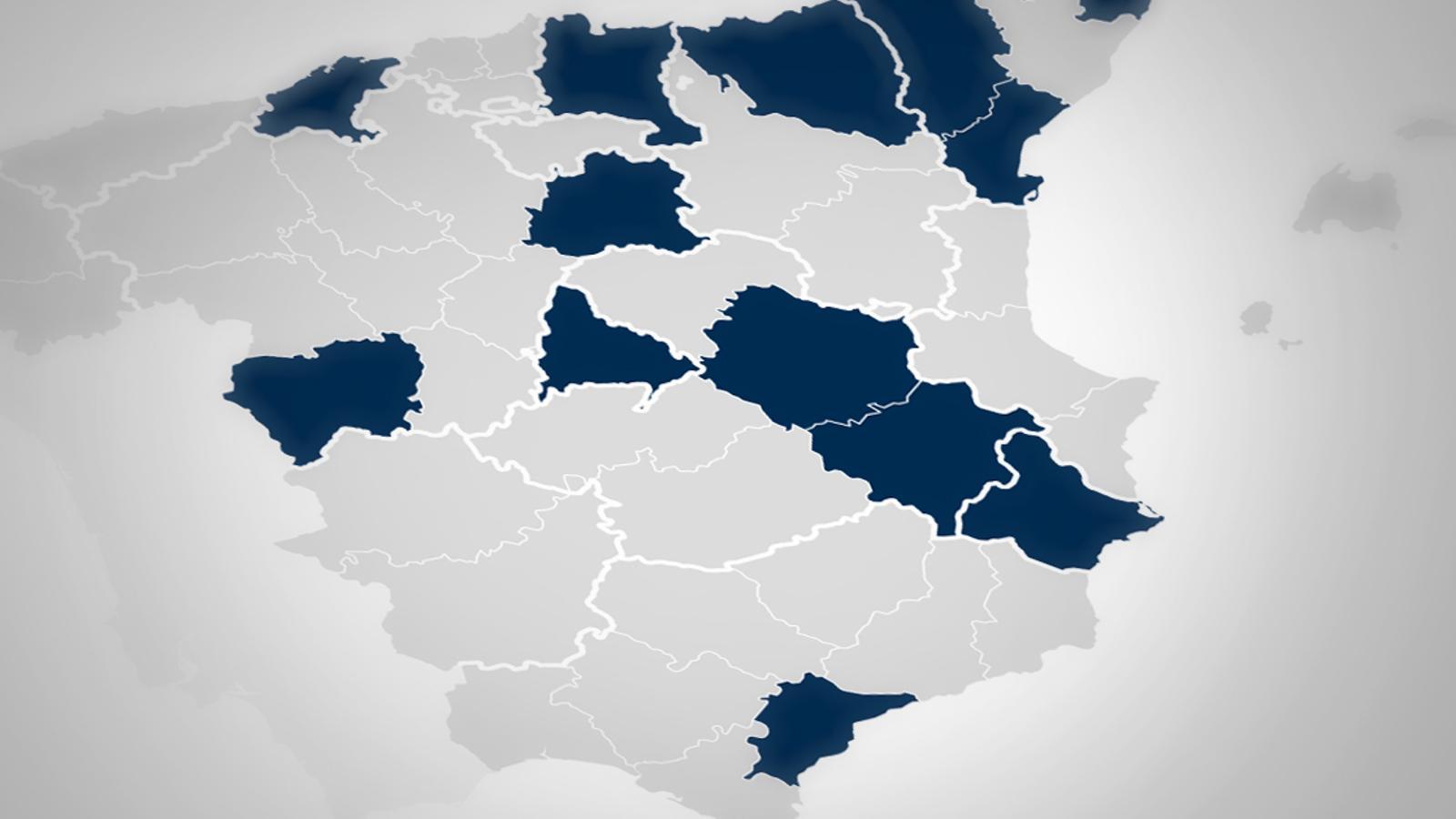
The Spanish electoral system, conducted through the D’Hondt law and with more or less small constituencies, implies in practice that on November 29th there are 52 parallel electoral races –one for each province–, the result of which is decisive for winning. It is useless to accumulate many votes in the most populated parts of the State if, later, in the smaller constituencies, where getting a deputy is easier (fewer votes are needed), the distribution of the D’Hondt law harms the party. In other words, in elections expected to be tight, the most important thing for the PP and the PSOE is to take the map, the magnifying glass, and make strategic decisions based on that.
And in this sense, what are the key constituencies? For the PP, and consequently the socialists, both Girona and Lleida will be decisive. It is not for nothing that Alberto Núñez Feijóo will have opened and closed the campaign in Catalonia. In the 2023 elections, the Popular Party was left without representation in the province of Lleida (2 PSC, 1 ERC, and 1 Junts) and also in the province of Girona (2 PSC, 2 Junts, 1 ERC, and 1 Sumar): in both cases, however, it was by very few votes. In the case of Lleida, the PP was approximately 3,500 votes away from achieving the deputy, which upon applying the D’Hondt law went to the PSC; and in the case of Girona, the dispute was extremely tight between the PP, Junts, and the PSC. The last seat went to Miriam Nogueras' party, but by only 400 votes from the Popular Party and 1,500 from the socialists. Therefore, in Catalonia, the two major national parties, beyond the vote granary of the metropolitan area, also have much at stake in the two least populated constituencies, since any seat could make the difference between the two blocs.
The situation is different in the province of Barcelona, since in the most populated constituencies it is more difficult to reduce the distances between parties because more votes are needed to achieve the seat. In 2023, the PSC took the last representative of the constituency, but with more than 17,000 votes difference from Vox. In Tarragona, the race was also very close and Junts took the last seat at the expense of the socialists by only 1,500 votes.
The dispute in the emptied Spain
The other great challenge for the PSOE and the PP is the distribution of seats in "Empty Spain," which is the right's most important stronghold for votes. In constituencies where only three to seven seats are up for grabs, there is a small population and the price—the number of votes—for a deputy is much lower. An example is Albacete. "We must mobilize. These are a thousand reference votes," asserts a regional socialist leader. In 2023, the result in this province was 2 seats for the PP and 2 for the PSOE, but Pedro Sánchez's last one was very close to being taken by Vox. For this reason, the Ferraz campaign team decided to hold the rally in this city and not another: to mobilize the unionist vote, very present in the province, to maximize the seats. The PSOE also won the last seat by a hair in La Rioja, where the dispute was with the PP—both Sánchez and Feijóo have already held rallies there—as well as in Tenerife, where the Spanish president will hold a rally this Saturday and where the PP leader is this Friday.
In the province of Huesca, the opposite happened. The PP took two of the three seats by a difference of 5,000 votes over the socialists. Nothing is a coincidence: in the final stretch of the campaign, Sánchez is scheduled to hold a rally in Huesca and this Friday the extraordinary council of ministers approved a final decree-law to impose more requirements on data centers. In this way, the PSOE hopes to scrape up votes from the organized movement against these new facilities, which has intensified in recent weeks, as they denounce the red carpet that the PP regional government has rolled out for large companies like Amazon despite the high consumption of water and energy they require. A strategy that the socialists have imported from the Democrats in the United States: this issue was key to defeat the Republicans in several states, such as Texas.
Murcia, the example of the battle
An example of the battle is the choice of Murcia this weekend by both the PP and the PSOE to hold their central rallies. Sánchez and Feijóo will be in the same place this Sunday, where in 2023 they contested the last seat of the ten distributed in the province. The socialists took it to the detriment of the popular party, but only by 1,500 votes. A difference that both parties believe could now change. The same thing is happening in the Community of Madrid: the PSOE will close the campaign in the Spanish capital with the idea of making a show of strength by mobilizing militants. In the last elections, the PP took the last seat in the count of the overseas vote, which led to Pedro Sánchez having to depend on Junts per Catalunya throughout the legislature. The elections are played out in all the provinces, but there are more important dance floors and the parties know perfectly well where they have to direct their efforts.
