Albert Dalmau: "Innovation makes sense when it generates opportunities and improves people's lives"
Minister of the Presidency of the Government of Catalonia
-
CAT -
CAST
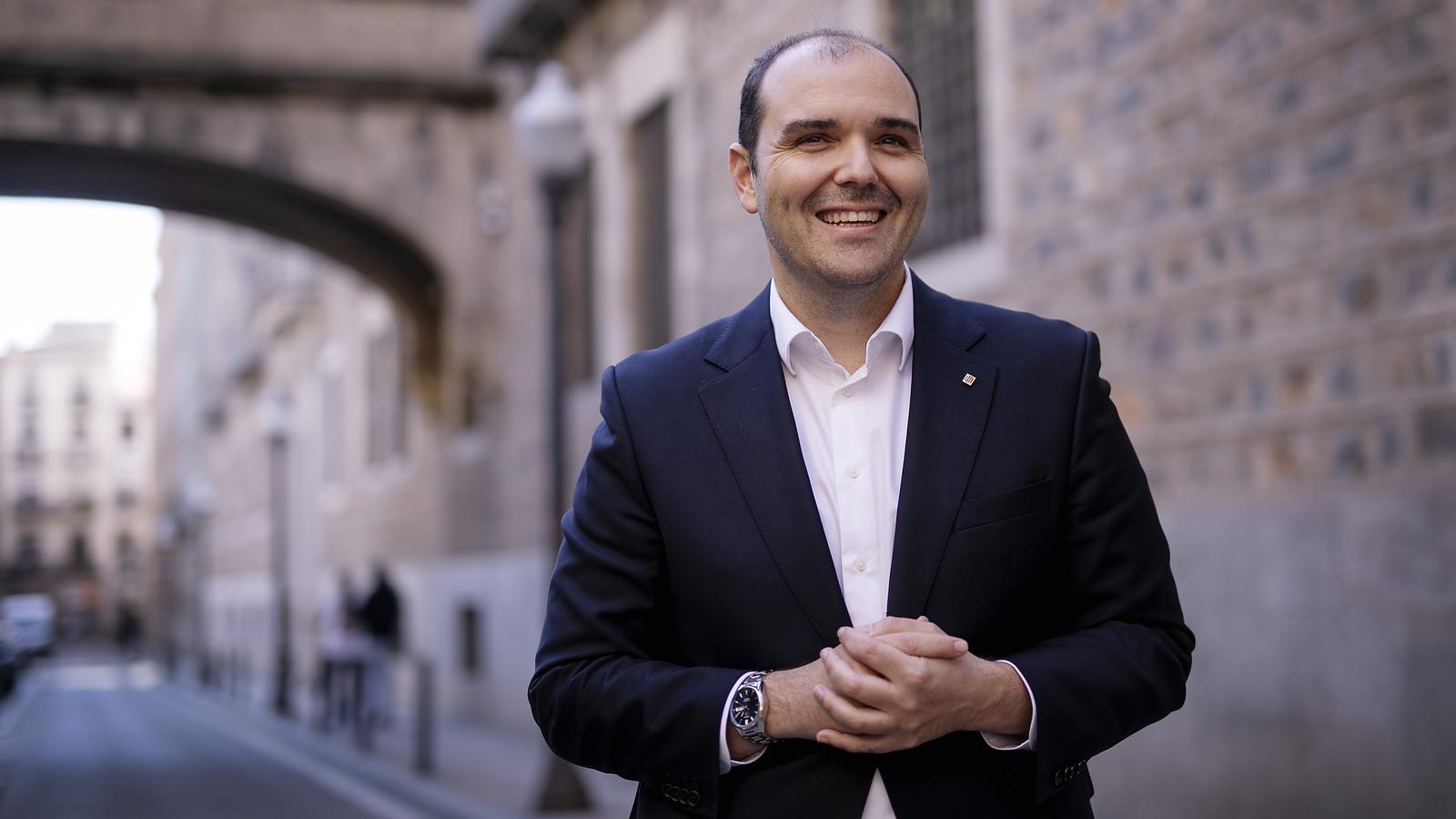
Albert Dalmau, Minister of the Presidency of the Government of Catalonia, is committed to the transformative challenge of technology in our country and defends innovation as a democratic tool. The Government is working, he says, for a simpler, closer, more proactive and personalized Administration. The minister opened the Graustic Day, the annual meeting point for the Catalan digital ecosystem.
What role should technology play in building a more competitive, innovative Catalonia with more opportunities for all citizens?
— Technology must be a lever for shared prosperity: more productivity, quality employment, more competitive companies, and better public services. Catalonia has a powerful digital ecosystem; now the challenge is for this transformative capacity to also reach SMEs and the entire territory. Innovation makes sense when it generates opportunities and improves people's lives. I always say that Catalonia has everything in its favor to do well. We have talent, knowledge, industrial capacity, a powerful entrepreneurial ecosystem, and a great tradition of innovation. What we must do is be capable of placing all this energy at the service of the strategic sectors that will shape our future, and technology is one of the main ones.
Technological transformation affects all public policies. How can the Government ensure that digitalization will contribute to improving services and people's lives, without becoming a new source of inequality or distance from the citizenry?
— Working to be a friendly Administration: simpler, closer, proactive, and personalized. It is not about moving paper bureaucracy to a screen, but about simplifying it and moving towards an Administration that anticipates: that informs people and businesses of the services that may be useful to them, facilitates their procedures, and accompanies them throughout the entire process. And it must be an Administration for everyone, combining digital, telephone, and in-person channels so that no one is left behind. In the last two years, we have already simplified 170 procedures, with very careful and meticulous work that we will continue to do. And this translates into very concrete things: making it easier to request dependency benefits, the guaranteed citizenship income, a non-contributory pension, or the large family title. We are talking about procedures that are often carried out at times when people especially need the Administration to make things easy for them.
Catalonia has outstanding capabilities in research, business, and digital talent. What must be done so that these capabilities translate into its own projects, contribute to strengthening the digital and technological sovereignty of Catalonia and Europe, and better prepare the Administration for the changes brought about by artificial intelligence and new technologies?
— We must better connect research, business, and the public sector to transform knowledge into our own capacity. European technological sovereignty does not mean autarky: it is having alternatives that allow us to decide on data, infrastructures, and critical technologies. This is also democratic quality. And we must leverage AI with guarantees: to increase the capabilities of public professionals and offer better services, but without replacing their judgment or responsibility.
What strengths does Catalonia have to consolidate itself as an international technological benchmark? What are the main challenges it still has to overcome?
— Catalonia has assets that are not easy to bring together in the same territory: leading universities and research centers, innovative companies and talent, the BSC and MareNostrum, the Alba Synchrotron, the Barcelona Cable Landing Station, and world-class events such as the MWC and the ISE. The bid for the European AI Gigafactory expresses this same ambition. And we have examples that demonstrate that this capacity translates into concrete milestones. This very week, i2CAT has managed to establish, for the first time in Europe, a mobile 5G connection through a regenerative satellite, the 6GStarLab. It is technology developed in Catalonia that opens up new possibilities for connectivity, including in emergency situations or in areas without terrestrial coverage. These milestones should be a source of national pride and show us the way: to better connect our capabilities, turn knowledge into innovation and business, and contribute to creating from Catalonia the technology that Europe needs.
How can we ensure that digital transformation and the benefits of innovation reach the entire territory and are not concentrated solely in large cities?
— Digital policy is also territorial policy. Connectivity is the foundation, but then it is necessary to bring talent, public services, economic activity, and innovation to it. That is why both the deployment of fiber optics, to make it reach 100% of the municipalities of Catalonia, and the Citizen Attention Offices (OAC), including mobile ones, or strategic projects outside Barcelona, such as the AI Gigafactory in Móra la Nova, in the Terres de l'Ebre, are important. In a cohesive country, the postal code cannot determine either the services or the opportunities that a person or a company can access. The government of President Salvador Illa is doing something that should not go unnoticed, and which I believe is a great message for the whole country: to go beyond wishes and promises and to bring, finally, strategic projects to the entire territory, thinking of the whole of Catalonia. This is our way to move the country forward and make it progress.
What is the Government's position regarding dual-use technologies, with both civil and defense applications? Could they also represent an opportunity for the Catalan industry?
— Europe is strengthening its strategic autonomy and Catalonia must be a part of it. We have capabilities in cybersecurity, AI, telecommunications, space, photonics, and advanced computing, with civil as well as security and defense applications. Dual-use technologies can open up opportunities for industrial diversification, always within the European framework and with responsibility and control. A solid technological and industrial base is also a guarantee of resilience and less dependence.
What value do entities like Graustic provide when it comes to connecting administrations, companies, and professionals in the sector and strengthening the Catalan technological ecosystem?
— Technological transformation cannot be achieved by anyone alone. It is necessary to connect administrations, companies, universities, research centers, and professionals, and Graustic contributes to creating these meeting spaces. The motto of the Day hits the nail on the head regarding the underlying question: not just what technology we can develop, but for what purpose. Innovation must end up generating economic progress and shared well-being; otherwise, it loses its meaning.
If I had to define the main technological priorities for Catalonia for the next ten years, what would they be and why?
— I would highlight five: talent; AI at the service of people and the economy; robust digital infrastructures throughout the territory; cybersecurity and technological autonomy; and a simpler, proactive and personalized Administration. They are different priorities with the same purpose: to use technology to build a more prosperous, cohesive, and secure Catalonia with a greater capacity to decide its future.
