SOM Care: social robots at the service of elderly people
Group Saltó, specialized in robotics and artificial intelligence, wins the Cohesion Award and the Jury's Special Award of the FAR Awards of the ARA newspaper with SOM Care, a platform that combats loneliness and improves the care of the elderly
-
CAT -
CAST
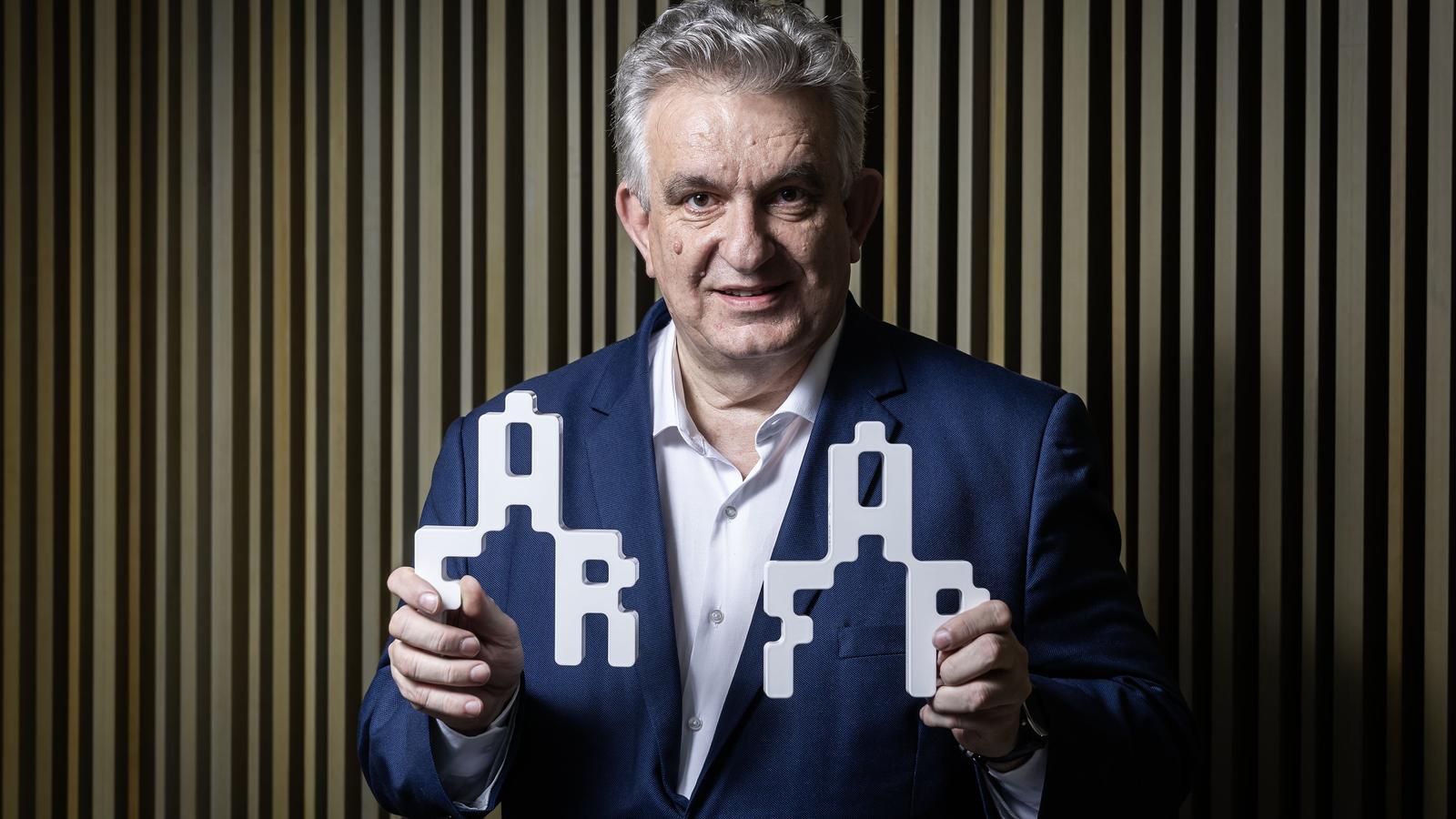
Can a robot replace human contact to combat loneliness? The question seems like science fiction, and even makes one fear the worst of endings, as in movies of the genre. Nothing could be further from the truth. Robotics, together with artificial intelligence, can become one more tool in the care of people, as is done by SOM Care, from Group Saltó, the great winner of the FAR Awards, which has received the distinction for best company in the Cohesion category and also the Jury's Special Award.
The double recognition highlights the human utility of technology and the commitment to innovation with a social purpose. SOM Care, specialized in the care of the elderly and dependent people, applies robotics and artificial intelligence to improve people's autonomy and complements the work of social and health professionals. It is part of SOM Solutions, the process optimization platform with which Group Saltó provides responses to other sectors such as logistics, agriculture, and renewable energies.
Group Saltó is a Catalan technology company based in Lleida that has made social robotics and artificial intelligence one of its main lines of innovation. Its founder, Jaume Saltó, linked to the technology sector for more than three decades, made the leap from electronic equipment maintenance to software development, artificial intelligence, and assistive robotics, transforming a technical services company into a technology group with more than 250 professionals and a presence in different Spanish cities.
The TEMI robot
SOM Care, specialized in the care of the elderly and dependent people, advocates for the application of robotics and artificial intelligence to improve people's autonomy. It is an intelligent care platform that combines social robotics, AI, and remote monitoring to support the elderly or those in situations of dependency.
Unlike conventional telecare, which is mainly focused on triggering alarms when there is an emergency, SOM Care also seeks to incorporate a preventive and daily accompaniment dimension in the form of a robot. TEMI, one of the robotic products and solutions promoted by the company for assistance at home and in social-health environments, is a mobile robot with a screen, camera, and interaction capabilities, and it is designed to live with the person, facilitate communication, offer companionship, and provide support in certain daily routines.
This social robot, together with the MAIA tabletop device, are two of the inventions on which Group Saltó is currently focusing its advances. Unlike TEMI, MAIA is the compact and portable alternative, without the mobility of a robot. Both integrate SOM Care functions and allow for the connection of health devices and the sharing of information with professionals.
In fact, SOM Care is not just a robot, but a technological ecosystem that can work with different devices. It facilitates daily interaction with the user and contributes to reducing isolation; it helps to follow routines for medication, appointments, and other scheduled activities; it collects information on daily habits, activity, and certain health data; it alerts professionals and caregivers to possible anomalies or risk situations; it facilitates communication with family members and social-health professionals, and adapts monitoring to each person's needs.
The platform can integrate measurement devices such as blood pressure monitors, thermometers, scales, and pulse oximeters. This data can help professionals to carry out remote monitoring and decide when it is appropriate to intervene.

A change of model
Among the projects carried out, the deployment of 600 robots in residences and private homes in Barcelona stands out, in a pilot test with the Barcelona City Council. In some Suara Cooperatives residences, social robots are already being used as a complementary tool for companionship and care. In Golmés, in Pla d'Urgell, five elderly people have participated in a pilot test with TEMI robots, in collaboration with IRBLleida, to study their impact on autonomy and support for caregivers, and in La Seu d'Urgell, remote monitoring of medication for the elderly is carried out from primary care, in a project promoted by IDAPA and i2CAT.
Each and every one of these initiatives speaks to the great potential of this social technology, also in the field of public investment policies in such a complex issue as the aging of the population and the new challenges it poses.
SOM Care proposes a substantial change in the model of care for the elderly and dependent, moving from a reactive system, which acts when an emergency occurs, to a preventive model capable of identifying risk signals and anticipating possible incidents. This transformation, which combines technology, prevention, and personal autonomy, does not aim to replace human contact, but rather to complement and reinforce it and, at the same time, alleviate both the human and economic burden.
A new paradigm
The possibility of reducing avoidable emergencies and hospitalizations, optimizing resources, and improving the quality of care opens up new perspectives in a context of an aging population and growing pressure on the system. The model also focuses on enhancing home care, facilitating the daily tasks of the elderly, and remotely monitoring activities of daily living (ADLs) to promote their autonomy and safety.
For decades, robot stories have fueled our collective imagination, but what once seemed reserved for science fiction is now a reality. Drawing a literary parallel, Group Saltó's social robots evoke the universe of Isaac Asimov and his vision of robotics at the service of people, conceived to protect them and look after their well-being.
With SOM Care, this idea takes shape in a technology that goes beyond innovation to focus on its social utility: accompanying the elderly, fostering their autonomy, reinforcing safety, and helping to combat unwanted loneliness. A demonstration of how artificial intelligence and robotics can respond to some of the great social challenges of our time, with a philosophy that recalls the famous laws of robotics that Asimov popularized in I, Robot: the new paradigm of putting technology at the service of people.
-
Sector
Technology, social robotics and artificial intelligence applied to social and health care.
-
Headquarters
Lleida, Catalonia.
-
Who is behind it
Group Saltó, a technology company founded in 1994 and led by Jaume Saltó, founder and CEO.
-
Purpose
To improve the quality of life of the elderly and dependent people through social robotics and artificial intelligence, promoting their autonomy, combating unwanted loneliness and promoting a more preventive, personalized and efficient care model.
-
FAR Award
Cohesion and Special Jury Award.
