300 new places for firefighters
The Generalitat opens a new call until September 29 and reserves 40% of the places for women. The Firefighters 2030 Plan plans to reach a staff of 4,000 firefighters to reinforce the response capacity in the face of the increase and complexity of emergencies
-
CAT -
CAST
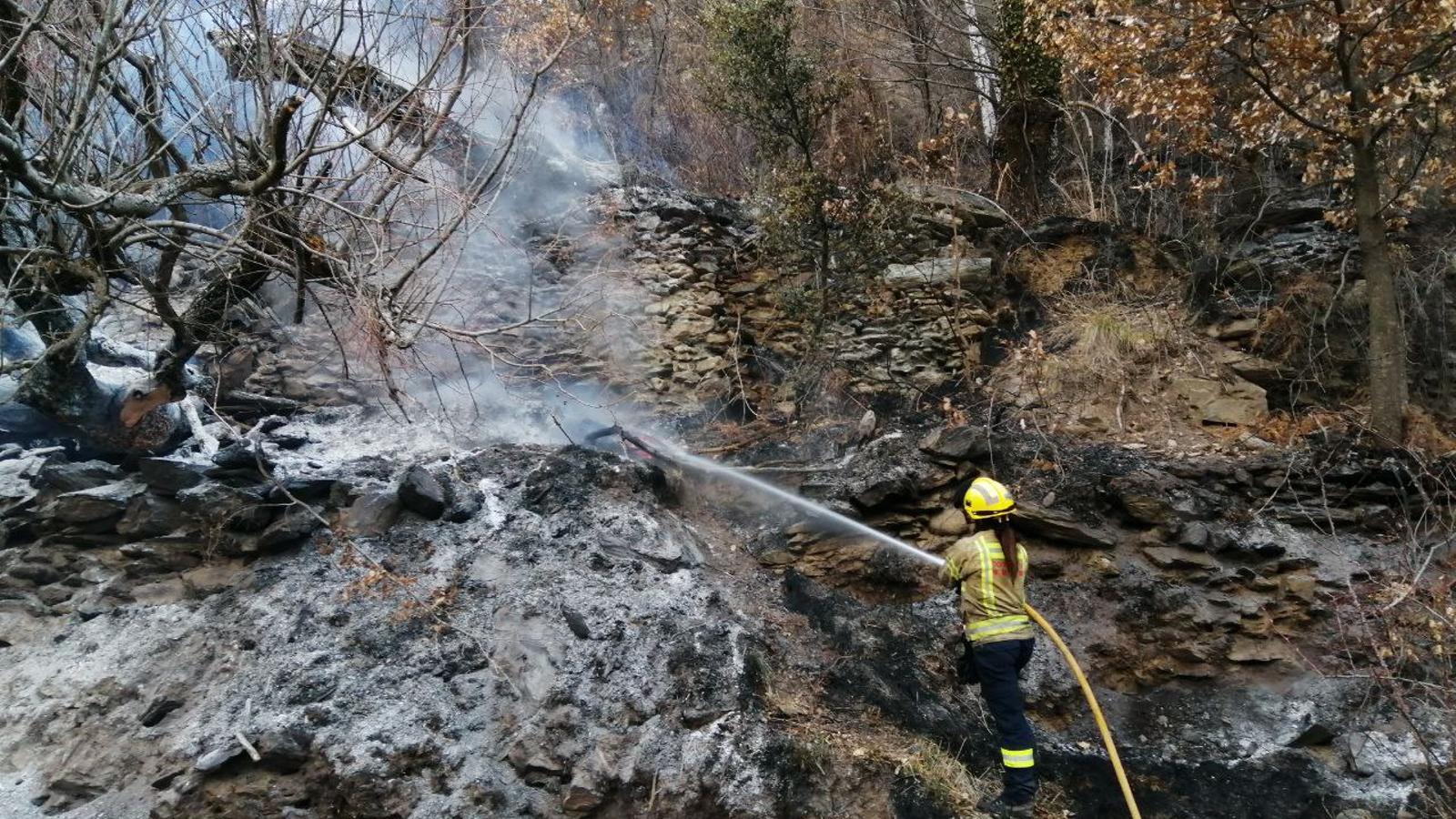
They say that being a firefighter is more than just a job. But what does a firefighter do? The first thing that comes to mind is that they are in charge of extinguishing fires. Unfortunately, every summer, the image is recurring. Men and women, under thermal clothing, full-face helmets, reinforced leather boots, work gloves, and safety belts, working tirelessly, are everywhere the fire burns our forests, but their responsibilities go further.
Firefighters are an elite corps that must face situations of maximum danger. From putting out a fire in the middle of the forest or in a building in the city, to rescue operations in accidents and natural disasters. Fires in homes, industries, vegetation, collapses, rescues in very diverse areas such as mountains, water, homes, railway infrastructure, rescue of people trapped in traffic accidents, floods, etc., are part of their day-to-day life. And, most importantly, they also work on operational prevention, both to minimize the risk of accidents and to be better prepared in case one occurs.

Being part of the Fire Department implies having a firm commitment to society. It is being part of a collective project at the service of the citizenry, sharing a way of working based on trust, cooperation, and teamwork, to respond to increasingly diverse and complex emergencies, which is now expanding with new access positions to the Corps.
A more inclusive and committed Corps
The Generalitat de Catalunya, through its Department of Interior and Public Security, announces a new call for applications with 300 new positions to continue building security teams based on a commitment to a safer, more diverse, and inclusive society, and reserves 40% of the positions for women to ensure the diversity of this emergency corps and make it, at the same time, more representative and prepared to face all these tasks. Applications can be submitted through Tràmits Gencat until September 29th, and the call is part of the objectives of the Firefighters Plan 2030, which aims to reach a staff of 4,000 firefighters to strengthen the response capacity in the face of the increase and complexity of emergencies.
With the goal of continuing to advance in the feminization of the Corps, call 81/26 maintains the 40% reservation of positions for women, a measure applied in the last three calls. In this period, the female presence in the Generalitat Firefighters Corps has gone from 3% to 8.9% of the total staff.
Four phases of the selection process
The call consists of four phases: opposition, competition, selective course, and internships at the Institute of Public Security of Catalonia (ISPC). In addition, applicants who do not accredit the required knowledge of Catalan and Spanish must pass a language test.
The opposition phase allows obtaining a maximum of 40 points and consists of five tests. The first is a knowledge test consisting of 70 multiple-choice questions on the reference syllabus. Compared to the previous call, the number of questions is reduced from 95 to 70 and the maximum score goes from 10 to 8 points.

The second test is physical and presents a new structure, more operational and focused on the professional profile of firefighters. It includes three exercises that simulate interventions in vegetation fires, structural fires, and water rescues, with a maximum score of 10 points.
The third is the trades test, which increases the maximum score from 10 to 12 points. It also increases the number of people who will be able to pass it, from 520 to 600.
The fourth test corresponds to the psychological evaluation, it has a maximum score of 10 points and, as a novelty, it becomes eliminatory. Finally, the fifth is the medical test, in which all people who have passed the fourth test will be summoned and it will be qualified as fit or unfit.
Contest, training and internships
The competition phase allows obtaining a maximum of 20 points. Among the new features, the assessment of academic qualifications corresponding to intermediate-level vocational training cycles determined in the call's bases is incorporated, in addition to work experience in different categories related to the job position.
People who pass the opposition and competition phases must take, depending on the score obtained, a training course at the Institute of Public Security of Catalonia. Once passed, they must complete a maximum of 700 hours of effective service practice at a fire station or at facilities of the Directorate-General for Fire Prevention, Extinction and Rescue before receiving the official appointment.
The selection process is governed by the principles of equality, merit, and capacity for access to the public service. All selected personnel, regardless of gender, must pass all phases and demonstrate the aptitudes and skills necessary to carry out the functions of the job position.
