These are the municipalities in the Barcelona demarcation that most notice the negative effects of the heat
The Barcelona Urban Research Institute demands urgent action to mitigate the impact of high temperatures on health
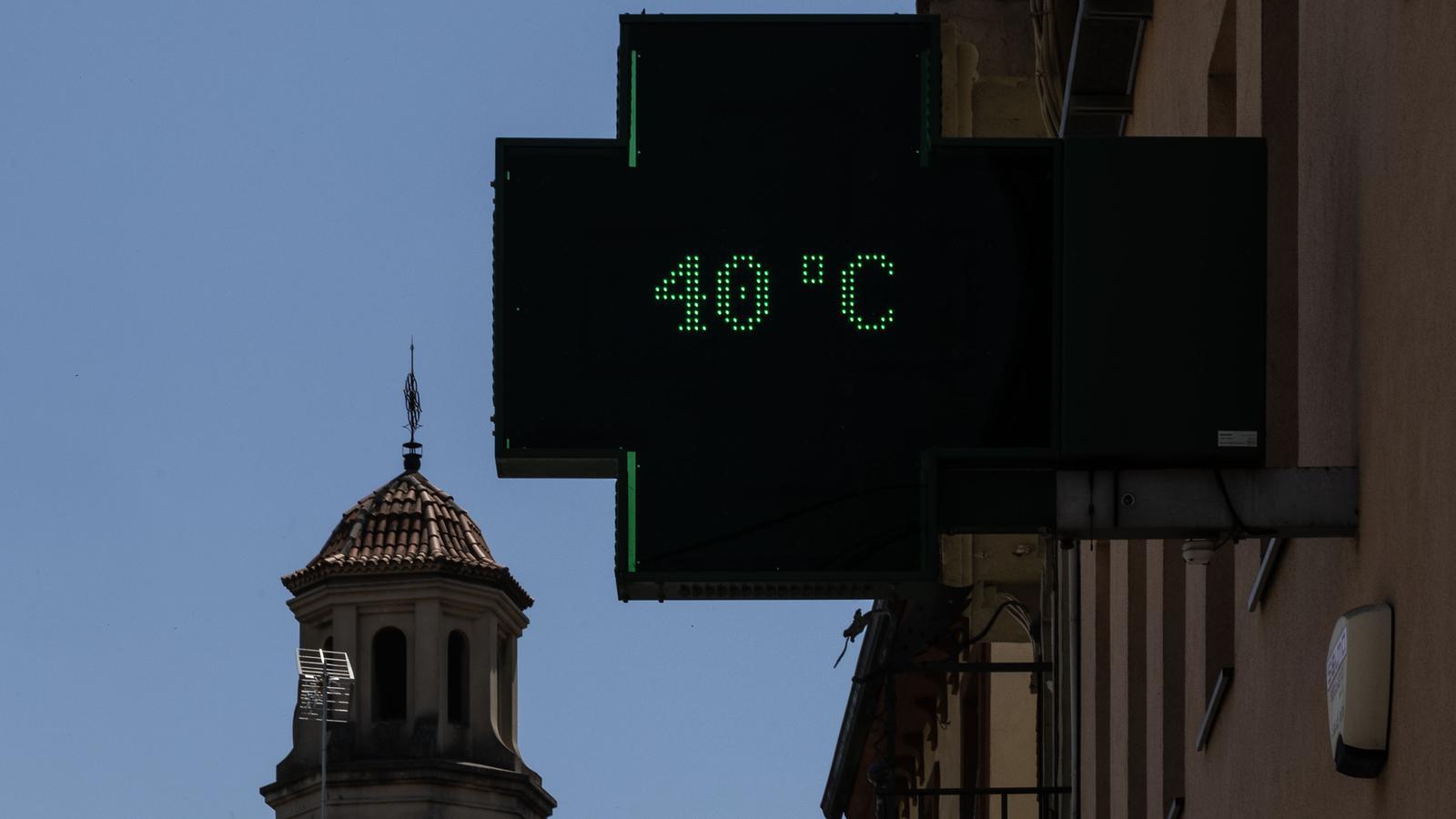

BarcelonaThe low income level, the high concentration of poorly maintained houses, and the extreme temperature of these forty municipalities make them the towns and cities in the Barcelona region that suffer most from the effects of heat, especially now that temperatures are so high. This is a combination of social determinants that directly impacts the health of people living in these localities. For this reason, the Barcelona Urban Research Institute (IDRA) calls for priority action in these 39 municipalities and proposes as an emergency measure the distribution of air conditioners among the most vulnerable. The list includes medium-sized towns and cities such as Manresa, Cardona, and Artés, where the state of housing is particularly worrying and temperatures soar during the day, to populations such as l'Hospitalet de Llobregat, Santa Coloma, Badalona, Cornellà, and Sant Boi, where it doesn't cool down at night and the apartments are old.
"Dying of heat is not an accident", said the director of the ecology and urbanism area of IDRA, Rubén Martínez, during the presentation of the report Who can protect themselves from the heat? According to the study's findings, these municipalities are often unable to provide an adequate response to heatwaves – such as the one Catalonia is currently experiencing – due to a lack of green spaces or climate refuges like swimming pools or air conditioning. Therefore, its proponents call for guaranteed access to cooling for the most vulnerable, such as elderly people living alone, regardless of their income, as well as for healthcare centers, residences, and schools. IDRA has also suggested limiting cooling in shopping centers and tourist activities.
According to the study's conclusions, income level determines who can protect themselves from the heat. For example, access to cooling systems such as air conditioning ranges from 38.9% among families with an income of less than €1,000/month to 71.2% among those with an income of more than €3,000/month. This means that two out of every three air conditioners in the province of Barcelona are in wealthy neighborhoods, and people with fewer resources who do have them have to use them "much more rationally" to avoid expenses, stated Martínez. Among the 16 most populous municipalities in Barcelona, the percentage difference between the population with air conditioning and those without is up to 50 points (87% versus 38%). The authors argued that air conditioning should not be seen as a luxury. "Treating air conditioning with prejudice, as if it were a dispensable whim, is equivalent to leaving families who cannot afford it today unprotected," they state in the report.
Interior and coast
One of the aspects the study focuses on is how heat impacts these municipalities, as not all suffer its effects at the same time of day or in the same way. This is because heat does not manifest equally everywhere: while the coast accumulates tropical nights, the interior suffers days of extreme heat. For example, two out of every three summer nights in L'Hospitalet de Llobregat do not drop below 20 °C. In contrast, in Manresa, two out of every three summer days the thermometer exceeds 35°C throughout the day. To these differences must also be added income inequalities, as solar panels, swimming pools, and green areas are concentrated where there is more income and less population density.
For all these reasons, they call for changing the energy model to reverse the effects of heat on people's health in a sustainable way. They also propose creating a state law for protection against extreme heat, a Provincial Climate Fund financed mainly through taxation on the most polluting sectors, such as fossil fuel companies, or a public system of heat and climate inequality indicators to better direct public policies.
