Italy imposes border controls with Spain and encourages EU allies to do the same
Meloni's measure is well received in some capitals and divides the EU, while Sánchez calls for "solidarity and empathy"

-
CAT -
CAST
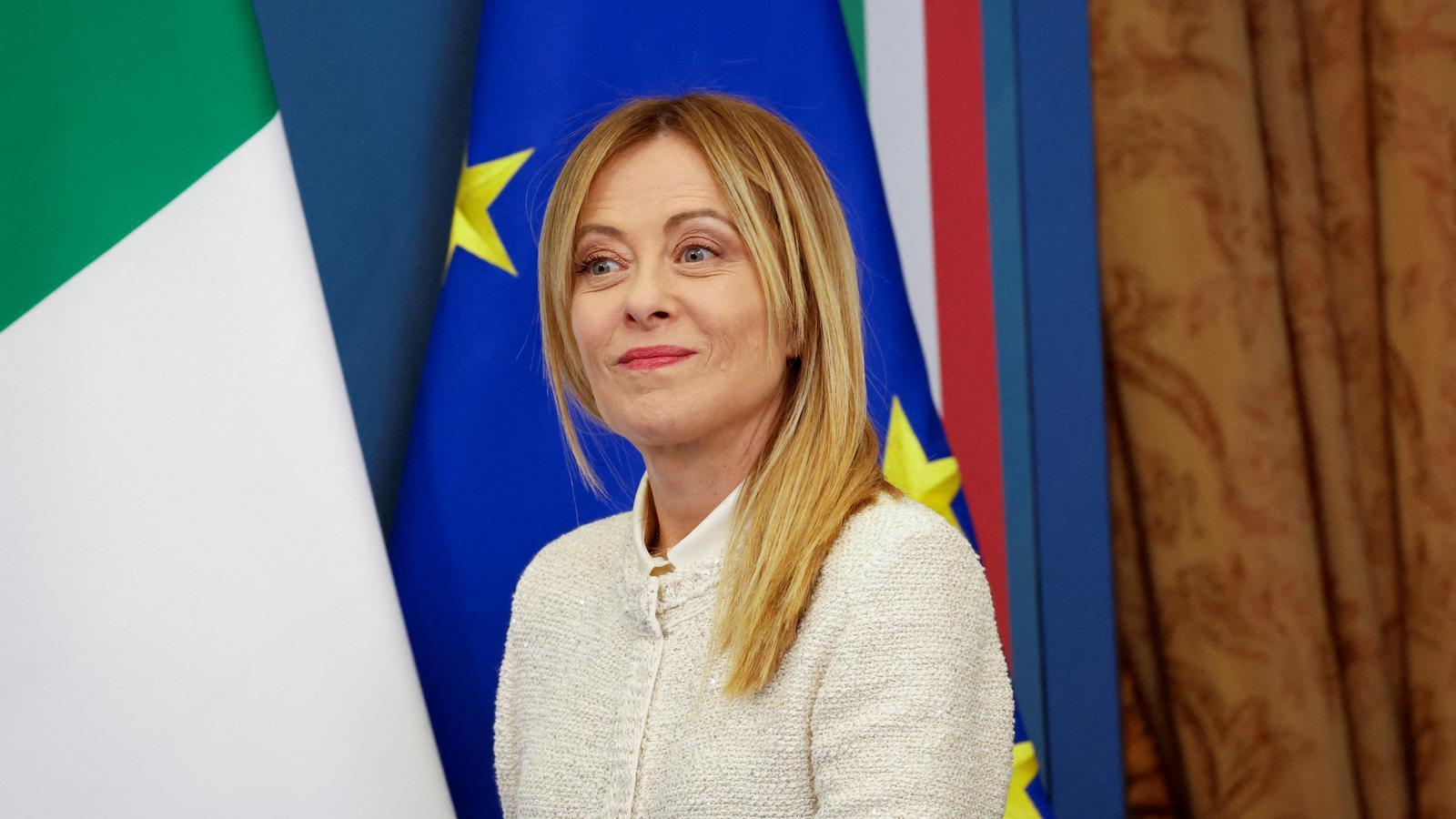
BarcelonaThe Italian government of Giorgia Meloni has ordered the reintroduction of controls at maritime and air borders with Spain following the arrival in Ceuta of thousands of migrants from Morocco. By order of the Ministry of the Interior, Italy will also increase land controls at the border with France, as reported by the Italian news agency ANSA. Italian Foreign Minister Antonio Tajani has justified the measure to "protect the security" of citizens and defend European borders. "We must work together to prevent uncontrolled flows of migrants from entering the EU territory," he wrote on X, linking immigration with terrorism. However, the Italian government has clarified that the controls will be random and will only affect citizens who do not belong to the EU.
The decision comes after Meloni's proposal to exclude Spain from the Schengen agreement – which allows free movement of people – was well received in some capitals and has divided the European Union. The leader proposed suspending Spain from the free movement treaty as one of the "extraordinary measures" to combat illegal immigration in EU territory. "Uncontrolled illegal immigration represents a real threat to the security of European borders," she wrote on Thursday evening on her social networks, warning that her executive would not stand "idly by." The Foreign Minister went a step further and attributed the migratory pressure to the extraordinary regularization process promoted by La Moncloa. "It is profoundly erroneous and encourages human trafficking," he argued.
The words of the Italian executive generated unease in the Spanish government. The Minister of Foreign Affairs, José Manuel Albares, has summoned the Italian ambassador in Madrid, Giuseppe Buccino Grimaldi, to reprimand him. "This message is inappropriate for the Foreign Minister of a partner and friendly country from which we expect European solidarity and not partisan demagoguery," Albares wrote on X.
However, the message has resonated in Europe, where several leaders have joined Meloni's call. Finland, governed by a coalition with the far-right, was the first to support it, justifying it by arguing that Spain has "completely failed in border protection." "This cannot continue. All European countries must support Meloni's proposal. Countries that do not fulfill their obligation to protect the external border cannot be members of Schengen," its Interior Minister, Mari Rantanen, wrote on X. But Prime Minister Petteri Orpo has qualified the executive's stance, stating that "Spain is not alone" in the EU.
Similarly, Denmark and the Czech Republic have advocated for excluding Spain from the free movement area. Danish Prime Minister, Mette Frederiksen, who had already clashed with Sánchez over migrant regularization, has urged the EU to study "all possibilities," including "the suspension of [Spain's] cooperation with Schengen." Prime Minister Andrej Babis attributed the situation in Ceuta to an "scandalous" immigration policy by the Sánchez government.
"It is no coincidence that the proponents are Finland or Italy, governed by far-right coalitions – Rafel Grassa, professor emeritus of international relations at the UAB, assures ARA. It is an attempt by the far-right to settle scores with Sánchez." For the expert, it is a purely rhetorical threat that serves them to link the Ceuta crisis to the extraordinary regularization.
France strengthens the border
For its part, France has opted to take measures while maintaining a more moderate rhetoric. French President Emmanuel Macron ordered the Ministry of the Interior on Thursday evening to reinforce border controls with Spain to ensure close monitoring of the situation. French police admit to having deployed drones, planes, and 170 officers as an "anticipatory" measure because at present there is no migratory impact in Europe. Furthermore, Paris has activated the Rapid Intervention Border Force to carry out exhaustive checks, as explained by the Minister of the Interior, Laurent Nuñez. In turn, states like the Netherlands and Germany have shown themselves to be more conciliatory with Spain, but have stressed that "whatever is necessary" must be done to protect the borders of the European Union.
Even Brussels, which outwardly continues to stand with Spain, has hardened its tone with Pedro Sánchez. In a social media message, the President of the European Commission showed a tough stance and described the images coming from Ceuta as "unacceptable." In a forceful message, Ursula von der Leyen urged Moncloa to return immigrants with speed "as our rules allow." It is worth noting that on Thursday Brussels sent financial, technical, and operational support through the Frontex agency and sent a message of "solidarity" with Spain.
The Schengen area is a zone of free movement of people regulated by a community treaty. It allows signatory states to function as a single territory, and the control of external borders is transferred to the peripheral states. Legally, there is no expulsion mechanism that permanently excludes a member state, explains Grassa, who insists that "it is a purely rhetorical threat."
However, countries can unilaterally reintroduce passport and security checks with one or all bloc partners, as Italy has done. On the other hand, European regulations provide for an emergency mechanism to temporarily isolate a country if it is considered to pose a risk to common security. Brussels used this threat during the 2015 refugee crisis in Greece. The law allows that, if "serious deficiencies" are detected at an external border, states can establish controls there for up to two years.
Migratory routes
Meloni's offensive arrives at a key moment for the continent's migration policy. The EU approved the controversial migration reform this June, which allows for more border detentions and agreements with third countries. While the Italian prime minister has managed to impose her agenda and establish herself as an undisputed voice on migration matters, the reality is that Italy still tops the list of irregular migrant entries. This is how Sánchez recalled it in a message on X, in which he appealed for "solidarity and empathy".
During the first six months of 2026 and always according to Frontex data, up to 14,340 irregular entries have been detected in Italian territory, which represents 52% less than the same period of the previous year. On the Canary Islands route, entries have fallen by 71%, with only 3,175 migrants attempting to enter irregularly via this route. On the other hand, on the Western Mediterranean route (which also leads to Spain), 7,860 entries have been detected, 17% more than in 2025.
