"We are slaves of this house, but we fell in love with it"
Pere and Coia live in a Modernist house in Reus from the end of the 19th century

-
CAT -
CAST
ReusThe real estate agent, who was a friend of theirs, had already warned them: "The problem with this house is that if you go to see it, you'll fall in love with it." And so it was. They tried to calculate how much the renovation of this gem might cost, but it was totally impossible to make even a minimal estimate. And, since you can't fight love, they bought it.
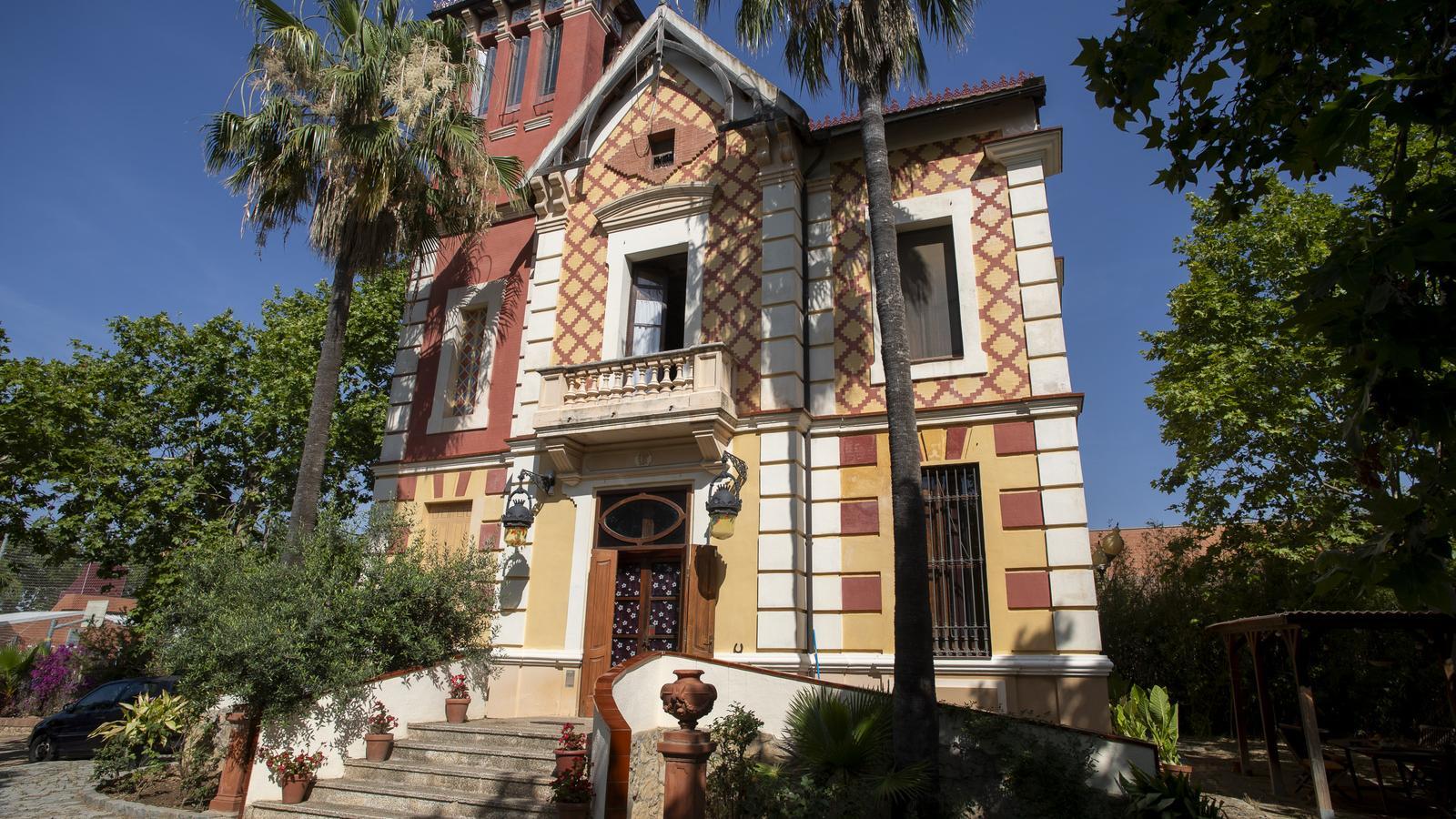
El Mas del Gasull is a modernist house from the late 19th century by architect Pere Caselles and is located in Reus (Baix Camp), where the city is beginning to replace asphalt with dirt roads. It consists of a ground floor, a first floor, and an attic, as well as a beautiful garden. Each floor is 150 square meters and, including the garden, the property occupies 3,000 square meters. It also used to have fields. It belonged to Fèlix Gasull i Roig, a Reus oil merchant, although in recent years the person who lived there or, rather, who stayed there during the summer seasons was Teresa Gasull, his unmarried sister.
When Teresa died in Barcelona, the house was left to the farmhand and his wife, who was a teacher. "At that time, they used it as a warehouse," explains the current owner, Pere Gomis, almost indignant just thinking about the degradation of functions this implies. The second life of Mas del Gasull was not very sensitive to the house's needs, but the third life was even harsher.
In the seventies, Catalonia was experiencing a resurgence of active schools, and the owner of the house ceded the property so that one could be founded. The educational project had given rise to Escola Montsant, but the community split, and the school that moved to Mas del Gasull thanks to the generosity of this teacher was the Mowgli school. They turned the chapel into a sandbox for the children and, among other things, covered the original paintings when they painted the house walls white. That delicate and peaceful work of art was for years a school full of children. When the public administration absorbed the school, it built it next door, and the property returned to the farmhand and his wife, who finally sold it in 1996 to Pere Gomis and his wife, Coia Domènech.
Life Project
"My wife didn't see it so clearly... but this has been our life project," explains Pere. With the passing of the years, he has no doubt: "We are slaves to this house, but we fell in love with it."
During the first ten years, they didn't stop renovating, much of it structural: the fence, the electrical installation, the roof... but they also recovered the paintings and the chapel, replanted the trees that had died, looked for grilles that wouldn't break the harmony... "We are susceptible to modernism and we saw that we could recover this house," explains Pere. Coia is a psychologist and he is a doctor, but they both love architecture. In fact, as he recalls, he hesitated a lot between choosing one career over the other. "I chose medicine because a friend told me: 'If you become a doctor, you can do something in architecture, but if you become an architect, you will never be able to operate on anyone.'"
With a sensitivity for modernism, certain knowledge of architecture and, obviously, with a good part of their savings, they set out to "leave the house as it was initially." For example: on top of the roof there was a small sample of what had been an old ridge tile. They took it, brought it to Hipòlit Montseny's workshop, where the descendants of those who supplied ceramic pieces for most of the modernist and noucentist buildings in Reus still worked, and had it restored, to cover the entire roof of the house again.
The iron door that separates this modernist gem from the street is the one that was at the old gas factory in Reus. "I walked past and saw that they had removed it and I was able to buy it," Pere explains proudly. The glass in the turret was also recovered from a sample that remained. "A glassmaker from Barcelona did it, he spent three months on it," he recalls.
The Masia is included in the Inventory of Architectural Heritage of Catalonia and this obliges the owners to conserve its unique elements, but for Pere and Coia, this has not been a problem because they are the first to be interested in it being so. They have been surprised by the number of bureaucratic problems they have encountered and the lack of public subsidies.
The whole family has lived in the house: Pere, Coia and their five children, but now only three remain and they all intend to leave. "Everyone knows how much it costs to maintain this house. It's a lot of sacrifice," admits Pere. And he reflects: "Maybe we would have bought a small apartment in Barcelona or we would have traveled more... but I would do it again." The conclusion: "This house was lucky to find us and it has thanked us."
