"There is accumulated discontent and anger": teachers of minors who were at the riots speak out
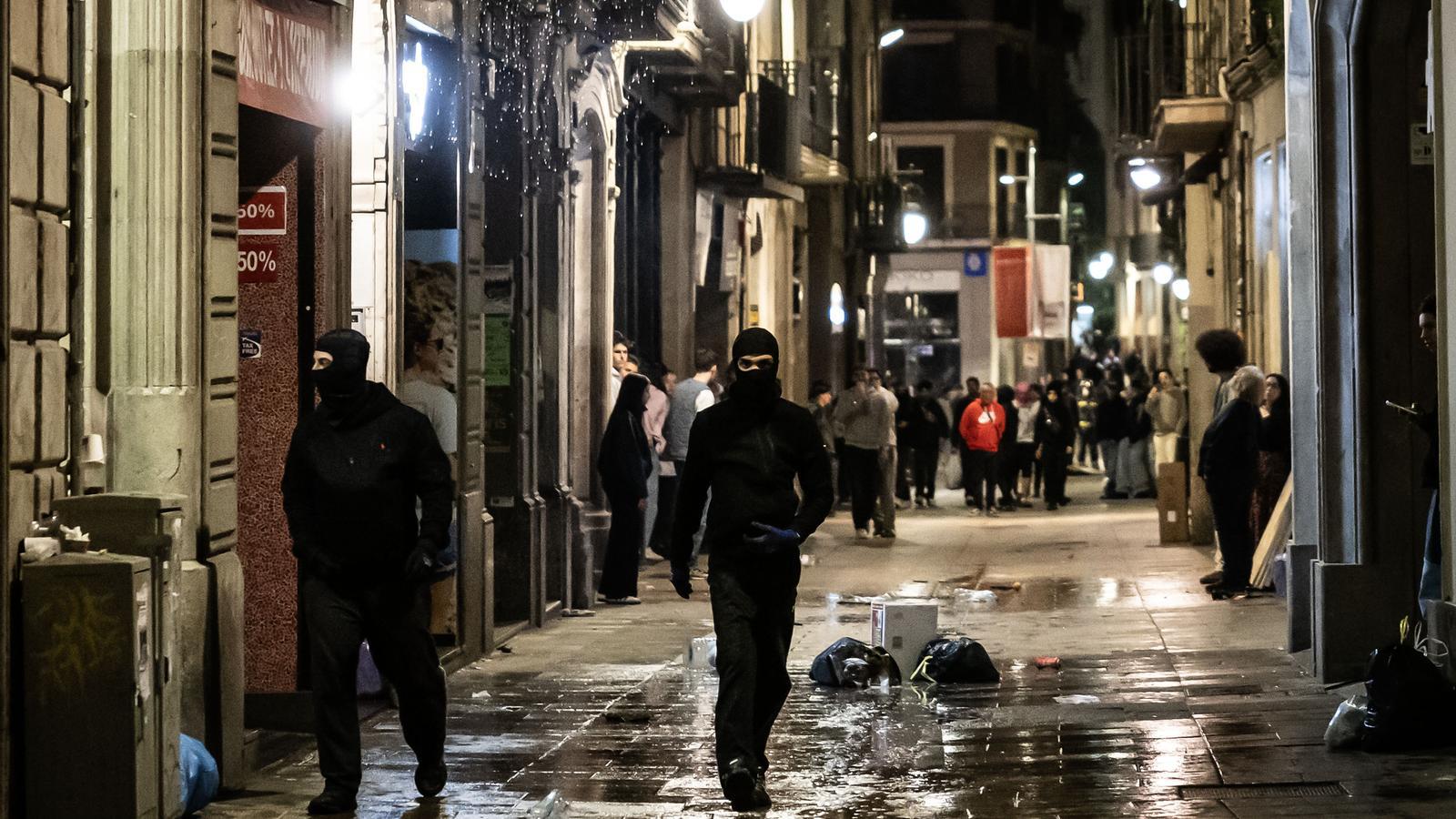
The teaching staff faces the first school days after the anonymous protest that gathered half a thousand young people around Plaça Catalunya
-
CAT -
CAST
GranollersEster –a fictitious name to maintain anonymity– found out on Monday in the teachers' lounge that two of her students, minors, had been identified in Saturday's riots in Barcelona. She is a teacher at a high school in the surroundings of Granollers, the area where the Mossos have traced the origin of the anonymous call, and like her, many teachers have not been able to nor wanted to avoid the topic of conversation of the week. They have encountered students who criticize the damage caused and others who joke about it. And also young people who proudly claim their authorship or others who went to Barcelona for "FOMO" –fear of missing out, says the teacher quoting the young people–, but who did not participate in it. The situation has generated great questions for teachers, who wonder what their role should be.
"There has been tension in the classrooms for some time. There is a breeding ground that leads to situations like this," asserts Ester. She is referring to the "accumulated discontent and rage" due to the crisis in which young people find themselves immersed, in matters such as housing, disenchantment with their studies, or job prospects. Faced with this scenario, the students "see that breaking things is the only way to make themselves heard," she says. In total, more than thirty businesses were damaged, and the number of detainees so far is 132, of whom 89 are minors, according to the public prosecutor's office.
Several teachers who spoke with ARA explain that the protests in France have been a recurring topic of conversation in recent weeks in high school classrooms. Ester believes that this gave them a "burst of enthusiasm," as in other parts of Europe, but that in Barcelona the young people ran into a "trap": "They thought they would find a full-fledged political protest, they got carried away by what they had seen on TikTok," she asserts.
In this sense, teachers also wonder where this call came from. The teacher from Granollers suspects the "Machiavellian" purpose of whoever made this call, whom the Mossos are still looking for. She says it has been very "opportune" that it happened precisely at a time when student assemblies are being formed ahead of the general strike on November 11. She also doubts that it was really a ‘Blocus’ in the Catalan style, taking the expression from the French to block educational centers. "An attempt is being made to burst and criminalize the student movement," states the teacher, who believes that the youth's frustration should be channeled into "youth organizations or unions".
Unlike Ester, there are teachers who already noticed that something was brewing last week. They heard informal conversations among the young people, in the hallways or in the playground, but they did not give it much importance, acknowledges Jonathan, a Vocational Training teacher at another center in a metropolitan municipality. He works with students born "here and there," he says, and assures that the protest was "transversal, regardless of origin or culture": "Young people feel abandoned by the system. Even if they make an effort, nothing ensures them a future." And he concludes that "they want to burn it all down to start over again."
Fear of breaking the ice
The call was spread anonymously through applications like TikTok and also in WhatsApp or Telegram broadcast channels that students could join via open links. As of now, the closure of two Telegram groups has already been forced. Marta, a teacher at another center in the Vallès Oriental, is aware that her students are in these messaging groups. She acknowledges that the teaching staff has divided opinions on how this topic should be addressed in the classrooms. She even adds that some teachers are "afraid" to open that can of worms – too complex and full of questions – and say there is not enough time to address it in depth.
Inside this hard-to-crack nut lies the use of social networks. "Social networks spread information like wildfire," says Jonathan, concerned about the growing dangers of the Internet: "I have students who spend between 8 and 10 hours in front of the screen," he asserts. He also adds that AI poisons the situation even further. It not only causes information to spread like an "oil slick," but now, this information is less reliable than ever. "It is hard for us adults to discern, but young people do not verify," the teacher laments.
