The Minister of Health on Madrid: "Manipulating waiting lists by deceiving patients is not new"
Managers of the Ramón y Cajal unilaterally modified the priority of about sixty people pending an operation, according to 'El País'
-
CAT -
CAST
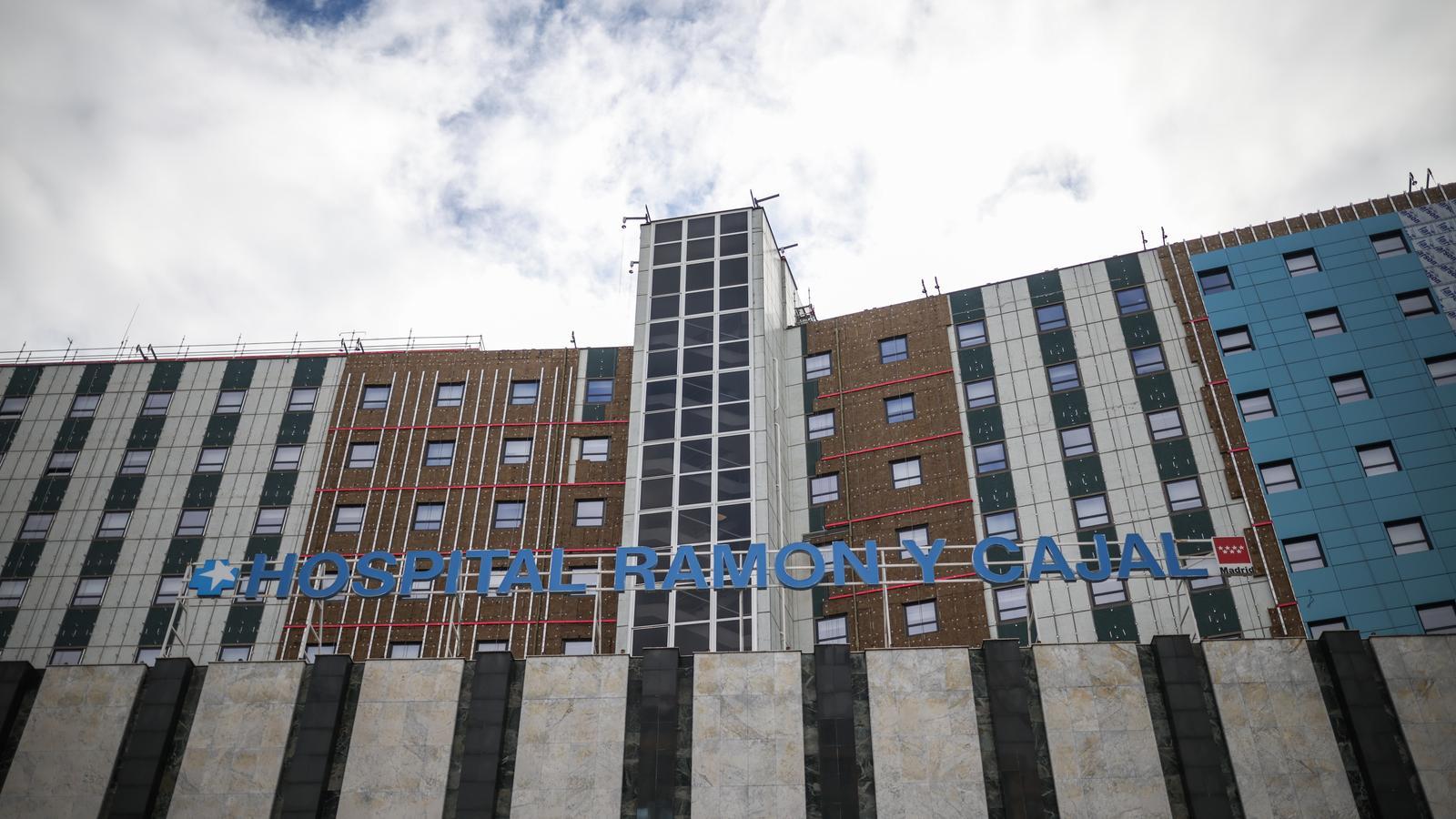
BarcelonaA new scandal in the Madrid healthcare system, stifled by years of cuts and privatizations, has once again exposed the shortcomings of the public system in the State capital. Managers of one of the city's major hospitals, the Ramón y Cajal, ordered last year to downgrade the severity of some sixty patients awaiting surgery to improve the status of waiting lists, according to internal documents to which El País has had access . According to the information, two heads of the center made changes to the priority of the operations without assessing the affected patients or consulting the surgeons who had determined the severity of the cases.
Always according to this newspaper, which cites an email sent by one of the two managers to a doctor outraged by the events, the reason for the modifications was to comply with the productivity objectives required by the Community's Ministry of Health, governed by Isabel Díaz Ayuso's PP. The hospital maintains that it has not committed any irregularity, and sources from the ministry consulted by the Efe agency deny interference in the waiting lists. In turn, the Minister of Health, Mónica García, has accused Ayuso's government of “manipulating” the lists and “deceiving surgeons and patients”. “One does not play with the health of patients”, she stressed on X, and added that the events reported this Tuesday are not new and that, for the moment, they are not “penalized”.
All this, according to El País, took place between February 28 and March 14 of last year, when 57 patients waiting for orthopedic and trauma surgeries at the Ramón y Cajal were moved from the priority category –which requires them to be operated on within 90 days– to the normal one, which extends the margin for the operation to 180 days. A fact that, furthermore, affects the productivity bonuses of the hospital's managers. The documents to which the news refers would demonstrate that behind these changes were the two cited managers, who have not wanted to make statements.
The same newspaper explains that among the affected patients there were people diagnosed with spinal anomalies, carpal tunnel syndrome, or dislocations. Also, at least one three-year-old child, whose parents were not notified of the change in priority. Several surgeons complained, but they clashed with those responsible for the changes. At least one of the doctors who protested was reprimanded with the opening of a disciplinary file.
The Minister of Health, Mónica García, has asked the Community of Madrid to clarify "the apparent alteration of waiting list data" at the hospital and has demanded guarantees regarding the control and veracity of waiting lists. She has done so in a letter sent to the Madrid Councilor for Health, Fátima Matute, in which she urges for information about what has happened.
Unify criteria
García recalled that the Spanish government presented new criteria for transparency and traceability of waiting lists in July, which were not approved by the autonomous communities. “We hope they are approved now,” she stated in her message on X. These criteria were intended to unify how autonomous communities collect and communicate health data, as they are responsible for health competencies and until now each one has done it differently. This scenario causes, according to sources from the Ministry of Health, not all communities to share data with the same level of exhaustiveness.
The Spanish government's proposal was to cover those areas that do not have a homogeneous information system on a national scale, such as primary care, mental health, and therapeutic tests. The Ministry of Health argues that it is “crucial” to have comparable data on access times to outpatient clinics to favor the early resolution of citizens' health problems and also to incorporate waiting times for mental health consultations in the face of the “sustained increase in demand.” Regarding therapeutic tests, the ministry led by García argued that it is necessary to establish criteria similar to those that already exist for surgeries and diagnostic tests.
“The goal is not only to offer figures, but also to provide advanced analytical tools that allow for better planning and evaluation of public policies,” the Ministry of Health defended in July, when it announced the criteria that the autonomous communities ultimately decided not to approve. Having data is essential to define the priorities of health policy, and waiting lists are a great indicator of the system's efficiency, but at this moment it remains very complicated because not all territories collect data in the same way.
The sector raises its voice
The scandal in the Madrid healthcare system has already caused an uproar in the nation's capital. The medical union Amyts was not surprised by the news, as it maintains that “practically all” healthcare centers manipulate waiting lists, something that, according to the union, many departments do to hide negative data from the Ministry of Health: it is not a problem “exclusive to Madrid,” they say. On the other hand, the Association for the Defense of Public Healthcare of Madrid (Adspm) has requested an “immediate” investigation into the facts from the Madrid Ministry of Health, as it considers them to be of “extreme gravity”.
