The majority of the passengers of the MS Hondius are already in their countries to spend the isolation there
Both the woman admitted to the Clínic and the one isolating in Alicante test negative for hantavirus
-
CAT -
CAST
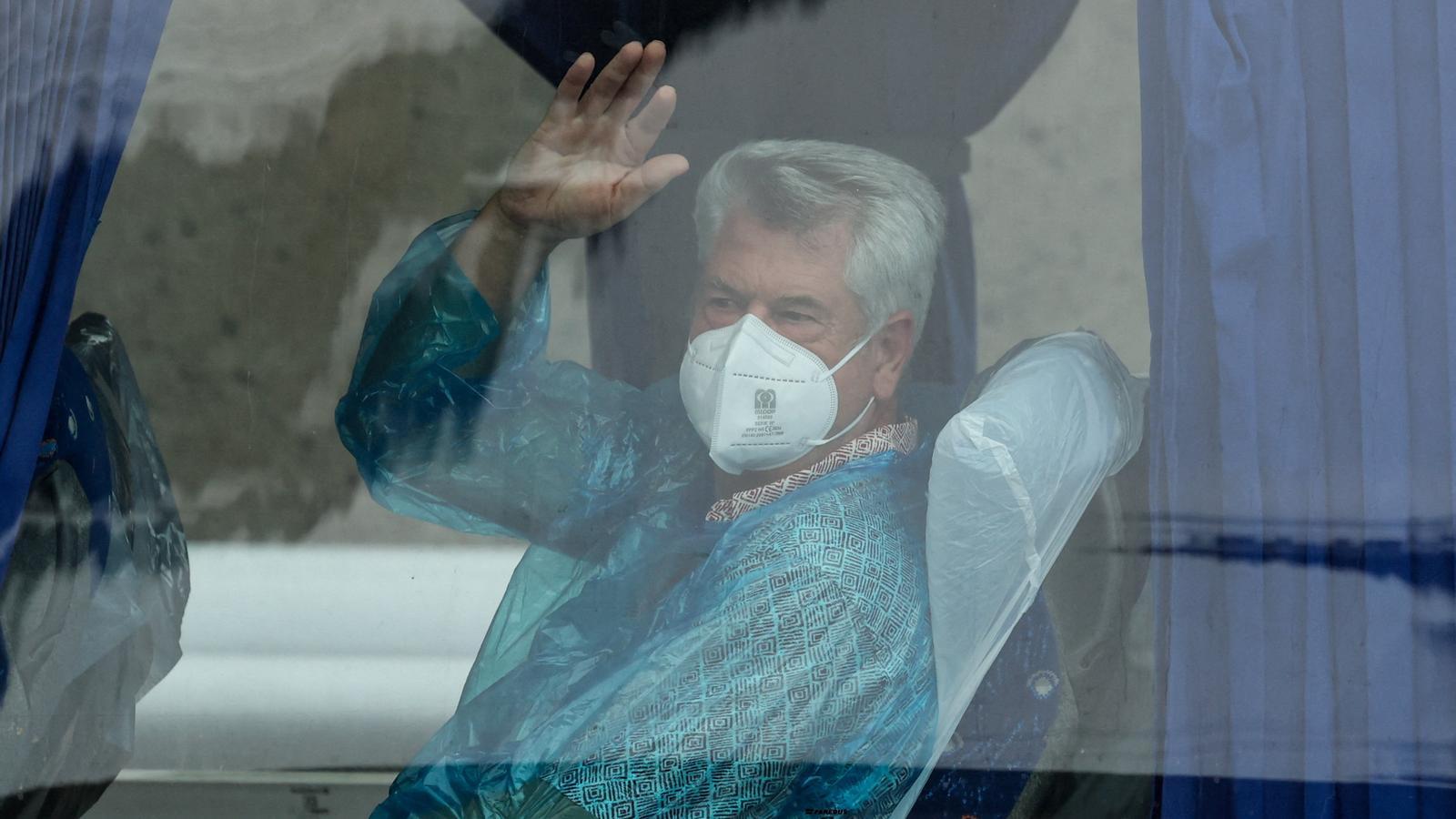
BarcelonaThis Sunday was the time to test the efforts of the past week to prepare the evacuation of the passengers trapped on the MSHondius and coordinate their return home with an operation that would guarantee health and safety at all times. The cruise ship arrived at dawn off the Canary coast, and the ship's lights were visible from the port of Granadilla before sunrise. At that moment there were 147 people on board, and during the day 94 have disembarked. Some passengers will still spend one more night on board awaiting the last repatriation flights, which will be completed this Monday for 24 more passengers to return to their countries. After these last departures, only 30 crew members will remain on the cruise ship, who will be in charge of taking it to the port of Rotterdam, in the Netherlands, where the disinfection of the ship will be finalized.
As had been agreed in the negotiations of the past few days, the ship did not dock at the port of Tenerife, but it did anchor. From there, the disembarkations of passengers and part of the crew have been taking place successively, divided into groups according to their nationality - there were people from 23 different countries on board - and only once the plane that was to repatriate them was ready. Before the maneuvers began, a health team confirmed that all passengers and crew members continued to show no symptoms that could suggest a hantavirus infection, although later this same Sunday a French citizen showed symptoms precisely during the repatriation flight.
The first to disembark from the ship were the 14 passengers of Spanish nationality, among whom there are five Catalans, and who are already in quarantine at the Gómez Ulla military hospital in Madrid, where they will undergo PCR tests. Afterwards, the staging of the protocol has been repeated with the other groups of evacuees: from the MSHondius they transferred to small boats to reach land, go by bus to Tenerife Sur airport and fly each to their country.
This Sunday, seven flights took off with passengers of eight nationalities: Spanish, French, Canadian, Dutch, British, Turkish, Irish, and American.On an eighth flight organized by the Netherlands, the country from which the ship flies its flag, passengers of eleven different nationalities traveled. Repatriations will continue on Monday, the day on which two more flights are scheduled. The first is an Australian plane that will pick up a total of six people: citizens of its country, New Zealanders, and one person with a British passport residing in Australia. On Monday, the second plane sent by the Netherlands will also take off from Tenerife, which will collect passengers who have not been evacuated by their countries, and will transport 18 people of eleven different nationalities.
The Minister of Health, Mónica García, has highlighted the successful operation of this "unprecedented operation" to disembark and repatriate the people trapped on the cruise ship. Both the head of Health and the Minister of the Interior, Fernando Grande-Marlaska, and the Minister of Territorial Policy, Ángel Víctor Torres, have insisted that the operation was carried out with absolute safety for the island's population. "We are prepared and the WHO knows it," said García about the State's capacity to undertake such an operation. The minister also explained that the operation proceeded without incident despite the difficulties and opposition encountered. "Not only are we meeting expectations, but we are fulfilling the pride we have in being a country that can take charge," she added.
Five more days of travel
The ship will return to the Netherlands. Before that, on Monday morning, it will refuel and load the necessary supplies at the port of Granadilla, before embarking on a five-day journey to the port of Rotterdam. The shipping company Oceanwide Expeditions explained in a statement this Saturday that these movements will begin once all passengers and some of the crew members to be repatriated on flights scheduled for tomorrow have disembarked. After these arrangements, the majority of the ship's crew will remain on board to sail to the final destination.The forecast is that the Hondius will resume navigation late in the afternoon.
Awaiting the tests that will be performed on all evacuated passengers from the ship, the confirmed positive cases of hantavirus by the WHO remain at eight, and there are none who had not been on board the
MV
Hondius. In Alicante, a woman remains hospitalized since Friday because she had symptoms that could be compatible with contagion. A first PCR already ruled out that she had been infected, and this Sunday the second test performed on her has also confirmed this. The woman, 32 years old, will continue to be admitted for quarantine in the hospital, and in 48 hours another test will be done. This Sunday, the result of the PCR test for a Catalan woman who has been in isolation at the Hospital Clínic since Saturday has also become known. She went there without symptoms after learning that she had been in the same plane for a few minutes as the Dutch woman who contracted the virus on the cruise and died. The woman continues to show no symptoms and, according to epidemiological surveillance protocols, will remain confined and under observation at the Clínic for prevention. In 7 days, another PCR will be performed to confirm the negative result.
The ship that has been the center of attention for days has been the focus of the hantavirus outbreak that has caused three deaths. Therefore, people who have been on board must undergo quarantine to avoid possible contagion. The duration and conditions of this isolation will vary somewhat depending on the protocol of each country. For example, in the United Kingdom, all passengers evacuated from the cruise ship have been admitted to Arrowe Park Hospital to spend between 42 and 45 days in quarantine under medical supervision. In France, the five evacuees have been transferred directly to Bichat Hospital in Paris, where they will spend the first 72 hours in quarantine and undergo a complete medical evaluation. After this initial period, they will be in isolation for 45 days under the control of the regional health agencies of their place of residence.
