Doctors parachute into the world's most remote human settlement to treat a possible hantavirus patient
The British island of Tristan da Cunha, in the middle of the Atlantic, receives medical personnel and material by air in an unprecedented operation
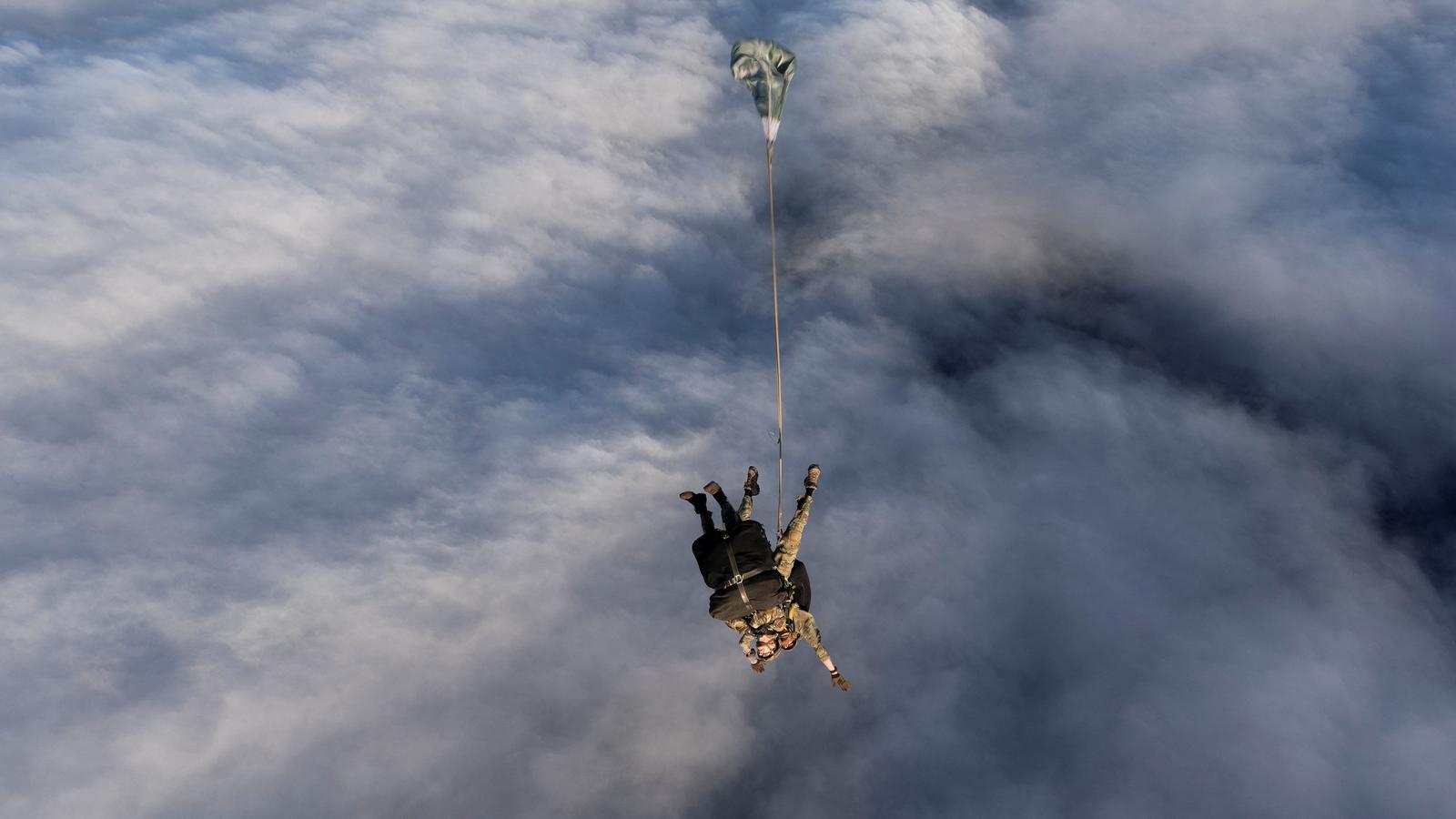
BarcelonaThe almost cinematic images left this Sunday by the evacuation of the ship MV Hondius are not the only ones that could be part of a medical thriller. In the middle of the Atlantic Ocean, between Uruguay and South Africa and almost 3,000 kilometers from dry land, a British army team has parachuted onto the archipelago of Tristan da Cunha, home to the world's most remote human settlement. On one of the islands, all volcanic, the tourist expedition that set off all public health alarms made a stop. According to the BBC, one of the passengers on the ship is a British citizen, a resident of the island, who has had symptoms compatible with hantavirus. He is now stable but isolated.
On the island, the only populated one in the archipelago and which bears the same name as the group, 221 people live and there is only a medical team of two people. Tristan da Cunha is part of the United Kingdom's overseas territories and can only be reached by ship, a journey that normally takes between 6 and 10 days from the nearest departure points.

Therefore, the United Kingdom has been forced to carry out an operation it has described as unprecedented for its army: deploying medical personnel to provide humanitarian support in a parachute jump. It is common for armies to drop medical and humanitarian material from the air, but it is rare for medical professionals themselves to arrive at their destination by falling from the sky.
According to the British Ministry of Foreign Affairs, oxygen supplies on the island were very scarce, and the only way to provide vital patient care in time was to get medical personnel to the area by plane and have them parachute in, as the aircraft could not land there. Various types of materials and medical aid have also been dropped from the air.
The journey to Tristan da Cunha has been long. The military team took off from the British air force station at Brize Norton, about 100 km from London. After a 6,788 km journey, it made a stop on Ascension Island, and subsequently flew another 3,000 km to Tristan da Cunha, with an in-flight refueling.
