The precedents of El Niño: does it have as much impact as believed?
The last years we have lived heat records all over the world and a historic drought in Catalonia

-
CAT -
CAST
BarcelonaThe last precedents of strong or very strong El Niño episodes left worrying data that were exacerbated by the influence of global warming. The super El Niño of 2015-2016 was the most powerful on record, with an oceanic warming index of more than 2.5 ºC. An extraordinary fact that contributed to 2016 being the warmest year recorded worldwide up to then.
The last one took place in 2023-2024. Although it was less intense than the previous one, its effects exceeded experts' forecasts, especially due to the unstoppable increase in global temperature in recent years. The result was that the planet chained together 15 consecutive months breaking heat records, and 2024 became the warmest year ever recorded in the world and the first to exceed the fateful 1.5 ºC warming above pre-industrial values. The El Niños of 1982-1983 and 1997-1998 were also potent.
El Niño and La Niña can influence agricultural crops, fishing, water availability, hurricanes, and even the economy of many countries. In fact, the United States National Oceanic and Atmospheric Administration (NOAA) calculates that during the next Niño there will be fewer hurricanes in the Atlantic and more cyclones in the Pacific due to changes in the direction and speed of atmospheric winds.
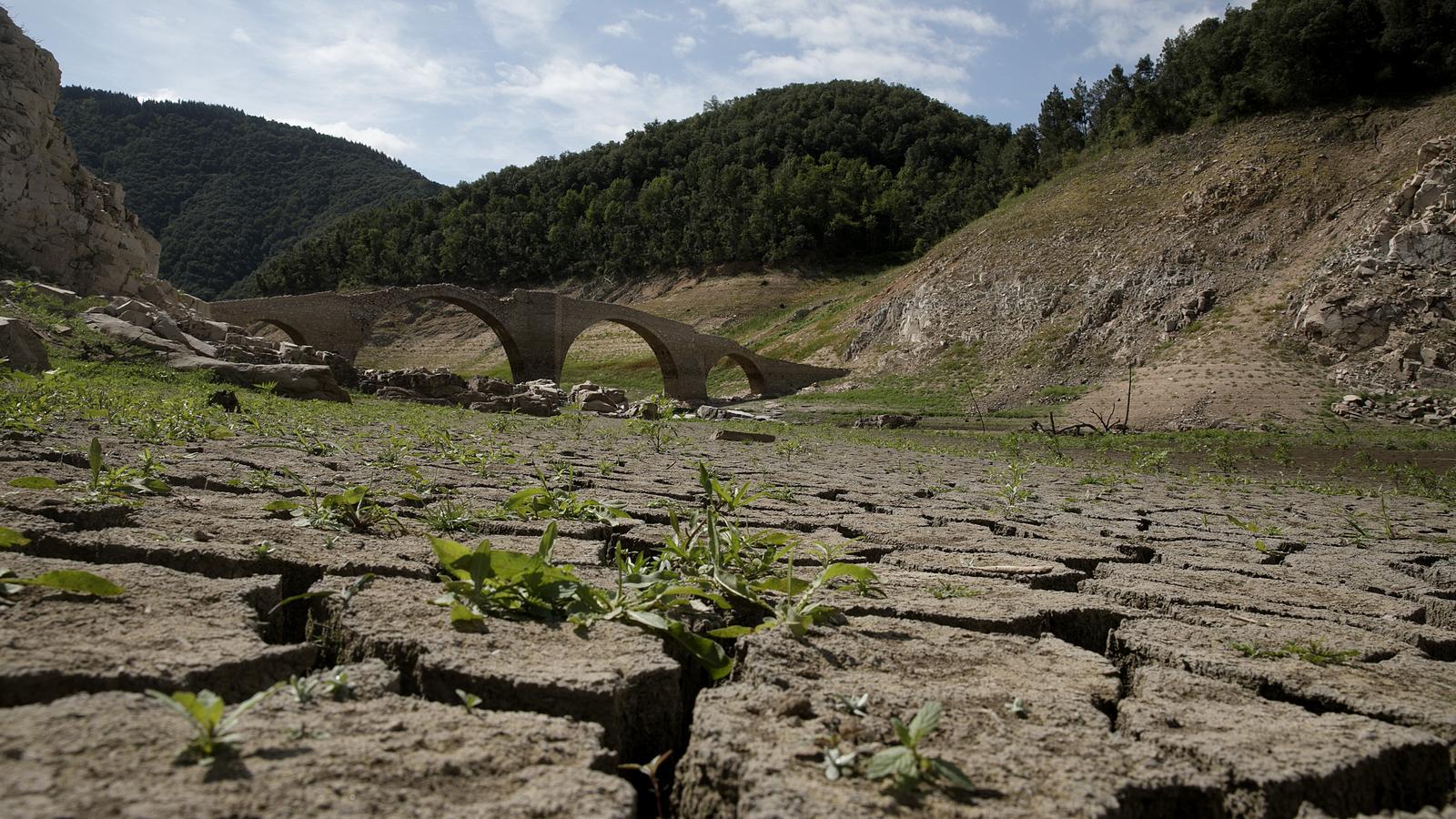
And, looking at Catalonia, is there any relationship between recent Niño periods with the heatwaves and droughts we have had in recent years? According to Vicent Altava, technician from the applied research and modeling area of Meteocat, the great super-Niño of 2015-2016 resulted in “a great drought between 2016 and 2018 in some areas such as the eastern Pyrenees and especially in the Ebro, where it was locally even stronger than the last one we experienced”. The powerful Niños of the eighties and nineties also generated droughts, in our region.
But the situation changes if we look at the last 4 years –the warmest in history– and the recent major drought. The warmest year ever recorded in Catalonia was 2022, before the latest El Niño occurred and, in fact, when we were still immersed in the La Niña episode. Furthermore, the worst years of the drought were 2022 and 2023, while in 2024 the rain tap turned on again, when in principle the effects of El Niño were supposed to reach us.
Therefore, the warmest year and the peak of the last drought have not coincided exactly with El Niño, which is mainly explained because the Mediterranean is one of the areas in the world that is warming the most, and in recent years it has already been experiencing an extraordinary rise in temperatures. “The last major drought began with phases still of La Niña, and this shows that, with current patterns, the relationship between El Niño and droughts in the Mediterranean is no longer so clear,” assures Altava.

“If this year the forecasts are met and we have another very hot summer in Catalonia, it will still not have to do with El Niño”, recalls the expert. The climate crisis is leading us into an unknown world. Altava highlights that work is being done on a global theory suggesting that in the coming decades we could have more years of La Niña than El Niño. “The job of the climate system is to counteract anomalies in planetary temperature, and if this system warms up, the main cooling mechanism is La Niña”, he states. For now, the last La Niña already lasted three years, an exceptional fact.
Current ecosystems, threatened
The last drought has caused the death of 28% of the trees in Catalan forests. Increasingly intense heat and extreme phenomena are fully affecting people's daily lives – especially during the summer – but they have also begun to cause changes in the country's native ecosystems. Conditions that can be aggravated in intense El Niño episodes, also with fiercer forest fires.
“If the climate becomes increasingly arid, we will see our forests lose their greenery and species disappear along the way,” explains Jordina Belmonte, a biologist and coordinator of the Aerobiology Network of Catalonia. Belmonte highlights that the last drought has shown that pine trees – a classic species of the Mediterranean climate – do not tolerate these extremes well and die easily.
Oaks and beeches will also be reduced and concentrated in higher areas, as they are more sensitive to water deficit and extreme heat, as are birches and some grasses. On the other hand, the biologist highlights holm oaks as a species that can better withstand the impact of the climate crisis, as well as some shrubs that have proliferated in recent years.
Belmonte sees it as inevitable that in the coming years new species will establish themselves here, replacing native ones. “We will have to look for plants that now live in drier and warmer areas – and that have a greater capacity for survival –, such as those in the Canary Islands or North Africa,” says the biologist, who points out that the early and intense heat also causes an advancement in pollination and can “touch” the fruit of many species.
In the case of animals, they also suffer the effects of these extreme phenomena. As Jaume Fatjó, a veterinarian and director of the Affinity Animals and Health Foundation Chair at the Autonomous University of Barcelona, explains, extreme heat is one of the factors that most affect the behavior and health of many species. The expert says: "When it is very hot, animal activity decreases significantly and they eat less. Ecosystems are designed to function within certain temperature and rainfall ranges, and if these patterns are greatly altered, the system begins to stop working and we may see some species begin to have problems surviving,” he concludes.
