Chronology: this is how the hantavirus outbreak has evolved day by day
The disembarkation of the cruise ship is proceeding with "normalcy" in Tenerife, where the ship has arrived one month after the first symptoms on board
-
CAT -
CAST
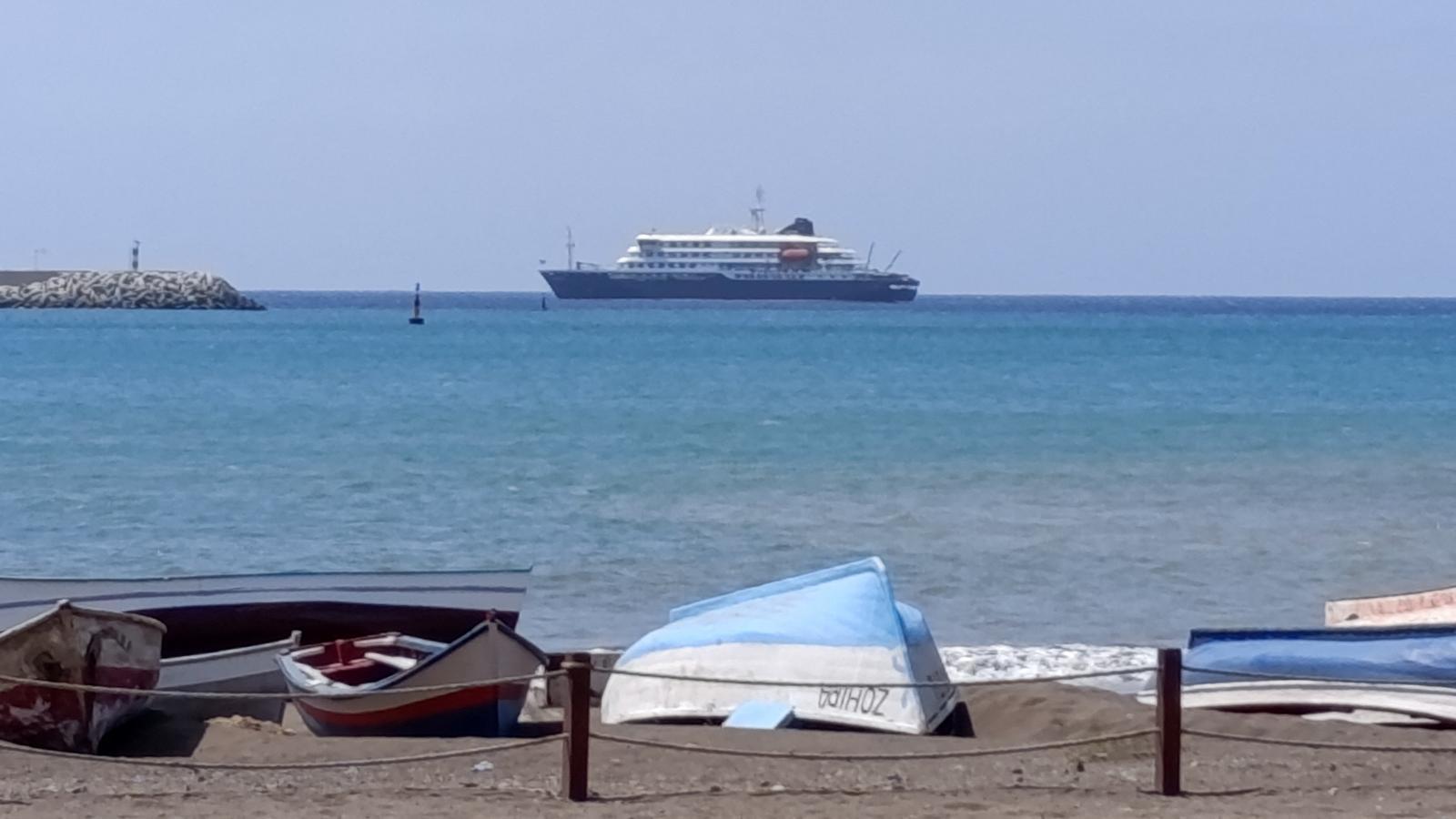
BarcelonaThe luxury cruise ship MV Hondius arrived early this morning at the port of Granadilla, in Tenerife, after days sailing the Atlantic under the watchful eye of the whole world due to the deadly hantavirus outbreak, which has already claimed three lives and affects at least 8 passengers. The ship set sail from Ushuaia, Argentina, on April 1, 2026. At ARA, we have compiled what is known so far about the evolution of the outbreak, case by case, according to official WHO reports.
April 1
The ship departs from Ushuaia, in Tierra del Fuego, Argentina. The cruise follows an itinerary across the South Atlantic, with multiple stops in remote and ecologically diverse regions, including continental Antarctica, South Georgia, Nightingale Island, Tristan da Cunha, Saint Helena, and Ascension Island. There are 147 people on board, including passengers and crew from 23 different nationalities.
April 6
The first symptoms of the illness appear on board. A man presents himself to the cruise ship doctor with a picture of fever and gastrointestinal distress.
April 11
The patient worsens, presents respiratory distress and dies on board the same day. No microbiological tests were performed.
April 24
It's a key day. The body of the first victim is disembarked in Saint Helena (an island of British territory). His wife also leaves the ship, who at that time already shows gastrointestinal symptoms. Before boarding the cruise ship, the couple had traveled through South America.
Presumably, that stop would have served for other passengers to leave the cruise ship to return home. This is the case of the Turkish content creator Ruhi Çenet, who has explained it through social media.
That day, another adult man presents himself to the cruise ship doctor with the same symptoms as the first: fever, shortness of breath, and signs of pneumonia.
April 25
The wife of the first deceased – who is the second detected case – worsens on a flight to Johannesburg, South Africa, and dies the following day upon arrival at the emergency services, on the 26th. She had tried to catch a flight to her country of origin, to the Netherlands, a key fact because she had contact with people who later had to be hospitalized.
April 27
The second sick person on the boat, who is British, worsens and is evacuated to Ascension Island, in South Africa. Currently, he remains hospitalized in the intensive care unit (ICU) of a Johannesburg hospital and is in critical but stable condition. On May 2nd, a PCR confirms that the infection is by hantavirus.
May 2nd
The WHO receives the alert about the cruise ship. The two deaths and the critical condition of the third patient are recorded. On the same day, a woman with pneumonia also dies on board. She had symptoms since April 28th. There are now three fatal victims related to this virus.
May 3rd
Health authorities report three more suspected cases on board.
May 4
The case of the woman who died in Johannesburg on April 25 has been confirmed by PCR as a hantavirus infection. At this time, contact tracing has begun with the rest of the passengers on the flight in which she was transported to the South African city.
Health authorities report a total of seven cases (two confirmed and five suspected), all among cruise ship passengers. At this time, the ship is already docked off the coast of Cape Verde, as the authorities of this country refuse to disembark.
May 6
An eighth case is confirmed, in Zurich. It is a man who had been on board the ship with his wife on the first leg of the journey – from Ushuaia to Santa Elena –, but they both finished the trip at the end of April and returned home. After feeling unwell, the man went to his GP. He was referred to the University Hospital of Zurich, where a laboratory test was carried out which confirmed the positive for the Andes hantavirus strain, and he was immediately placed in isolation. The wife of this latter infected person has not yet shown symptoms, but the Swiss government has reported that she is at home in isolation as a precaution.
May 7
A flight attendant who had shared a trip with a hantavirus victim is admitted to Amsterdam because she shows symptoms compatible with those of the disease. Alarms are sounding due to the possibility that the virus is more easily contagious than expected, as it is initially transmitted through close and prolonged contact.
May 8
Catalonia identifies two new contacts of the woman who died in Johannesburg: a woman who returned to South Africa after spending a week in Barcelona, and another resident in Catalonia. This second one begins a quarantine at the Hospital Clínic.
In parallel, a 32-year-old woman who had also had contact with the victim is admitted to the hospital in Alicante. This patient ends up testing negative.
Regarding the flight attendant admitted to Amsterdam, suspected of having hantavirus, she tests negative for the disease. She had been in contact with the woman who died in Johannesburg on April 25, when the victim tried to catch a flight to return home.
Meanwhile, the United Kingdom detects another man in Tristan da Cunha with symptoms of the disease. The territory is an island where the cruise ship called in April and belongs to the British overseas territory in the South Atlantic.
May 9
The WHO raises the number of confirmed hantavirus cases to six. The organization's Director-General, Tedros Adhanom, is traveling to Tenerife to oversee the ship's arrival and disembarkation after meeting in Madrid with the Spanish Prime Minister, Pedro Sánchez.
May 10
The luxury cruise ship MV Hondius arrives at the port of Granadilla, Tenerife, shortly after six in the morning, with 147 people on board. The Directorate General of the Merchant Navy orders its entry despite the Canary Islands government denying it access unless it has confirmation that the passengers will leave the island on the same day. The return to their countries of origin is scheduled to last two days and end on Monday.
At 09:45 a.m., the five Catalans traveling on the cruise ship disembark, all asymptomatic, as are the rest of the passengers with Spanish passports. In total, 14 people will travel to Madrid on a military plane and will undergo quarantine at the Gómez Ulla Hospital.
The rest of the passengers are also leaving the island: planes from France, Canada, the Netherlands – carrying Dutch, German, Belgian, Greek passengers and part of the crew – the United Kingdom, Ireland, and the United States are taking off. The last to be evacuated are expected to be the Australian passengers, who will disembark on Monday afternoon. The Minister of Health, Mónica García, assures that the evacuation of the MV Hondius is proceeding "with complete normality and absolute safety".
On the political front, Pope Leo XIV and the Prime Minister of the Netherlands have thanked Spain for its management of the health crisis.
May 11
One of the fourteen Spanish passengers on the cruise ship MV Hondius isolated at the Gómez Ulla Hospital has a provisional positive result for hantavirus in the PCR test performed when the group was admitted to this military center in Madrid for quarantine. The other thirteen cruise passengers, on the other hand, tested negative and will undergo a second test within seven days. The positive passenger is a man who, according to the Ministry of Health, is well and shows no symptoms.
Following protocol, in the next few hours his biological samples will be analyzed again and, if the same result is repeated, he will be transferred to the High-Level Isolation and Treatment Unit (Uatan) ward of the same hospital, with stricter and more specific conditions for treating infectious diseases. The rest of the passengers remain in individual rooms.
The medical news coincides with the completion of the evacuation operation of the ship and the repatriation of all passengers, with the exception of about twenty crew members who are sailing towards the port of Rotterdam, in the Netherlands.
France also confirms a positive case for a woman who started to have a fever during the flight that was taking her back home. Her health condition is deteriorating and she requires admission to the intensive care unit, where she is currently "stable". The United States also reports a mild infection, although the WHO's update on the outbreak's balance does not count it pending a more conclusive test.
May 12
PCR confirms the hantavirus infection of the Spanish patient with a provisional positive. The Ministry of Health reports that upon arrival in Madrid, the patient began to experience symptoms such as a slight fever and mild respiratory problems, but is stable. He is admitted to a High-Level Isolation and Treatment Unit (UATAN) and will remain until clinical recovery, in accordance with established health protocols. Regarding the rest of the individuals who remain in isolation at the Central Defense Hospital Gómez Ulla, definitive tests confirm a total of 13 negative results.
The citizen of the United States with a mild positive ultimately tests negative with a PCR test. The health status of the French patient positive for hantavirus is worsening, and she is in serious condition in the intensive care unit, while the rest of the French passengers continue to test negative. With the positive case detected in the Spanish State and the ruled-out case in the United States, the provisional outbreak tally rises to 10 infected individuals, of whom three have died.
The World Health Organization congratulates the Spanish government on the management of the hantavirus outbreak and modifies the start date of the quarantine that passengers must observe to May 10th, when it was initially the 6th, so that the 42 days of strict supervision will conclude on June 21st. The health authority warns that there are likely to be more cases.
