How will the repatriations of the passengers from the hantavirus cruise be carried out?
The outbreak on the cruise ship raises questions about who should bear the costs and legal obligations for the return trips
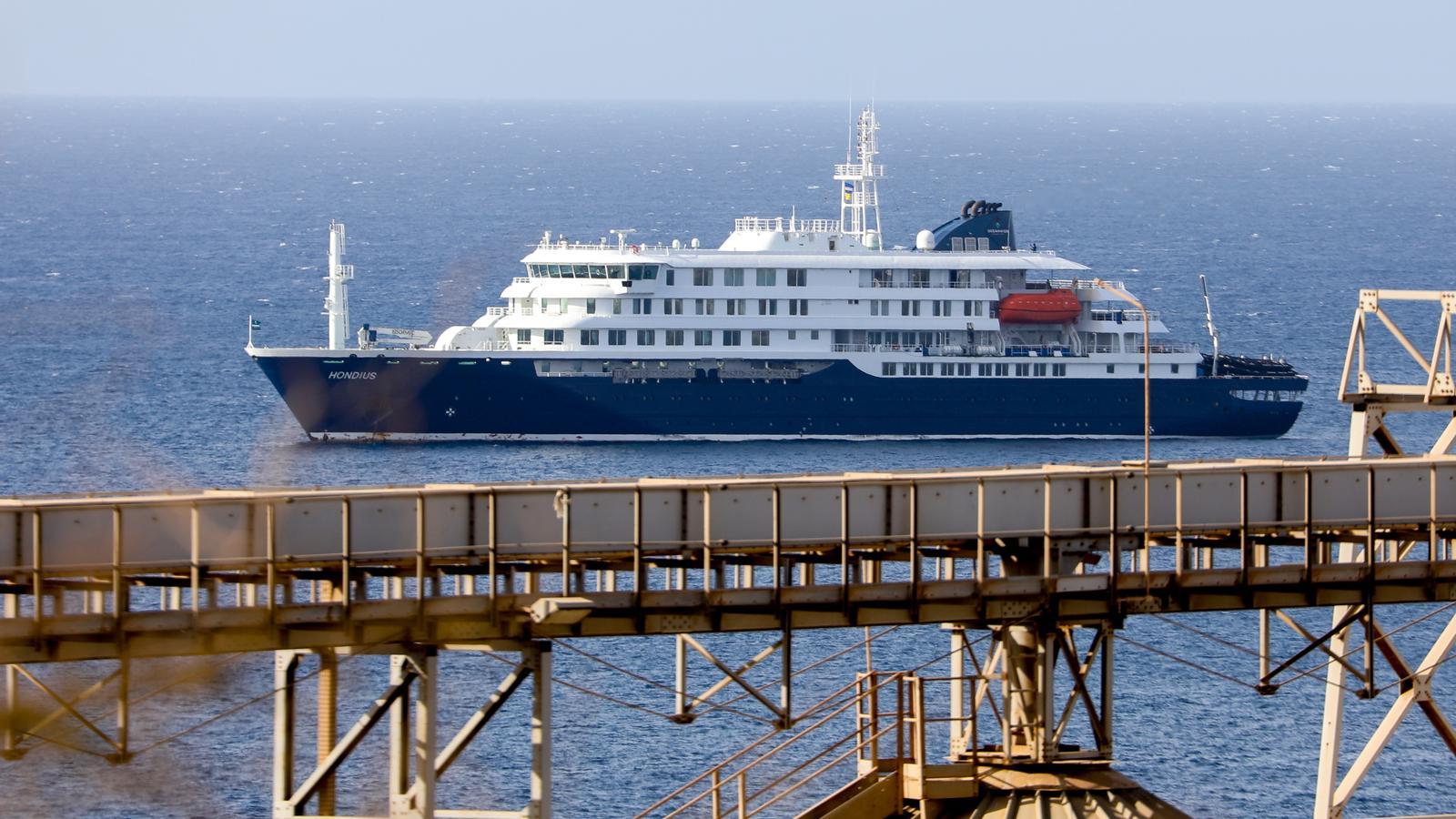
BarcelonaHealth and emergency authorities are working against the clock to prepare for the arrival of the MV Hondius this weekend in the Canary Islands. The luxury cruise ship, the focus of the hantavirus outbreak, will anchor in the port of La Granadilla, in Tenerife, and from there passengers and crew will be transported to their home countries. In fact, the Spanish government has assured that no one will disembark without prior confirmation that their plane is ready to take off. On board are passengers and crew of 23 different nationalities, from within and outside the European Union, and since Thursday meetings have been held to also organize repatriations.
Who will pick up the affected?
The most common situation when someone needs to be repatriated is that it is covered by their travel insurance or, if they don't have it, by themselves. But the situation of the MV Hondius is "exceptional" and that is why states are taking care of it even though "there is no legal obligation to do so," explains Josep Maria Aguirre, professor of administrative law at the Universitat de Girona (UdG). The specialist adds that the Netherlands would also not be obliged to do so, even if the ship flies its flag.
Nevertheless, Alfonso González Bondia, professor of public international law at the Universitat Rovira i Virgili (URV), clarifies that Spain has agreed to receive the ship on the basis of the regulations of the World Health Organization (WHO), and assures that this agency could also call on other states to cooperate. "They do not have the obligation, but normally all states, through their consular offices and in accordance with international treaties and the internal regulations of each country, are accustomed to assuming the obligation to assist their nationals abroad in emergency situations," explains the researcher.
For the moment, the European countries that have confirmed they will activate planes to collect their citizens are France (5), Greece (1) the Netherlands (11) and Turkey (3), which is not a member of the EU, but is part of the European Civil Protection mechanism that has been activated for this emergency. The United States (with 17 affected) and Great Britain (23) will also send a plane. On the other hand, Belgium, Ireland, Germany and Switzerland have said they are willing to host their affected citizens, but they do not have planes available to evacuate them and could do so through the European mechanism or the Netherlands, which is the flag country of the cruise ship and is willing to take charge if necessary.
Who will bear the cost?
This Wednesday, sources from the central government reported by Efe indicated that the cost would fall on the countries of origin of those affected, but previously they had pointed out that both the transfer and care of infected people "would be fully covered by insurers or their countries of origin". The same sources added at the time that for the rest of the people, "a joint EU evacuation mechanism would be activated, funded 25% by the enabling country and 75% by the EU". Nevertheless, two days later, executive sources told el ARA that the details are still being finalized.
Bondia recalls that passengers are not obliged to have insurance, although given the type of trip they were taking, it is most likely they did. In any case, he explains that if a state dedicates a plane to a repatriation, it may be that according to the laws of each country, the administration itself assumes the cost or subsequently claims it from the affected person or their insurance. "There is no international regulation stating that the state must assume it. It is internal regulation for each case," he summarizes.
Will there be differences between passengers and crew?
The main difference between one and the other is that for the crew members, a possible contagion is a work accident, says Aguirre. "The shipping company, even if it is not the cause of the illness, has an added responsibility towards its workers," he adds.
What role will insurance play?
On the other hand, the professor of commercial law at URV Pablo Girgado takes for granted that it will be the states who will take charge of all the expenses. Even so, he explains that in this case an eventual insurance compensation would not be for the affected parties, but for the state, which would have to claim it through its legal services. In his opinion, the one responsible for the expenses should be the shipping company or its insurer.
What will happen now with the ship?
The Ministry of Health has explained that the Netherlands, as the ship's flag state, is the one that can decide "what to do with the ship and the crew". For its part, the Spanish government maintains that the cruise ship should continue to its destination port with the entire crew.
In addition to the 14 Spaniards who will be transferred to Madrid for quarantine at the Gómez Ulla hospital, there are passengers and crew from EU member countries on the ship – France (5), Germany (8), Greece (1), Belgium (2), Netherlands (11), Ireland (2), Poland (1), and Portugal (1) – or those adhering to the European Civil Protection mechanism activated for this emergency – Turkey (3), Ukraine (5), and Montenegro (1). There are also passengers and crew from non-EU countries: the United Kingdom (23), Canada (4), United States (17), Australia (4), Japan (1), New Zealand (1), Argentina (1), Russia (1), Philippines (38, all crew), India (2), and Guatemala (1).
