The Government asks teachers to apply the "principle of reality" in their demands
Niubó offers dialogue to USTEC, but defends the agreement signed with CCOO and UGT
BarcelonaThe Government does not budge, despite the teachers' standoff. On the same day that teachers took to the streets and emptied classrooms to demand a new agreement with the Department of Education, the head of the department, Esther Niubó, and also the Government spokesperson and Minister of Territory, Sílvia Paneque, have once again defended the agreement they signed a few weeks ago with CCOO and UGT. An unprecedented pact, they assure, but one that does not satisfy the majority union in the educational field, USTEC, which demands more reforms. This Tuesday, in an interview with ARA, the union's spokesperson, Iolanda Segura, requested 400 euros more per month to bridge the gap and call off the strike. The Government, on the other hand, asks teachers to apply the "principle of reality": "We will not be able to solve a problem that has been damaged over the last ten years from today to tomorrow," Paneque added.
Paneque indicated that the executive is aware of the teachers' discontent, but insisted that Thursday's sectoral table meeting is "a sign that the Government maintains an open hand to explain the agreement it has reached, to explain its implementation, and to listen." This is the same thesis that Niubó maintained a few hours earlier, who expressed confidence that Thursday's meeting with the unions "will serve to lower the level of tension that the faculty and families are experiencing and which does not help to improve the educational system," she said in an interview with Catalunya Ràdio.
The Minister of Education was wary of the salary increase proposed by USTEC and insisted that "maximalist proposals do not help to bring positions closer." "2 billion euros after a decade of disinvestment is not a small amount, it is a good start," defended the spokesperson, who presented the agreement as a "very important, never-before-implemented" pact.
The opposition attacks the Government
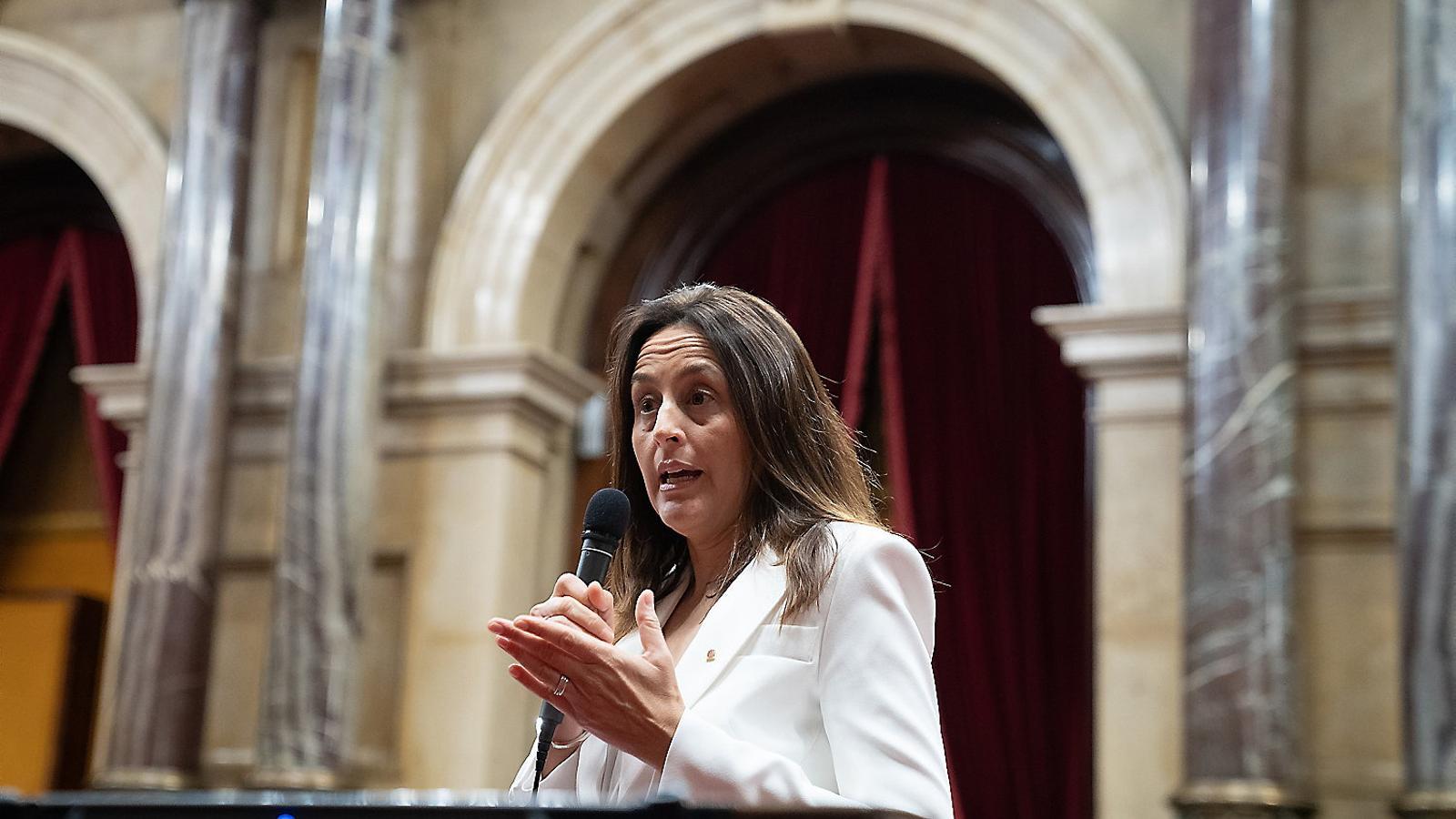
The opposition, for its part, has sided with the teachers and has attacked the Government. Junts has accused the Government of treating teachers as criminals, placing police in classrooms and also in their assemblies," said the party leader in Parliament, Mònica Sales, who also demanded the dismissal of the Minister of Education, Esther Niubó. The Junts members accuse her of "lack of leadership and ambition". "She has not been able to manage the situation," she sentenced.
For their part, the investiture partners, Esquerra and Comuns, have also called on the Government to resolve the educational crisis. The spokesperson for the Republicans in Parliament, Ester Capella, has considered it "unacceptable" to talk about a country agreement when it "does not reflect the majority of the educational community" and has warned that Minister Niubó cannot ignore one of the "greatest demands of recent decades". Capella has also regretted that the PSC has blocked a parliamentary proposal to force a joint negotiation with the unions and demands that the executive have "flexibility" to admit that the current agreement "leaves out" a fundamental part of the sector.
Jéssica Albiach, leader of Comuns in Parliament, has stated that the agreement is insufficient: "There is a part of the educational community that says that not enough has been done," Albiach affirmed, and has claimed that it is "an agreement that should not be an end point but a starting point". The deputy has also called for "more dialogue, fewer smokescreens, and fewer repressive measures", and has prioritized the incorporation of psychologists and social workers.
