What is ciguatera, a new food poisoning that has already arrived in the Canary Islands
The climate crisis and mobility are expanding a disease caused by a microalgae that we can contract by consuming some fish

-
CAT -
CAST
Puerto de la Cruz (Tenerife)There was great expectation to know what the scientist Ana Gago-Martínez, professor at the University of Vigo, researcher in analytical and food chemistry, and director of the EU reference laboratory for marine biotoxins, would explain. This is because the increase in cases of ciguatera poisoning, which is contracted by ingesting certain fish, has required significant effort from administrations and the scientific community to manage a potential health problem that, until a few years ago, was not unique to us in Europe. In her presentation at the "Encuentro de los Mares" congress in Tenerife, Gago-Martínez asked for the public to be informed, but without causing alarm. We will try to summarize the key points of a potential risk, to comply with what the scientist requests.

What is ciguatera
Ciguatera is a food poisoning caused by natural toxins from the marine environment, ciguatoxins. These are generated by a type of microalgae (Gambierdiscus and Fukuyoa), which enter the food chain. These microalgae are eaten by a herbivorous fish, then a carnivorous fish eats the herbivorous one, and then this larger fish is caught, and that is how it reaches human consumption. These microalgae are not native to our coasts, but rather to the Caribbean and the Pacific. But for some years now, they have begun to appear on European coasts, such as Madeira and the Canary Islands. The reasons are the climate crisis, changes in ecosystems, and the mobility of tourists and the fishing industry. Knowing which strain has arrived has been key to understanding the scope of the disease, as the Pacific strain is more severe than the Caribbean one.
When did it appear
Regarding poisonings of this profile, they appear from The Odyssey by Homer to the chronicles of Alexander the Great, who prohibited his soldiers from consuming certain fish. The term ciguatera is from the naturalist Antonio Parra. He first used it in 1787 in Cuba, referring to the consumption of cigua, a marine snail. It was the Japanese Takeshi Yasumoto who in 1977 managed to identify what generated it. Later, in 1989, another Japanese, Michio Murata, discovered its chemical structure and named it Gambierdiscus toxicus. This toxin is not killed by cold (freezing the fish) or heat (cooking it).
In the State, the alarm was first raised in 2004, when a family of five caught a
círvia in the Canary Islands and ate it. They all contracted the illness. This case could be scientifically proven because remains of the consumed fish were preserved. Although at that time there was no technology to guarantee the presence of ciguatera 100%, Gago-Martínez was able to send samples abroad, where they confirmed the positive result and it was established that the outbreak was the Caribbean one, the least aggressive. Even Yasumoto himself highlighted its low toxicological load. It was the first reported case in the islands, but since then there have been several outbreaks with a total of 212 people who have contracted the illness. It is estimated that worldwide, between 10,000 and 50,000 cases of ciguatera occur each year, despite significant underdiagnosis. And more so, because as it has been expanding in recent years, it reaches new areas where health services do not identify it.
The Canary authorities were very quick to report the appearance of ciguatera, and since then, three universities and 40 institutions have been working intensely to contain the situation and create a protocol to detect and manage a possible expansion. The University of Vigo, the Universidad Carlos III, and the Institute of Agrifood Research and Technology (IRTA) have worked together to find an effective method to analyze fish susceptible of causing it and have conducted a survey to understand the scope and possible spread. This latter part has fallen to IRTA, which, although it has detected the microalga, Gambierdiscus, in the Mediterranean, has never found any contaminated fish. We need to be vigilant, but with imported fish and with fishing that does not undergo any health control, such as sport fishing. The fish sold in the fish markets are safe. But we must bear in mind that contaminated fish imported from India have been identified. We must also add a very ambiguous European legislation that will need to be straightened out.

Fish susceptible to ciguatera poisoning
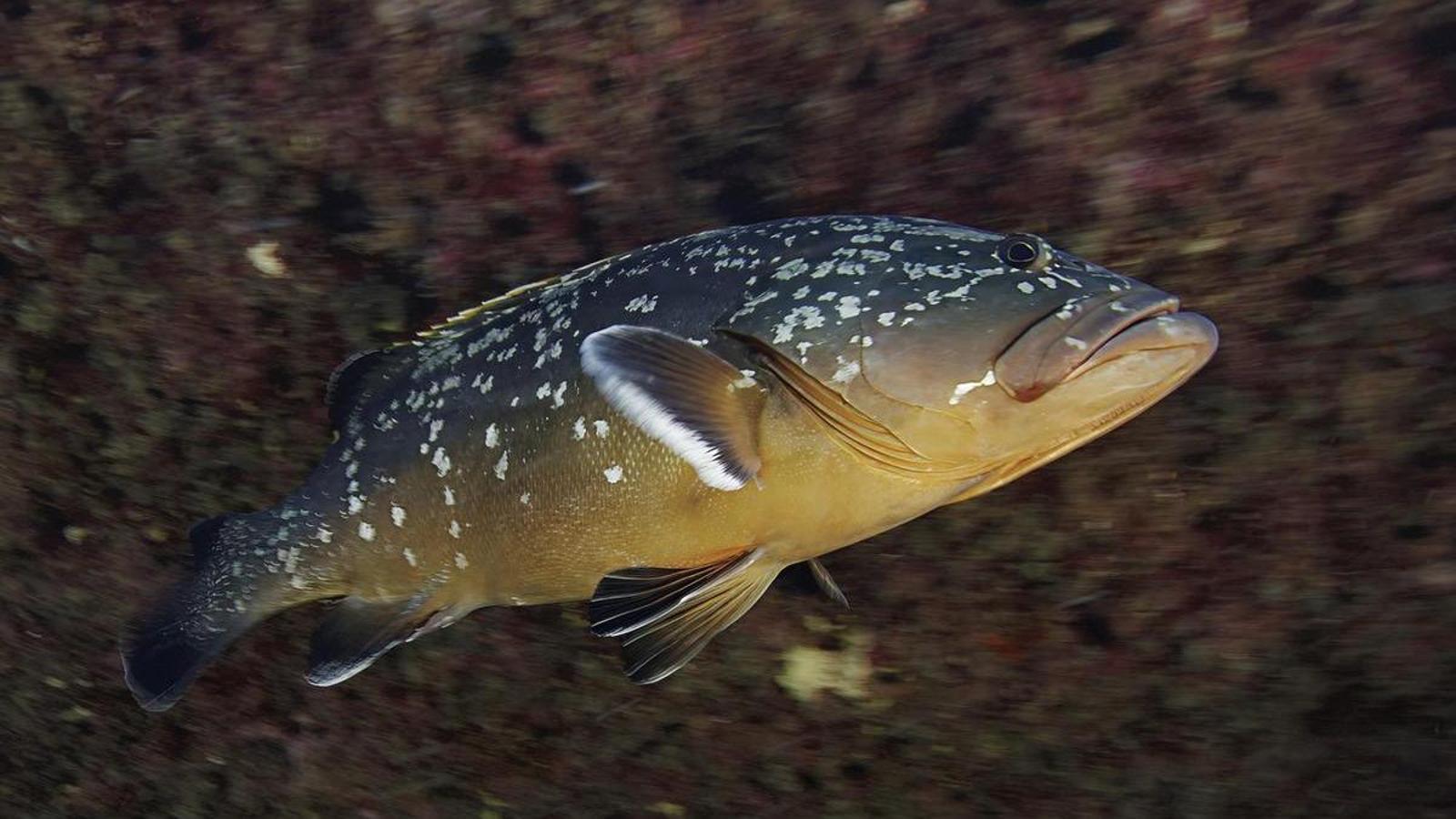
These are the specimens that must be analyzed before being put up for sale: the amberjack (Seriola spp) from 10 kilos, the dusky grouper (Epinephelus marginatus) from 8 kilos, the bluefish (Pomatomus saltatrix) from 2 kilos, the broomtail grouper (Mycteroperca fusca) from 7 kilos, and the wahoo (Acanthocybium solandri) from 35 kilos. “These chemical structures are very complex, and being able to detect and quantify them is important because toxicology depends on how much there is,” explains Gago-Martínez. The method applied is high-resolution mass spectrometry (HRMS).
What symptoms does ciguatera produce
When the disease is contracted, the symptomatology is as follows: gastroenteritis (nausea, vomiting, and diarrhea), tingling, thermal inversion (fever), and weakness. And although less frequent, cardiovascular problems. The treatment is the same as for the flu or intestinal flu. In the event that there is a suspicion of having contracted it, the remains of the fish that could be contaminated must be preserved so that it can be analyzed.
