The Casal dels Infants, Carles Capdevila award: a "shelter" for vulnerable families
ARA and the COIB recognize the entity's innovation in mental health education
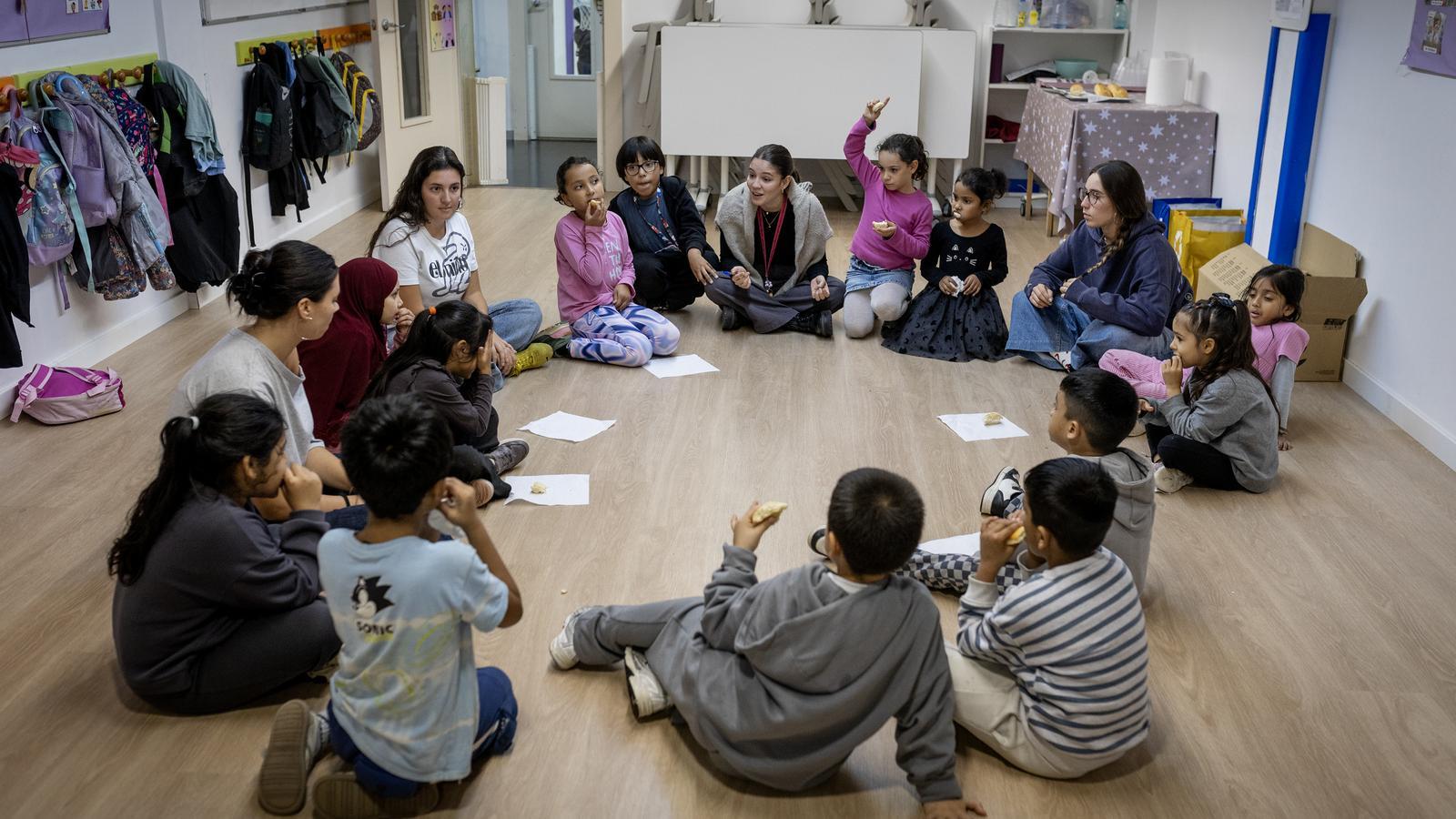
The Casal dels Infants is “home”. It is the word used by Marta, one of the mothers who have received support from the organization: her son joined when he was three years old and now he is eight. For households in vulnerable situations—often newcomers, as is the case with Marta, who is Dominican—the Casal dels Infants becomes a “shelter” that allows children and adolescents to socialize and integrate, “to be involved and express themselves,” she says with satisfaction. But this is just one case of thousands.
In 2025 alone, the Casal dels Infants launched 53 socio-educational services that supported 7,000 children, young people, mothers, and fathers in Catalonia, with the tireless determination to combat social exclusion and transform the most unequal neighborhoods. After nearly fifty years of history, the Casal dels Infants has been recognized with the Carles Capdevila award from the ARA newspaper and the Official College of Nurses of Barcelona (COIB) for its contribution to promoting the health and well-being of children and families, thanks to work on healthy habits, emotional support, parenting support, and leisure education.

The embryo of this socio-educational resource is located in the Raval, in Barcelona. The project has been taking root and growing, and they now have a broad constellation of services aimed at people of different ages, with implementation also in Badalona, Santa Coloma de Gramenet, Sant Adrià de Besòs, and Salt. In addition, they coordinate a network of entities in Morocco – last year they accompanied 4,000 people in four cities.
But social exclusion continues to affect a large part of the population. In fact, the entity warns that in Catalonia in 2025, the worst child poverty figures in the entire European Union were recorded, with more than one in three minors at risk. These statistics intensify in neighborhoods that present worse indicators, where half of the children live below the poverty line. Furthermore, the alarms are intensified by the data from the Socio-educational Intervention Services, which only cover 6% of the total number of children in this situation.

Rosa Balaguer Bueno, director general of the organization, explains that the neighborhood largely determines the possibilities of its residents. For this reason, the Casal dels Infants not only wants to assist vulnerable people and weave "kinder community structures," but it also influences policy. They make proposals to local, national, or state administrations, with the aim of "transforming neighborhoods," states Balaguer.
For example, one of the great evils that runs through vulnerability is access to housing, acknowledges Balaguer. Anna Solanas, head of the Childhood Project at the Raval Open Center, highlights the difficulties of the little ones in being able to keep up with the school pace without adequate conditions at home or, directly, with threats of eviction. Therefore, she says, educational support is also one of the points they work on at the center. And Balaguer diagnoses that "a commitment in terms of resources and better-prepared teaching staff would be needed."
Mental health, social cohesion
Another concern shared by the professionals and families of the Casal dels Infants is linked to the emotional well-being of the children. They observe that the mental health of minors is worsening both due to their material conditions and the arrival of the virtual world, where “they spend many hours,” laments Balaguer. This is why the entity launched a transversal methodology last year that incorporates work around healthy habits and emotional management into the routine activities of children and adolescents. The so-called Integral Well-being Model “is one of the great recent successes of the organization,” celebrates the director.
Faced with the impoverishment of the neighborhoods, Balaguer believes that social cohesion must be strengthened. Even more so considering the high degree of diversity, which the director acknowledges has been a reality for some time: “Diversity will be the future, like it or not,” she predicts. “At the Casal dels Infants we are a community, like a family,” she summarizes, “and we want the entire neighborhood to be a community.”
