Juanpe Sánchez López: "Failure is letting go"
Writer and university researcher

-
CAT -
CAST
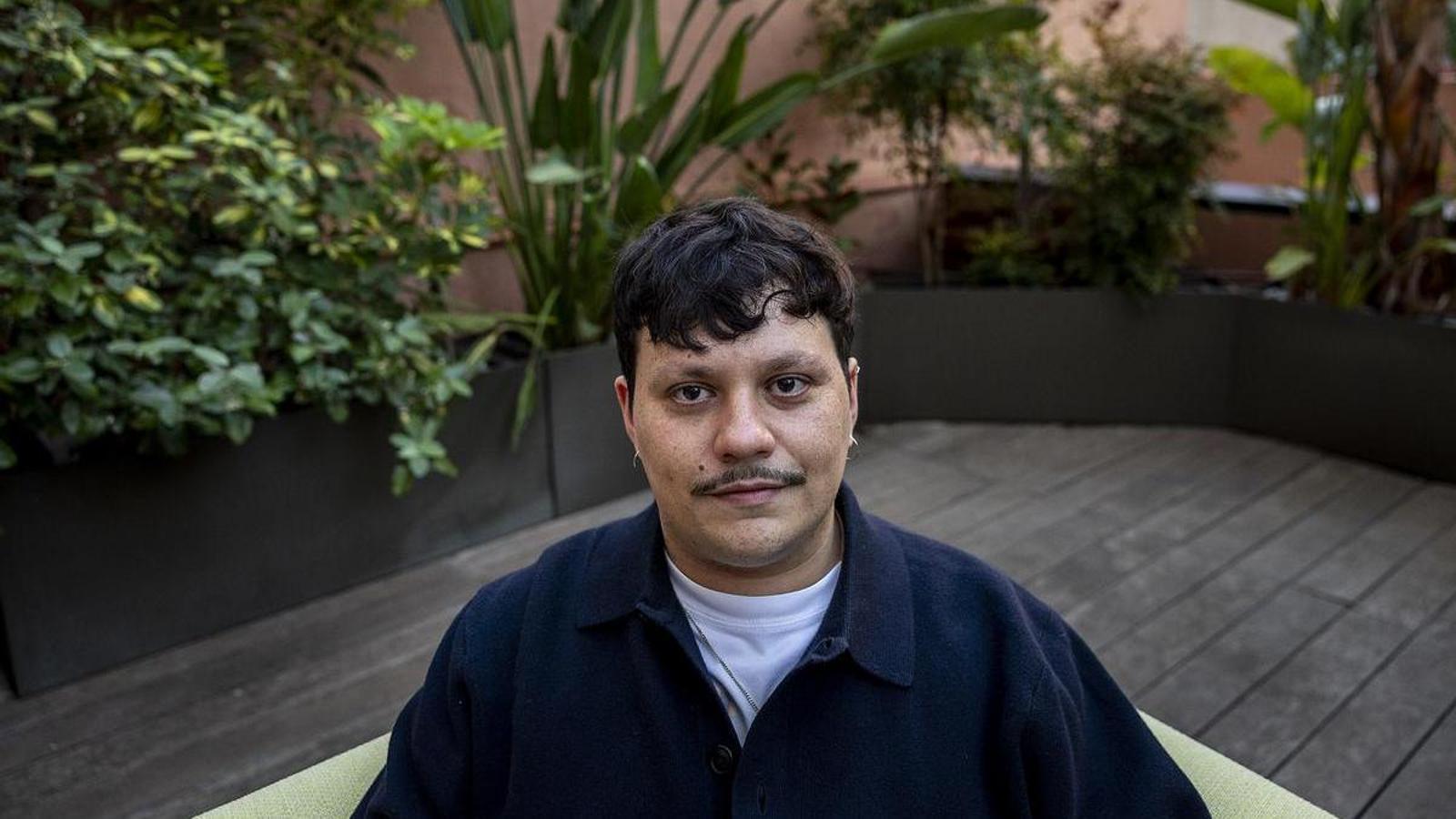
“We are all failures because we all have dreams”, says the opening quote of Gran manual del fracaso (Quaderns Anagrama). Shortly after, Juanpe Sánchez López himself explains that he was a fat, gay boy who learned quickly that he could not afford any more failures in life. Starting from there, he reflects on this concept, the scales of values that determine what is a success or a failure, and how going off-track –what we often call failures– is, in reality, what constitutes us as people. Born in Alicante, he has lived in Bilbao for just over a year. In fact, his WhatsApp profile picture is a selfie he took in that city during a visit from his parents.
What is the straight yardstick?
— Something that I believe we all carry in our pocket. It is a way of measuring ourselves, comparing ourselves, and relating both to oneself and to others. It seems small and harmless, but it is there and sometimes it prevents us from walking.
Is the yardstick what we are supposed to be?
— It is what one thinks one would like to be. And in a society obsessed with success, with obtaining capital in any way...
It is that we are part of society, we cannot escape its pressures.
— Of course, as much as one may think of free will, one is never entirely liberated from what others want.
You say that we want a partner, a house, a job.
— Our life models and our future models are predetermined by this triad. The home, in the sense of having something in your name; love as a promise of that which is above what is economic, and work, which measures your scale a bit, depending on what job it is. But this invisibilizes a circle that surrounds it so that this triangle can exist.
Which is this circle?
— That which is not within normative future expectations: working less, friends, having hobbies. In other words: not profiting from what we do.
I love, in fact, the opening quote of the book: I was supposed to be a Nobel Prize winner in physics, but the sun, beer, the beach, Coca-Cola, parks, and a love affair prevented me from doing so. Why this sentence?
— Because there is an aspiration of what we would like to be, and the best that can happen to you is a Nobel Prize recognition, but the things that might prevent you from it are full of beauty, right?
But when we go to a meeting of colleagues whom we haven't seen for a long time we don't ask ourselves if we have many friends, if we have been able to walk barefoot on the sand or have been in a park...
— We have little time to explain ourselves, and when you meet someone, catching up means accumulating things… And we explain our lives in fragments. For me, it is as if failure were the narrative and success the point.
Let's develop it.
— We explain ourselves: now I am here, now there, but what about getting there? What has happened in between? We explain failures as non-achievements of success, when in reality they are what constitute you, they make you think about yourself.
We also explain them as preludes to success: Steve Jobs failed before succeeding, and stories like this one.
— It is a control formula. The narrative of “fail until you succeed” creates a structure in which many people will not be able to achieve the promise. How many of our success structures are not actually unfair to the dreams of others?
“Success supposedly drives our lives, but failure alters them and builds who we are”.
— Goals allow us to pretend that we control destiny, failure is letting go.
Falling in love is also about letting go, isn't it?
— But we are obsessed with controlling it.
How?
— We look for suitors through things we have in common. We believe that the other person will improve us. And even with language, we want to define it and close it off: it is a red flag, we must manage our emotions… But when you experience love, what you see is that there are so many uncontrollable things… there is no possible calculation.
What do we lose?
— The underlying problem is that this control is associated with the promise of happiness, and even of health. And I'm not saying that we should start smoking non-stop, but what satisfaction is there in control if we control to achieve things that we cannot attain?
You say that you are fat and queer, and that you learned quickly that you could not fail anymore.
— There are some cards with which we have to play, and if many are taken from you, the game gets complicated for you. Because to exist with a good life you have to be more or less accepted. And there are things that present themselves as failures, and we have to compensate for them in some way.
You compensated for it by being a very good student.
— Yes, intelligent and nice. And I have built myself with that. I am what has happened to me and the compensations I have made.
Why was it important for you to talk about failure?
— Because it was something that hurt me, and researching is a way of exploring.
Is publishing a book with Anagrama not a success?
— That is how we measure it, right? Begging for a bit of attention is being successful. Perhaps I would consider myself successful if I didn't have to fight so hard for my working conditions.
How is the yardstick?
— I feel like I am in one of the worst stages of my life, because everything goes fast and we are precarious. And I don't feel like I can say no, it would be rejecting opportunities and I'm not Mariana Enriquez. So, as you can see, I've written a manual about failure that I don't know how to follow.
