Housing: too much price for so little salary

-
CAT -
CAST
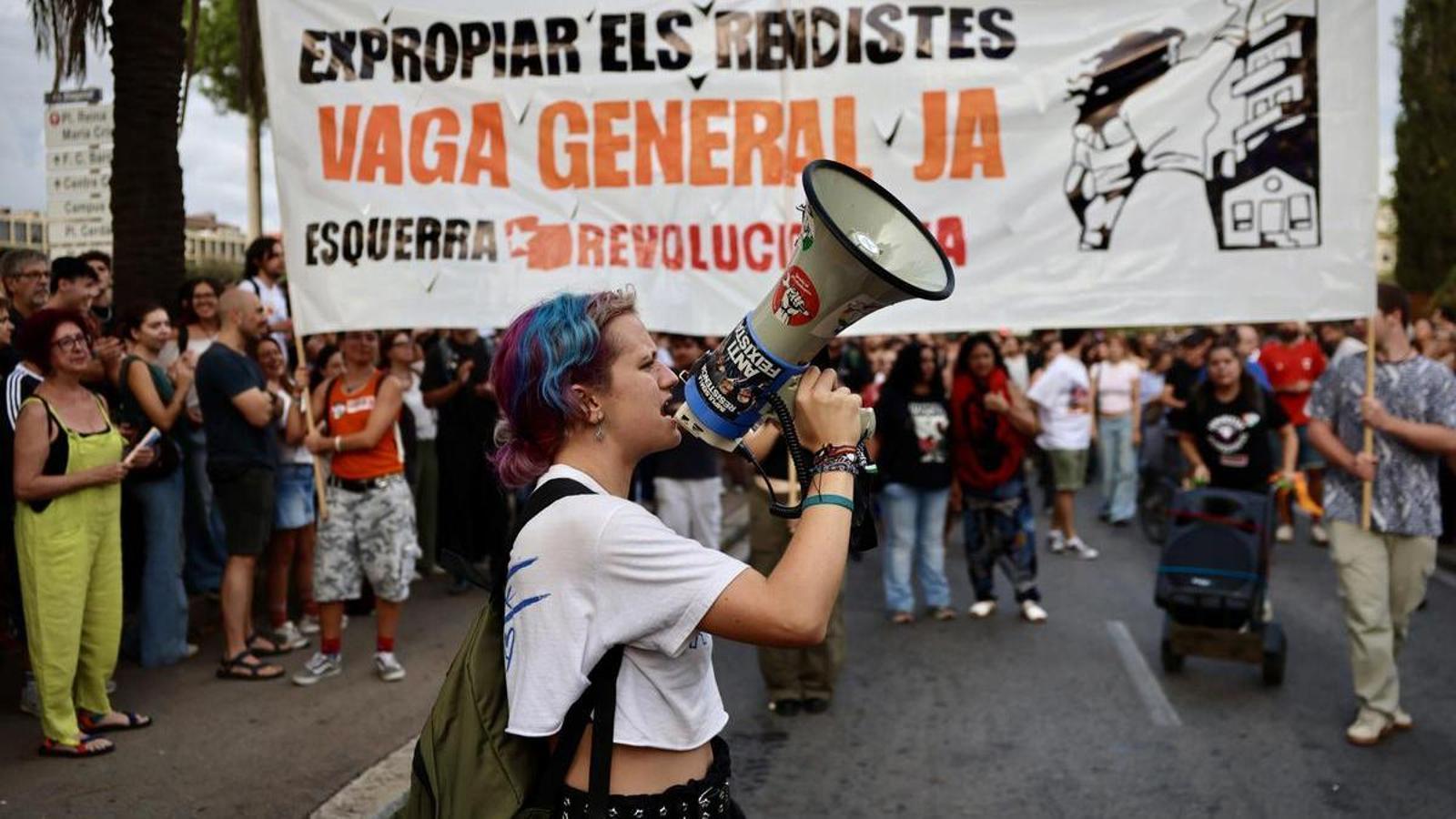
Next week, the first general strike under Pedro Sánchez's mandate in the Spanish government will take place. By a matter of days, the call will be part of this legislative term. The protest is fundamentally driven by an increase in the cost of living, closely linked to the conflicts in Ukraine and the Persian Gulf, which especially affects food. And citizens perceive this when they go grocery shopping. But the other reason that has triggered the discontent has a more distant origin, and has to do with the difference between the increase in wages and that of an element that is a basic right enshrined in the Spanish Constitution. Specifically, in article 47, which defends the right of all citizens to decent and adequate housing.
According to the analysis collected by ARA, between 2013 and 2024 –the last fiscal year with available data– the median salary –a figure that is not distorted by the highest incomes– has grown by 30.7% on average. Meanwhile, the average rent, according to the Generalitat, has increased almost double, 55.7%, although platforms like Idealista raise the price increase to 73%. The price of housing for purchase, on the other hand, has grown even more: 78.7%. Furthermore, between 2024 and 2025 the price soared by 20 points, so that by 2025 the price per square meter had practically doubled that of 2013. And to this, one must add that the shopping basket has become 43.1% more expensive.
The issue is that either wages have not grown as much as they should to be able to live properly, or homes, for various reasons, have a price that is not adjusted to the general economic level of the country. And these reasons range from the lack of sufficient supply to meet demand to the pressure from tourist apartments or rooms, that is, everything that escapes the price cap of the housing law. Without forgetting that administrations have spent many years leaving housing in the hands of the market. It is an element that the Catalan and Spanish governments now seem to want to correct.
Although wages in recent years, in general terms, have exceeded inflation and, therefore, it can be said that citizens have gained purchasing power, the rising cost of basic expenses (housing, energy, and food) is eating up an increasingly larger piece of the income of the 25% of the population with the lowest income. In contrast, the prices of what the highest incomes consume the most (health, education, or information and communication) have not risen as much, and essential expenses do not involve such a large part of their budget. The point is that, unlike other stages, the suffocation caused by the price increases is also reaching the middle incomes.
November 11th will not solve the problem – surely the organizers of the strike do not expect it to either – but perhaps it will awaken the ingenuity of political parties, or some of them. In reality, it is starting to be time for them to explain to us what plans they have or what they intend to do if they reach Moncloa to solve a problem that, taking into account the growing frustration of many citizens, could escalate and end up complicating coexistence.
