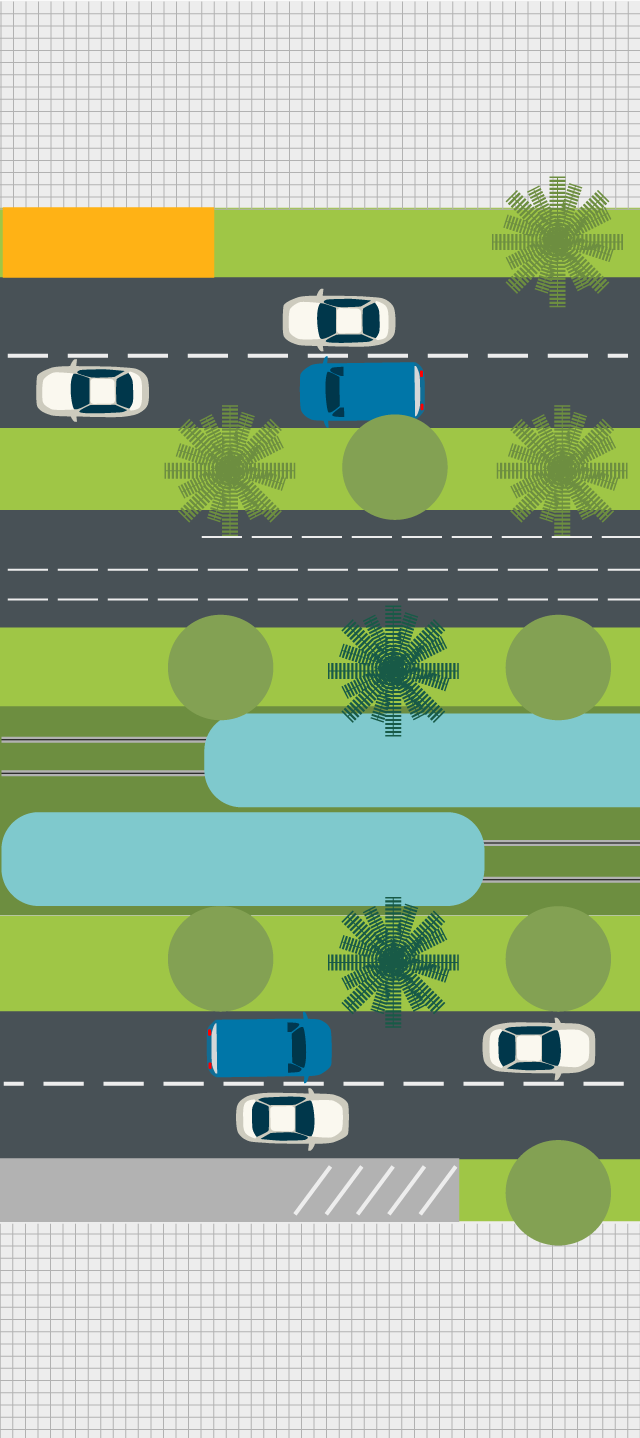
In parallel to the works currently out for tender, the City Council is working on a complementary project to reorganize mobility on Diagonal between the University Zone and Francesc Macià. The proposal plans to reserve the two central lanes entering Barcelona for buses and move private traffic to the three side lanes. A formula that, in addition to favoring the speed of public transport and intermodality, aims to make it easier for vehicles entering via Diagonal to turn right and join the city's orthogonal grid, and will prevent them from having to cross over the tram tracks. The intention is to end bottlenecks like the one currently generated by the Numància traffic light.
Four years of works but without traffic cuts: this is how the tram will be connected along the Diagonal
The tram will connect the two ends of the avenue in only 40 minutes

02/11/2026 - 20:38 h

-
CAT -
CAST
BarcelonaThe great project of the next term in Barcelona begins to move forward. The municipal company BIMSA will tender this week the works to connect the tram through the Diagonal. The goal is for the works to begin this summer with the horizon that, if there are no setbacks, the tram will be operating by 2031. In between, there will be forty months of construction in which between Passeig de Gràcia and Avinguda Sarrià, at least two traffic lanes in each direction will be maintained at all times. The bike lane will also remain active.
Although at some point there had been speculation about the possibility of dividing the work into two different phases, finally the City Council and the Metropolitan Transport Authority (ATM) will maintain the initial plan of carrying out the entire project at the same time. An operation that not only includes the link between the Trambaix and the Trambesòs, but will also involve the doubling of the Diagonal sewer –which will gain 60% of hydraulic capacity during torrential rain episodes– and the redevelopment of the avenue in the section between Passeig de Sant Joan and Passeig de Gràcia.

The first deputy mayor of Barcelona, Laia Bonet, has assured that this is an "exciting" project that will allow for correcting the current disconnection between the Trambaix and the Trambesòs. "These are two networks that work very well, but that currently do not communicate with each other," she stated. The forecast is that the new infrastructure, which with three new stops –Diagonal/Cinc d'Oros, Balmes and Casanova– will connect the Baix Llobregat and the Besòs through the center of Barcelona, will serve nearly 75 million passengers each year.
Once the two networks are connected, the forecast is that passengers will be able to travel from the Zona Universitària to the Campus Diagonal-Besòs in less than 40 minutes. The goal is that, as has already happened with the arrival of the tram from Glòries to Verdaguer, the infrastructure will facilitate intermodality –with a multitude of connections with the rest of the public transport network, the metro and the bus– and also help to decongest two quite saturated metro lines such as the L1 and the L5.
Regarding traffic, the City Council and the ATM estimate that with the implementation of the tram, the circulation of private vehicles will be reduced by approximately 12,500 vehicles on weekdays. Regarding the impact that the reduction of lanes for private vehicles on the Diagonal may have on city traffic, they believe that the orthogonal grid of the Catalan capital should be able to absorb these vehicles without much problem.
Shared platform between buses and tram
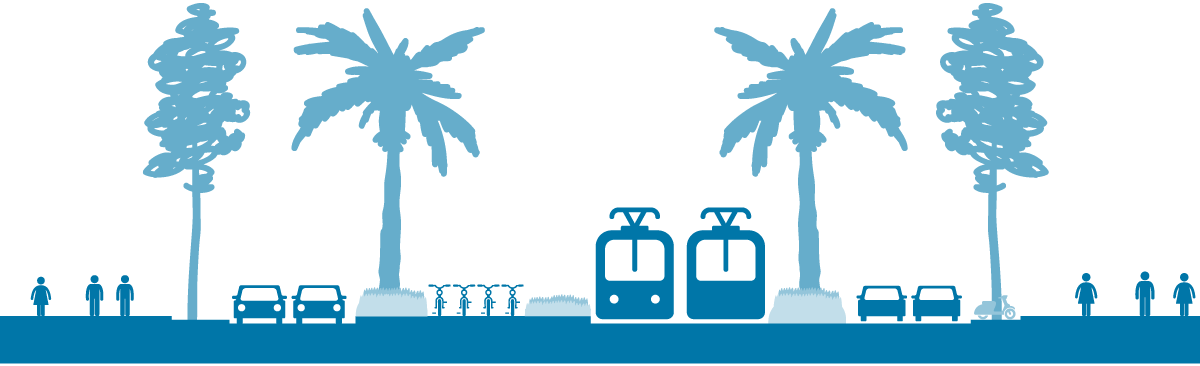
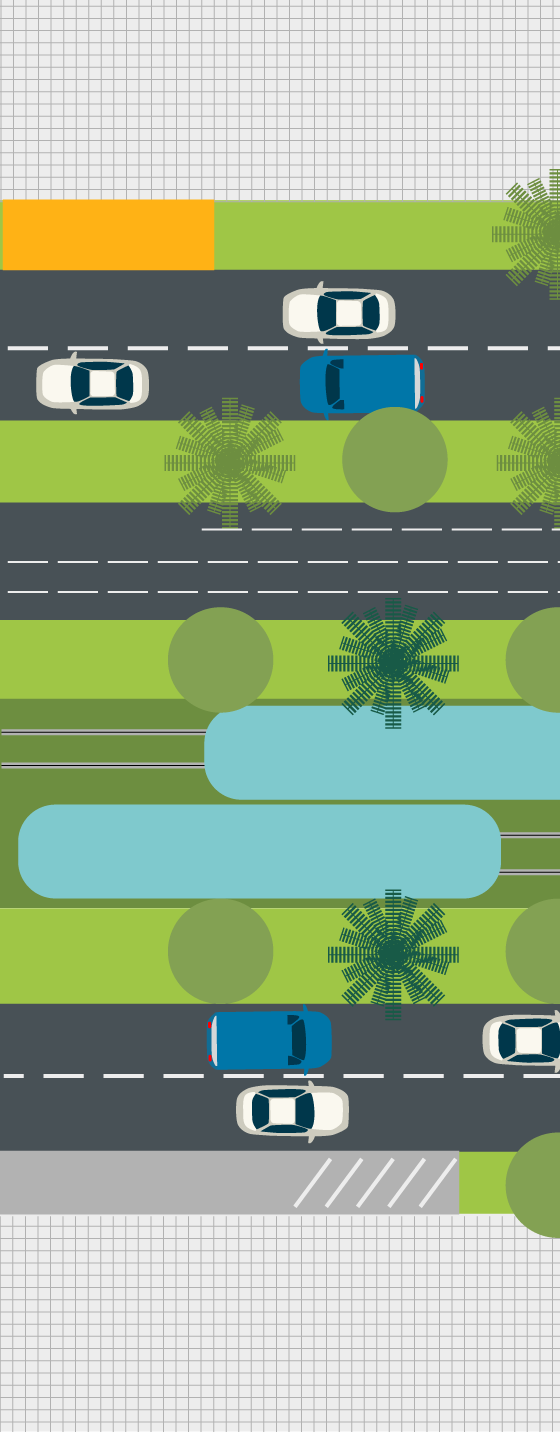
Regarding the transformation of the Diagonal, the project aims to provide continuity between Passeig de Sant Joan and Passeig de Gràcia for the renovation that was already carried out in a first phase between Glòries and the Verdaguer monument. This will involve widening the side pavements to 7.5 metres, and leaving the sides for private vehicles and the centre of the road for the tram and a 4-metre wide bicycle lane.
Tram
Cars
Bicycles
Cars
Pedestrians
Pedestrians
Pedestrians
Bus stop
Traffic
Trees
Bike lane
Trees
Tram
Trees
Traffic
Motorcycle parking
Pedestrians
Pedestrians
Bus stop
Traffic
Trees
Bike lane
Trees
Tram
Trees
Traffic
Motorcycle parking
Pedestrians
Between Passeig de Gràcia and Plaça Francesc Macià, the street section will be identical, but it will not be necessary to act on the sidewalks, which were already renovated during Xavier Trias's mandate as mayor. One of the project's novelties is that in the section between Via Augusta and Pau Claris, buses will coexist with the tram on a single platform. A viable option due to the fact that at this point the tram runs without a catenary.
Finally, the arrival of the tram at the Besòs side of Francesc Macià will also imply making changes to the square. As happens at the intersection of Diagonal with Passeig Sant Joan, the tram will run on the sea side. In addition, the sidewalks on the perimeter of the square will be renovated, new trees will be planted, and the existing bike lane will be modified.
In total, the redevelopment project for this 2.8-kilometer stretch of the Diagonal plans to gain 16,000 square meters of space for pedestrians and 18,900 square meters of urban greenery. The space intended for bicycles will also be expanded to 8,700 square meters.
Rethinking the entrance via Diagonal
