Doubts and some scares on the first day of the new relationship between cars and buses in Barcelona
The new system wants to favor the commercial speed of the buses on Balmes street
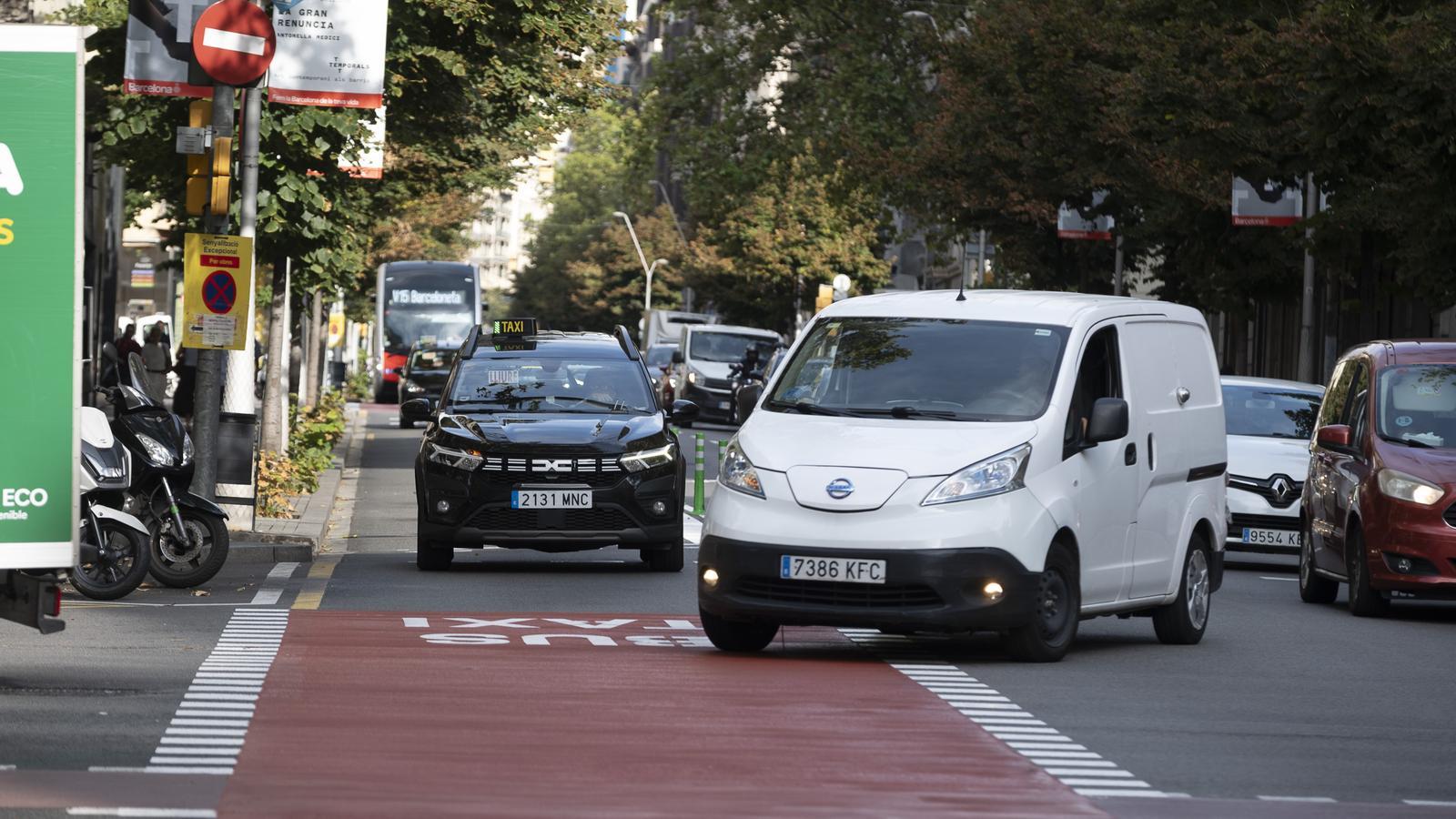

BarcelonaIt is not easy to get used to changes. This is corroborated by one of the new flexible bollards that have been installed on Balmes Street, which define the new relationship between cars and buses on one of the busiest streets in Barcelona. A few minutes past nine in the morning, it is already completely crushed and lying on the ground. This Friday is the first day of the pilot project promoted by the City Council so that vehicles wanting to turn right must do so from the middle lane. That is to say, without occupying the bus lane and giving way to taxis and buses in the style of what they already have to do, for example, with bike lanes.
To help drivers understand the new turning system, the City Council has added flexible bollards that prevent merging into the bus lane and has painted the lane red at intersections to highlight that buses have priority. However, in the debut of the new model, it is easy to see scenes of confusion and even some scares. Although there are many who get it the first time and make the turn correctly, in a little over half an hour at the intersection of Balmes and Mallorca, it is easy to grasp some of the difficulties of this premiere.

The first thing observed is that many drivers who want to turn right continue to merge into the bus lane before the intersection. The bollards, in this case, what they achieve is that they merge into it earlier, and drive practically half the street from the right lane. It happens with many cars and with each and every one of the motorcycles.
Committed people
Now it is the turn of those who do make the right turn from the middle lane. Committed, almost stoic people, who not only have to let buses and taxis pass before turning, but also the cars that do not do it well and drive in the right lane. As if that were not enough, from time to time they also have to endure an impatient honk from one of the cars behind them that cannot quite understand what they are doing there in the middle, standing still. Patience.
However, within the category of those who turn from the middle lane, three types of drivers can be distinguished. The cautious ones – who wait for no one to come –, the reckless ones, and those who simply do not see it clearly, give up turning and continue straight down, hoping for better luck at another turn. The latter, however, are a clear majority. To the point that the most common image is that of taxi drivers slowing down and yielding to the cars that are turning. When that does not happen, there are scares. The driver of a line 67 bus shakes his head after a van has crossed right in front of him. A taxi flashes its lights at a vehicle that has remained stuck right in front. There is some sudden braking.
The goal of all this is for buses V15, 7, 63, and 67 to be able to circulate faster and stop being some of those with the lowest commercial speed in the city. A driver of the V15 line who was debuting this morning with the new system admits that it is still too early to know if he will notice the impact. "Maybe they don't occupy your lane, but they cross in front of you and you have to be careful," he says. Nevertheless, he trusts that little by little everyone will get familiar with the new model. We end up getting used to everything.
