Barcelona opposes Agbar's plans for the city's last large agricultural space
Residents of Vallbona show themselves worried about the future of the Ponderosa after the purchase of the lands by part of the company
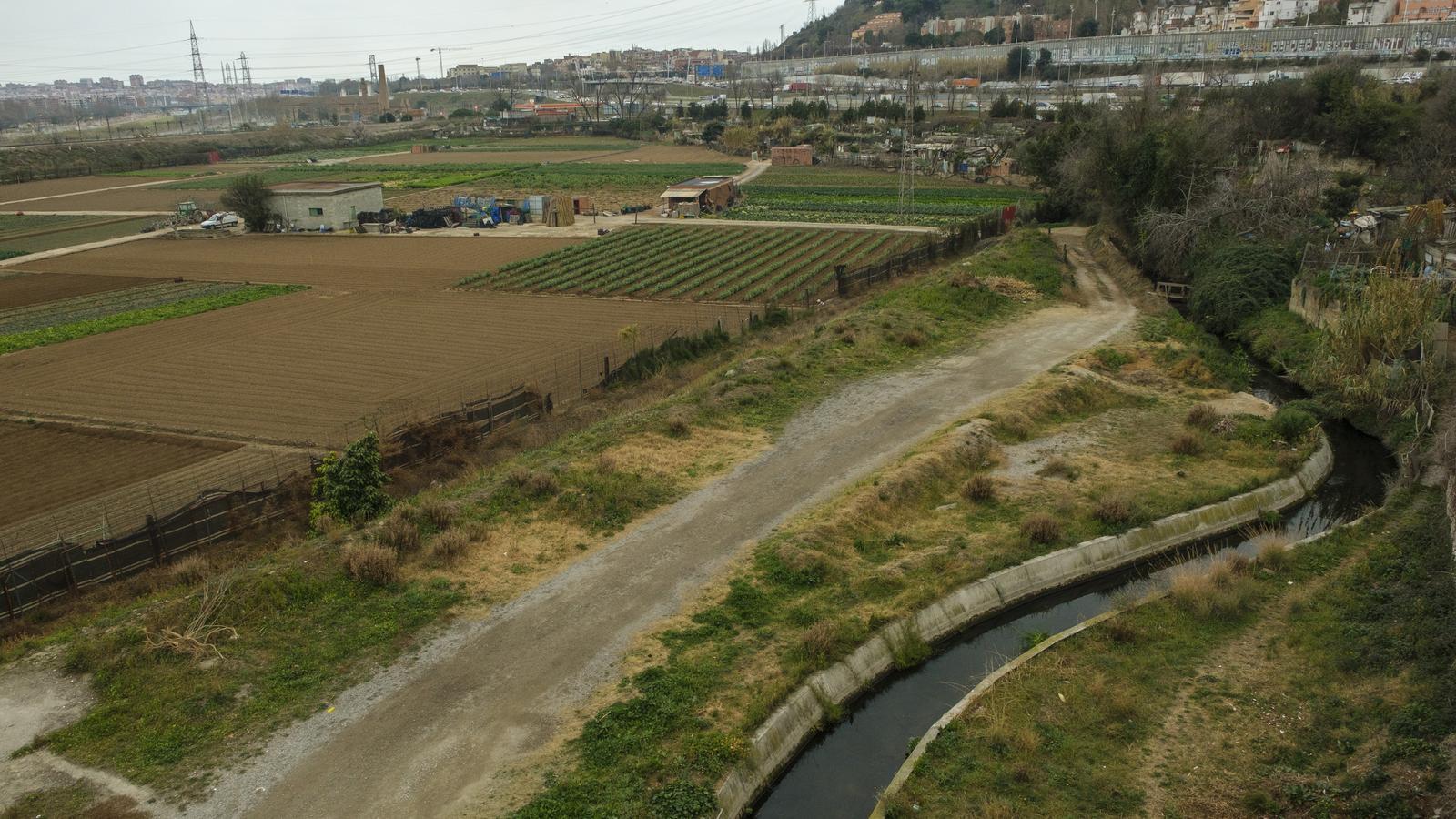

BarcelonaFrontal opposition from Barcelona City Council to the possibility of installing a new water treatment plant in the city's last large agricultural space. The first deputy mayor, Laia Bonet, rejected this Tuesday in the council's urban planning commission that the Ponderosa vegetable gardens –in the Vallbona neighborhood– be sacrificed to install a facility of this type. "La Ponderosa is not the appropriate location for this infrastructure," argued Bonet, who assured that the municipal government has also conveyed this "clearly" to both the Catalan Water Agency (ACA) as well as the AMB and the Generalitat.
The head of urban planning for Jaume Collboni's government explained that they are working with these institutions to "put alternative locations on the table" and "not compromise such a strategic space." Words that come after the ARA reported that in November 2024, the public-private company Aigües de Barcelona (Agbar) purchased the land where La Ponderosa is located with the intention that it serve for a next phase of the expansion of the drinking water treatment station (Etap) that the company has in Trinitat. Plans that now clash with the objective of the city council, which is the one that has the final word on whether the land –classified as community equipment and facilities of interest or metropolitan scope– can host this expansion.
In this sense, the proposal that Barcelona en Comú brought to debate this Tuesday demanded that the municipal government recover the plan that the then mayors of Barcelona, Ada Colau, and Montcada i Reixac, Laura Campos, put on the table in 2023. A project called AgroVallbona, which sought to shield the agricultural use of La Ponderosa by modifying the urban planning so that the area would stop being developable land and be recognized as rustic. In this way, it would not be possible to build on the fields where tomatoes and lettuce are now grown.
Despite his rejection of locating a future water treatment plant on these lands, Bonet has distanced himself from the request to restore that planning. "The current context is different," he argued, and admitted that elements such as the change in ownership of the lands—which until the end of 2024 were in the hands of Sareb—have a "direct impact" on the future of the area. Despite the PSC's abstention, however, the proposal by Barcelona en Comú went ahead with the votes of this group, Junts per Barcelona, and Esquerra. PP and Vox voted against it.
Common councilor Carolina Recio criticized the fact that that planning is not being recovered. "If it had gone ahead, we would not be lamenting the purchase of lands that make it so we do not know what the future of the Ponderosa lands is," she pointed out. ERC councilor Eva Baró also demanded rescuing that plan "so that the future of the city is not determined by whoever buys or stops buying a piece of land." From Junts, Carme Lleó defended the importance of the Ponderosa and demanded that decisions regarding water management be taken with "transparency".
Concern among neighbors
The change of ownership of the Ponderosa land has also generated concern among the residents of the area. Zaida Palet, from the Vallbona Viu association, considers it an example "of the neighborhood once again being threatened by megaprojects without any benefit to the residents." She criticizes that the municipal government does not believe in the AgroVallbona project despite the fact that it was promoted by a government of which they were a part, and she censures that everything related to water management "is being decided from the AMB without any real participatory process."
"We are worried that the opportunity for growth in Vallbona will be taken by Agbar with this move," adds Sergi Marchal, who is also a resident of the neighborhood. Although showing understanding of the fact that key infrastructure is needed in the metropolitan area, he laments that its impact often falls on this neighborhood and on a space like La Ponderosa, the last agricultural land in the city. A place where you can still find farmers like Carlos Zaragoza, who has been retired since January, but who continues to go to plow some vegetable gardens where he has worked since he was nine years old and who hopes that they can continue to be part of the most characteristic landscape of the city.

