Agbar keeps the lands of the last large agricultural space in Barcelona
The company bought in 2024 the lands of the Ponderosa with the objective of expanding its Besòs water treatment plant

-
CAT -
CAST
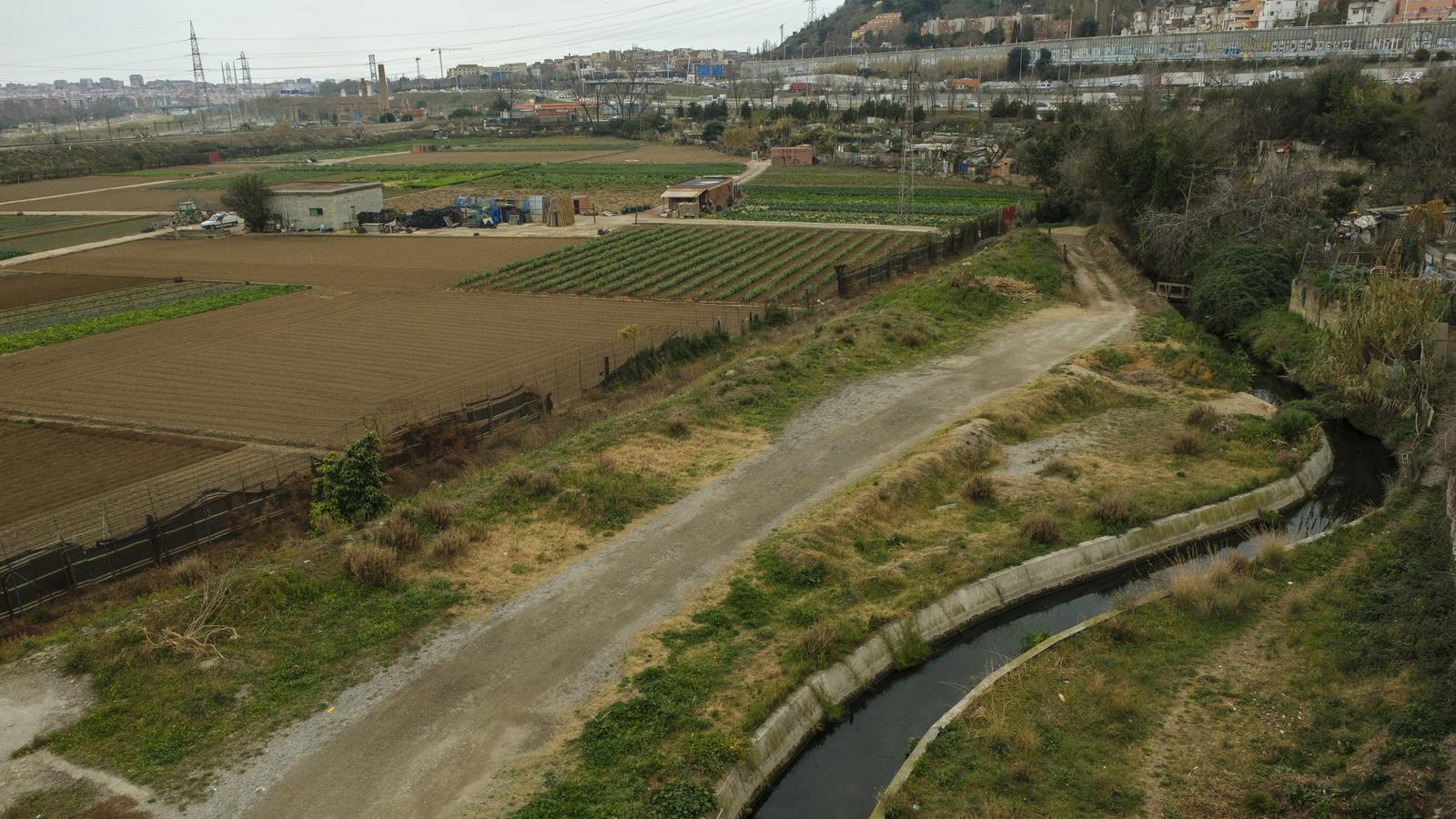
BarcelonaOne of the miracles that Barcelona preserves is the Ponderosa vegetable gardens, in the Vallbona neighborhood and right next to the Rec Comtal. A large part of this last great agricultural space of the Catalan capital survives on land that, as ARA has been able to confirm, changed hands at the end of 2024. In November of that year, the public-private company Aigües de Barcelona (Agbar) acquired a plot of almost nine hectares in the Nou Barris district, on the border between Barcelona and Montcada, located between roads and train tracks, but key for the city and also for the management of the water that reaches it.
Company sources confirm to this newspaper the purchase of these lands, which had belonged to Renta Corporación but were in the hands of Sareb. The goal, they explain, is for them to serve for a future phase of the expansion of the drinking water treatment plant (Etap) that the company has in Trinitat. A project that, however, is still in its infancy and that in order to move forward will require the agreement of various administrations. One of them is the Barcelona City Council, which is who would have the final say on whether the land—classified as community facilities and endowments of interest or metropolitan scope—can accommodate this expansion.
The issue is not minor because it can define the future of land that Barcelona has been trying to reconfigure for decades. The last proposal was put on the table in 2023 by the then mayors of Barcelona, Ada Colau, and Montcada i Reixac, Laura Campos, and it sought, precisely, to shield the agricultural use of La Ponderosa. The project, called AgroVallbona, aimed to modify urban planning so that the area would stop being developable land and be recognized as rustic, so that it would not be possible to build on the fields where tomatoes and lettuce now grow. That proposal, however, has not been materialized.

Another attempt to redefine that space did not prosper before either. In 2009, the Strategic Residential Area (ARE) project was approved, which provided for up to 2,000 homes, 60% of which were social housing, in what was to be the city's first eco-neighborhood. Those plans ran head-on into the real estate crisis and ended up filed away in a drawer.
Now it remains to be seen what the future of the area is after Agbar has taken ownership of the land, and also what the response of the neighbors will be, who have always fought to keep La Ponderosa alive. These vegetable gardens are an inseparable part of a neighborhood that has often felt forgotten due to being in a corner of the city. Even today, they are a vital part of the daily life of some neighbors who, since the death in 2019 of Juan Ortuño, a farmer who had worked the land there since 1951, can no longer queue to buy tomatoes at the point of sale he had in a shack.
Public water management
Beyond the symbolic relevance of the space, the land acquired by Agbar is also strategic in terms of managing the water that Barcelona drinks. As company sources explain, their objective is to eventually use the plot to expand the drinking water treatment plant that the public-private company already has in operation just 400 meters away. A project that they link to the importance of actions to improve metropolitan resilience in the face of drought scenarios.
From Aigua és Vida, however, they believe that with this move Agbar also seeks to condition the plans for public management of the water received by the Barcelona area, since two water treatment plants managed by Aigües Ter Llobregat (ATL) were planned near the area. Dante Maschio, spokesperson for the association, recalls that this was defended by the Government in the meetings of the Interdepartmental Drought Commission that was set in motion by the Pere Aragonès executive.
In fact, the first of these projects—which is intended to be installed on land in the municipality of Montcada i Reixac—has already been released for public information and received allegations from the Montcada City Council—which requested looking for a new location—and from Agbar itself. Sources from the Catalan Water Agency point out that the location of the second treatment plant is still under study, but from Aigua és Vida it is pointed out that the Ponderosa land was a possible destination. A location, however, that would now force negotiations with Agbar regardless. For this reason, Maschio questions that the company was allowed to buy the land. "In the eyes of the public, we find no possible justification other than favoring Agbar's business," he says.

