What transforms an aid worker into a sexual predator?
Psychologists and neuroscientists explain how power, impunity and dehumanization can turn humanitarian aid into a tool of exploitation following the case of abuses against refugee women in South Sudan

-
CAT -
CAST
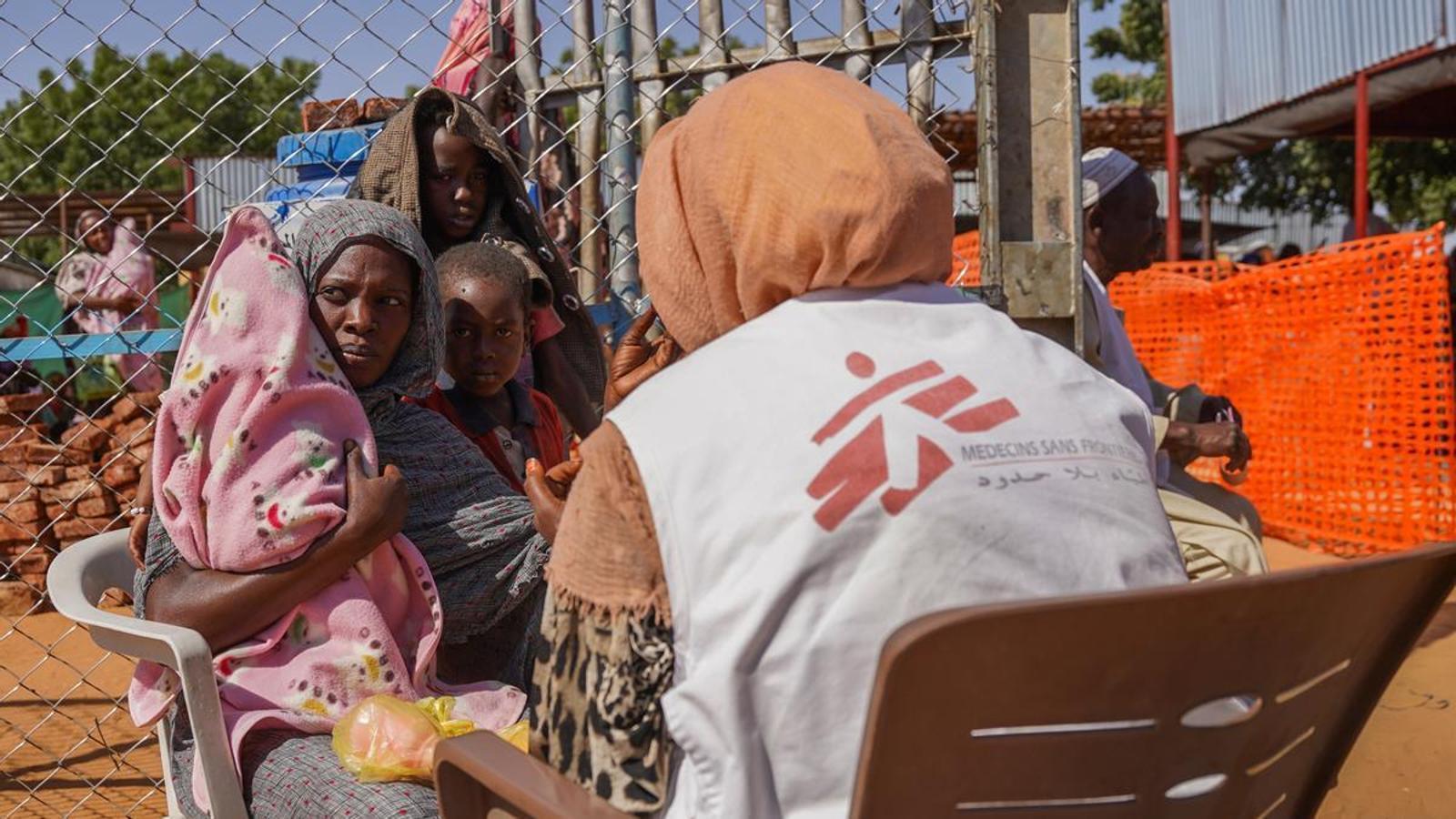
One of the news stories that has shaken the international conscience this week is that 18 workers from Doctors Without Borders (MSF) have been reported for sexual abuse of all kinds against refugee women in South Sudan in exchange for food. What happens to human nature that someone is capable of exercising this violence against those who have nothing?
The first reaction is one of absolute incomprehension, a shock that stirs us inside. It is hard for us to accept the paradox that someone who, in our collective imagination, leaves the safety of their home and travels thousands of kilometers with the sole premise of saving lives, could end up using this very mission to destroy them. This breach of trust is brutal because it attacks one of our few benchmarks of absolute goodness: the figure of the aid worker as a selfless hero. When what should be a protective shield for those who have nothing suddenly becomes the weapon of exploitation for those who have everything, the moral void that remains is difficult to digest.

Antonio Andrés Pueyo, professor of psychology of violence at the University of Barcelona, explains that it is vital to break the comfortable scheme of "monsters versus good people." Pueyo warns us: “Under heroic labels such as aid worker, a very heterogeneous human group coexists. In the mud of international missions, the ethics of a vocational doctor share space with logistics personnel, guides, or drivers who sometimes possess neither that training nor that moral compass.” In these scenarios of chaos, "evil" is not always a prior pathology, but rather the response of an ordinary person to an environment that offers two poisons: total power over the other and the feeling that no one will hold them accountable.
This abuse germinates in what Pueyo calls "the opportunity of trust": the victim does not expect to be harmed by someone wearing a uniform that symbolizes salvation; this asymmetry of power turns aid into a weapon. Whether through force, emotional manipulation, or blackmail with basic resources, the aggressor stops seeing a person and begins to see an opportunity. As the professor explains, “in contexts of absolute impunity—where the aggressor feels that their home country will not judge them and that no one will believe the victim in the midst of the chaos—the brain performs a cold cost-benefit calculation. If the perceived risk of punishment is zero, moral brakes evaporate”.
Normalizing abuse
It is not a question of "madness", but of an ethical structure that collapses in the face of the absence of external control. But the horror in Sudan has a collective dimension that makes it even more disturbing and that, lamentably, is not uncommon. How is it possible that 18 people participate or remain silent in the face of such acts?
“On the margins of war, peer influence is a devastating component. If the group normalizes abuse, the behavior becomes a routine shared where responsibility is diluted —explains Pueyo—. If others do it, I do too", seems to be the silent motto that nullifies individual inhibitory mechanisms.

According to Emilia Redolar, a neuroscience professor at the UOC, absolute power can physically reconfigure the functioning of the brain. The predator's brain is not necessarily a sick brain, but one that uses the dorsolateral prefrontal cortex—the seat of cold reasoning and planning—to deliberately silence signals of moral distress. It is a kind of executive anesthesia: the rational brain justifies horror based on self-interest and turns off the ethical alarms that allow us to fit in socially. This disconnection becomes even more serious when it affects the ventromedial prefrontal cortex, the structure that allows us to feel the pain of others as our own (empathy). By failing this "theory of mind," the aggressor loses the ability to recognize the humanity of the victim; the refugee woman ceases to be a person with feelings and rights to become a commodity, a simple resource, or an object at the disposal of those who have control over food and survival.
But the darkest part of this process is that, in these profiles, abuse stops producing guilt to directly activate the reward circuit. Through the frontoparietal network, the act of dominating the weak activates the nucleus accumbens(the pleasure center) and transforms power into a biological gratification similar to a drug. The brain receives a shot of dopamine every time it imposes its will on the vulnerable, a fact that leads Redolar to launch an uncomfortable reflection on the humanitarian vocation: “Not everyone who approaches conflict zones does so out of pure altruism; there are profiles that seek these scenarios precisely because the role of protector grants them a hierarchical and moral superiority that directly feeds their pleasure circuit”. In this void of surveillance and impunity, the extreme vulnerability of the other is not an ethical limit, but the fuel necessary for a perverse biological satisfaction.
This trail of impunity and biology is not exclusive to Sudan. It is the same pattern we saw in the orgies of Oxfam executives in Haiti or in the abuses of WHO personnel in the Congo during the Ebola crisis. Faced with this abyss, prevention cannot depend only on a supposed inherent goodness in the aid worker. Andrés Pueyo proposes stricter screening and the use of criminal record certificates —a minimum already mandatory in the State to work with minors—, despite admitting that “no selection system can guarantee with total efficacy how a person will react in conditions of extreme chaos”. The solution requires leveling the asymmetry of power with rigorous external controls and ending the structural impunity that allows many aggressors to "disappear" without being held accountable before the justice system of their countries of origin. Implementing blacklists to prevent abusers from being rehired and enabling confidential reporting channels are necessary steps that some organizations have already begun to apply, but it is necessary to go further. As Redolar, from the UOC, reminds us, giving visibility to these dark corners of the brain from science is the basis for designing protocols that do not lower their guard against the intoxication of power.
