They compile for the first time a catalog of the mysterious "dark proteins"
Thousands of tiny molecules are identified that until now had gone unnoticed and that could have key functions in the cells

-
CAT -
CAST
Perhaps one of the most used metaphors in biology is the one that compares DNA to an instruction manual. Indeed, just as if it were an encyclopedia, a genome contains all the necessary information to make any cell of that living being function. Continuing with the simile, this data is only used when needed: at each specific moment in the life of the cell, it will be necessary to read some pages or others of the book (or, to put it in a way closer to reality, it will be necessary to activate or deactivate a gene, the basic unit of information of this encyclopedia). But what happens afterwards? This part is not usually explained as often.
To go from idea to action, someone is needed to do the work. And that someone is proteins, which, if we want to continue abusing allegories, we could consider as the small workers of the cell, each specialized in a series of specific functions. Together they form what is called the proteome, and the peculiarity is that they do not all exist at once. Simplifying greatly, genes actually contain the guidelines for manufacturing proteins, and they are only read at the moments when these workers are needed. As if they were complex Lego figures, proteins are built by joining pieces that fit together, and these “bricks” are called amino acids.
But no one said biology is simple. One of the clearest examples is that, although the human genome contains about 20,000 genes with instructions to build proteins, human cells can actually produce more than 70,000 different ones. How do they do it? By reading the pages of the instruction manual in different orders, the combinations multiply. This is why organisms with a relatively small genome can be much more complex than others that have a longer one: size does not matter, but how it is used. In the end, what counts is how many workers you have doing the work.
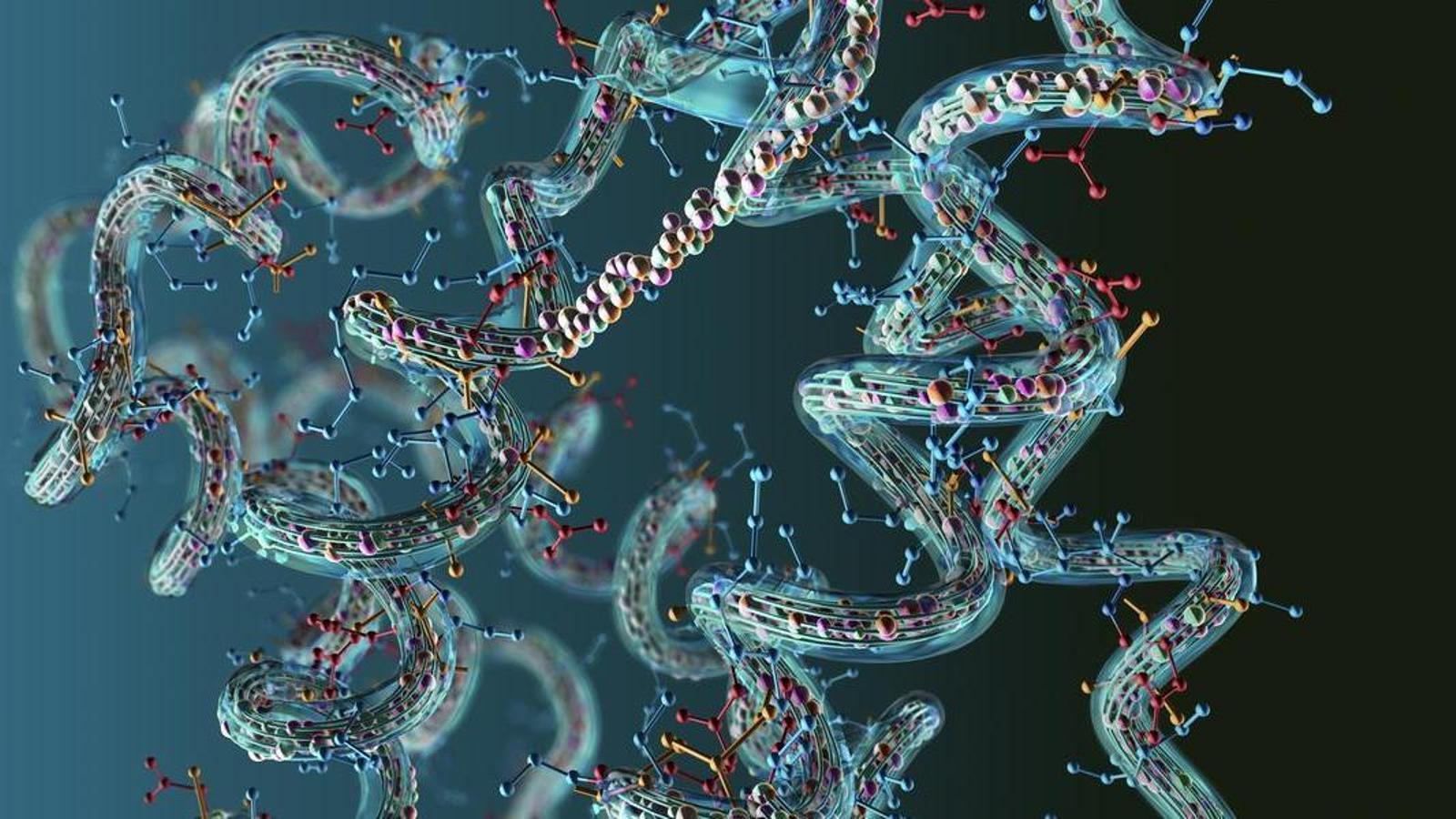
And, to complicate matters further, it was discovered relatively recently that these 70,000 “official” proteins are not the only ones responsible for keeping the cell functioning. Hidden in the genome is the information necessary to produce thousands of proteins that have the peculiarity of being much smaller, and which until now are known as “dark proteins” because of how little is known about them and the difficulty there was in detecting them.
The existence of these microproteins has been suspected since the 90s of the last century, when pieces of the genome were discovered that contained information but not enough to manufacture an entire protein. At first, it was thought that they had no utility, but little by little it was seen that changes in these regions were associated with diseases such as cancer. This made it suspected that they generated some kind of product, but it was not known exactly which one.
It has not been until now that the mystery has been solved. A study recently published in the journal Nature, directed by Sebastiaan van Heesch, from the Princess Máxima Center for Pediatric Oncology in the Netherlands, presents the first database that gathers everything known about these microproteins and, incidentally, gives them a more elegant proper name: peptideins (from peptide, which is what short chains of amino acids that do not reach the size of a whole protein are called). Van Heesch's group, which represents what has been called TransCODE Consortium, has managed to identify 1,785 peptideins, but they believe there are many more. They have even proposed that there may be twice as many peptideins as there are normal proteins. It may be that many do not actually have any use for the cell, that they are just byproducts that are rapidly degraded before they can do anything, as some experts have proposed, but others might fulfill key regulatory tasks for their big sisters. Specifically, about fifty have been identified that could be important for the functioning of the heart or the brain.
The public databases that are available to all scientists now contain all known details about peptideins alongside those of other proteins, and it is believed that this will accelerate research in this field. Over the coming years we will surely learn more about what they are and exactly what they do inside our cells. This will mean that, in all likelihood, we will have more therapeutic targets for a range of diseases, and drugs will begin to be designed to block them when they do not function correctly.
Time will tell if their functions are secondary or, as everything seems to indicate in some cases, important in key aspects of cell physiology. In any case, what we do know now is that although our modest genome is vastly surpassed in size by that of organisms as diverse as an amoeba (which is 220 times larger), some fish (30 or 40 times) or the axolotl (10 times), it contains enough information to generate an extremely complicated proteome, of which it seems we still have a lot left to discover.
