Why this time are important the elections of the Senate?
Various progressive voices call for an alliance of the left to avoid a change of majorities in the Constitutional Court

-
CAT -
CAST
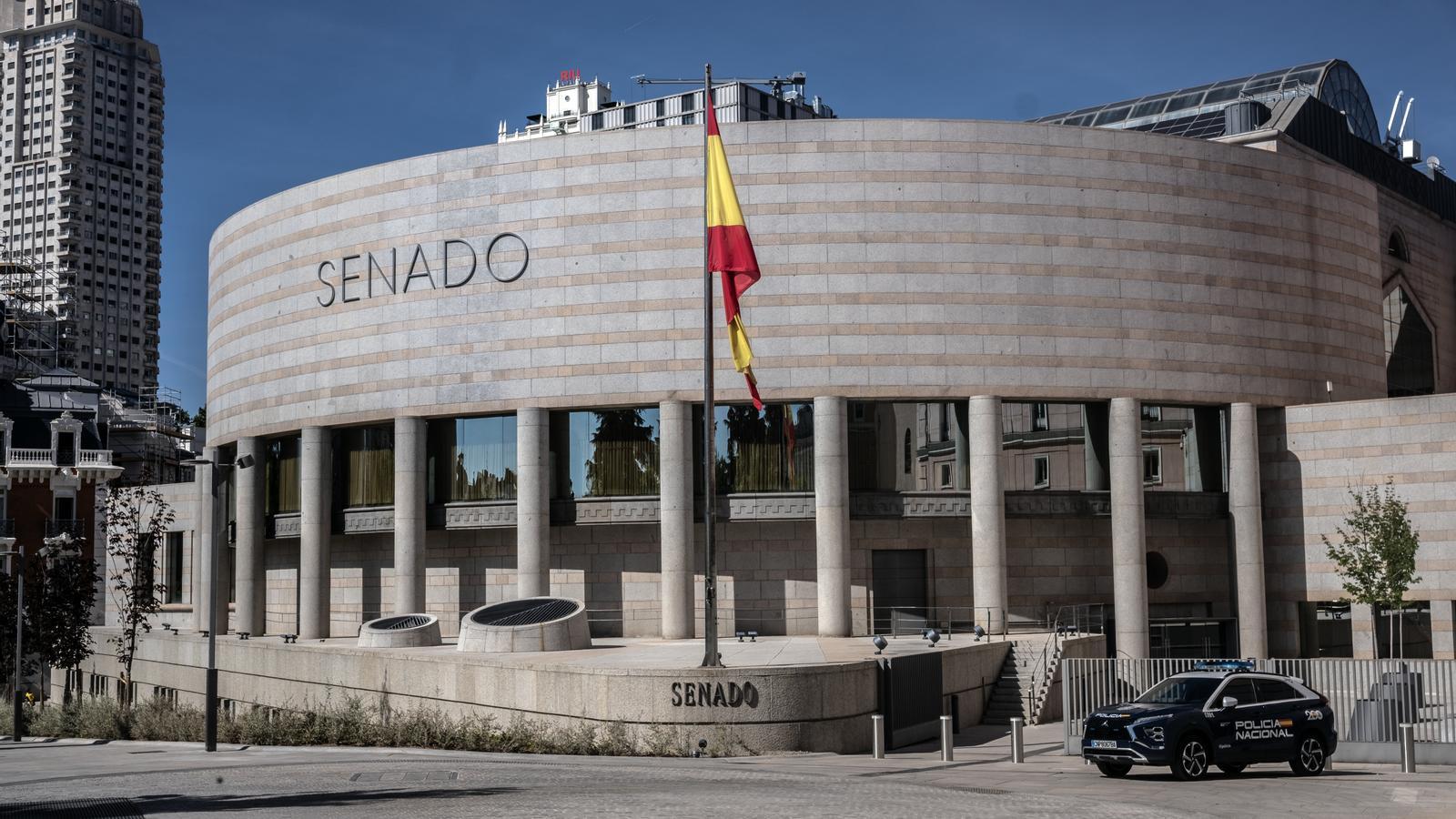
MadridNormally, the Senate is a secondary chamber in the day-to-day politics in Madrid. Although this term the PP, which has an absolute majority there, has turned it into the scourge of the socialist government – the toughest control sessions for ministers were in the upper house – and the cradle of all the investigative commissions that affected the PSOE. However, in the next Senate elections, also scheduled for November 29, not only are the majorities in the upper house at stake, but there is also, indirectly, a change of majorities in the Constitutional Court on the table.
For what reason? The Senate is composed of 266 senators, about sixty of whom are appointed by the autonomous communities. The rest are elected directly on the day of the general elections through a majority system of limited voting with open lists. In 2023, the PP managed to surpass the absolute majority, and in the next elections, it expects an even better result. For this reason, some parliamentary sources interpret, it is currently blocking the renewal of up to four magistrates of the Constitutional Court, one of whom is the president himself, Cándido Conde-Pumpido. If the selection were made now, the split would be 2-2 between conservatives and progressives; on the other hand, if it is done after November 29, when the PP and Vox hope to have a better result, they aspire to be able to propose up to four conservative magistrates. This is not a minor change: if the new members of the TC were all proposed by the right, a change of majorities would occur: from progressive to conservative in the high court.
To be able to achieve this, the PP would have to reach three-fifths of the Senate, something it considers feasible given what the polls give it and also because it already has many senators designated by the autonomous communities governed by the right. However, this wait has caused a blockade in the Constitutional Court and, for example, its president to maintain the leadership of the high court even though his term has already expired.
Last week, at the informative breakfast that Conde-Pumpido offered at the Real Casino de Madrid, this issue did not go unnoticed. The magistrate called on the PP and the PSOE to renew the body, and later announced that he would retire to "private life".
Left-wing alliance?
For this reason, various progressive voices are asking the left to explore an alliance and not to run separately against the Popular Party and Vox. It must be taken into account that, unlike the Congress, the Senate has a majority electoral system with open lists, so it rewards the concentration of the vote on certain candidates. In Catalonia in the years 2000, 2004, and 2008, the PSC, ERC, and ICV ran together for the Senate under the brand Entesa Catalana de Progrés. And in 2023, the experience was repeated in Ibiza and Formentera, where the PSOE, Sumar, Esquerra Unida, and Ara Eivissa allied themselves to obtain representation. It is, in fact, the only senator that the space to the left of the socialists obtained. Will they repeat this scheme at a national level? For the moment, Sumar is still choosing its visible face and must resolve whether it will run jointly with Irene Montero's Podemos.

