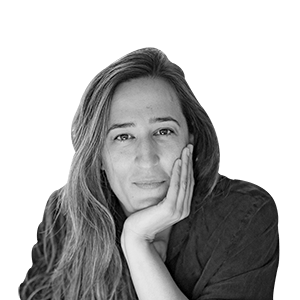
Jordi Hereu: "We do not feel at all responsible for the growth of the far right"
Head of the PSC list for Barcelona
-
CAT -
CAST
BarcelonaInterview with the acting Minister of Industry and Tourism and head of the PSC list for Barcelona in the upcoming general elections, Jordi Hereu (Barcelona, 1965).
Only the CIS predicts that the sum of the left will reach a majority. What makes you think it is possible?
— We have great growth potential in people who need to be mobilized and who until now have lived their lives without thinking in terms of participation. In the coming days they will be mobilized, and this can lead us, and I am convinced that it will lead us, to victory.
Pedro Sánchez won in 2023 with the promise of stopping the far right. Three years later, Vox is even further ahead in the polls. What responsibility does the PSOE have in this?
— We do not feel at all responsible for the growth of the far right because it is happening all over the world, unfortunately.
But does it force a rethink of the strategy in some way?
— No, now we are obliged to win them democratically. We have not had an ordinary opposition and from the first day I have felt criticized not for what I did, but for who I was.
Vox is making inroads precisely in neighborhoods, such as Torre Baró, that previously voted for the PSOE. What is failing?
— We continue to win in these neighborhoods. We are the left of proximity, of those of us who are there in the day-to-day. And, from proximity, we take charge of the fears, of the insecurities, of the problems that people have. Only from proximity can you defeat those who come with many lies. They do not come to solve the problems, they live off the problems.
But they connect with a part of the working class.
— With a part, but we are going to win. We will beat them, and the People's Party too, because we have precisely never given up. It is only when you give up that others make a gap for themselves.
Has the PSOE not abandoned a part of the working class?
— No, radically no. We are the fastest growing country in Europe without having abandoned any of the social democratic paradigms. In other times, perhaps due to the crisis, we had to abandon some things, but this time we have managed to grow more than anyone and, at the same time, defend social rights, labor rights, civil rights, and have a radical commitment to coexistence. And in front of us we have some people, to whom we must be grateful for their clarity, who are explicitly against all that we defend. That is why it is true that these are different elections. They want to destroy all of this, and they have many international allies, many new communication systems, a lot of money and no scruples.
What is the point of GDP growth if people don't feel it in their pockets afterwards?
— There are people who notice it, there are people who do not notice it. Now there are two major challenges. One is the cost of living, which is experienced in a more dramatic way due to a war that we are fighting. And, then, the big issue: housing. It centers many of the contradictions and problems that we have now, and I believe it clashes with the narrative of generational progress. It is a problem in the day-to-day life of a great many people.
You are now defending stronger interventionist measures on housing than the partners were already defending during Sánchez's first term. Do you think they have taken too long?
— In the previous term, we passed the housing law. When the right was in government, the State had nothing to say or do regarding housing, because it is the thesis of the pure market. Furthermore, the housing law is what already generates the philosophy that the housing market is very imperfect.
But do you think that, for example, it has taken too long to apply measures such as the caps in tense zones? Podemos was already asking for it in 2020.
— We have had the parliamentary blockage of up to twelve initiatives and, for this reason, we are now asking to have a majority to proceed to approve them.

Notice that I was talking to you about 2020. They didn't need Junts to reach a majority.
— With Pedro Sánchez, housing policy is made from the State. And we also need an involved city council that offers land and is linked to an autonomous government that believes in it. Only with the three together will we be able to do it. Spain built more between 1996 and 2007 than the rest of Europe. The thesis was that the market would solve it with more supply, but we have learned many things, such as that an entire stock of protected housing must be created that always remains as public heritage. And that we should not do what was done with good intention in the 80s and 90s of carrying out public housing developments that after 10 years would pass to the free market. Now we must regulate the market from every point of view and protect the vulnerable, but we say that we must build much more, which is what distances us from another type of left.
Speaking of construction, Catalonia has grown by 700,000 people in the last eight years. Should this not have been planned for, also in housing?
— We are a growing economy and, furthermore, we are located in a part of the world where we have next to us a continent that is at an abysmal distance. Italy, a country governed by the far-right, receives more irregular immigration than we do. I say this because there are people who use immigration as the repository for all evils and challenges. For the sake of our economic fabric and social actors, we need the incorporation of people coming from abroad, because our birth rate and age pyramid do not suffice.
Let me ask it differently. How can we maintain the current welfare system with a low-wage model?
— Generating higher productivity sectors. Innovating more and generating and betting on higher productivity sectors. The great goal of productivity seems fundamental to me.
No major star promises from the Spanish government in Catalonia have materialized, such as the new financing system or the cancellation of the FLA, even though they have had three years to make it possible. Do you understand those who say that the PSOE does not keep its promises?
— We have fulfilled our commitments and in the coming months we will finally be able to see many things achieved. And we have managed to restore normalcy so that all the people who participated in the Process can move freely throughout Catalonia. This is easy to defend here, but over there in Madrid it is not easy.
Do you want to see Puigdemont here?
— Well, I will celebrate it as a victory for the agenda of reconciliation. And, therefore, I wish that everyone can defend their ideas normally. Without us, it surely would not have happened. Of course, the Rodalies or the debt forgiveness are agreements that must arrive, but we are facing people who are even willing to sacrifice the interests of their citizens in their autonomous communities to put spokes in the wheels of proposals that we have put forward for the benefit of everyone.
But Junts would vote in favor of, for example, the debt cancellation.
— They are good and positive measures for strengthening the welfare state.
Regarding Rodalies, the transfer of the R1 line was agreed upon for the end of the year. Do you think this will arrive in 2026 or should we already accept that it won't?
— I don't know. Nobody said it would be easy. The point is to persevere. We will make it. It is true that at these moments people still cannot board a new train, but the new trains exist and will arrive very soon. This means that decisions have been taken for years now, because a train cannot be improvised.
Can Spain afford the maintenance of the AVE tracks?
— These are collective decisions that derive from politics. And, therefore, of course it is possible. Do we have the capacity to maintain it? Well, yes. We are obliged to. I will also tell you that the whole country has requested the extension of high-speed rail, because there is no territory that has not wanted connectivity. The same people who criticize it are the ones who later ask for it. It is like the debate on pensions. People wonder if it will be possible. It depends on political will and on what model you want.
If the PSOE has to depend on Junts again, do you see a feasible agreement that has the economic agreement as a bargaining chip?
— I believe we are working on a model that is feasible, desirable and agreed upon. Everyone wins.
And does it involve an economic agreement?
— No, no, no. It goes through what we are defending, this [new] [financing] model.
But that does not mean that it cannot be negotiated.
— After an election, what might open up, I do not know. I do know the theses that we are now defending, which seem realistic and feasible to me. This whole thing in politics of always stating the most magnificent, yet hardly achievable hypothesis, is applied quite a bit by Junts, especially to put ERC in trouble, which is a classic of this debate. In any case, it contrasts with their historical demands, and when they could, they never asked for it.
Why is the economic agreement possible for the Basque Country and not for Catalonia?
— There was a constitutional debate. And, well, in politics everything is possible, but I don't see it as easy. Therefore, I hold on to what we have within reach and what is here. Later, regarding the future, I will never in my life say "that is impossible", but I am not considering it right now. It is not part of our program.
Why should they vote for you if Ada Colau or Gabriel Rufián would also make Sánchez president?
— We must do two big things: concentrate the vote on whoever can beat the other bloc and mobilize a great many people. The extreme right and the right have been mobilized for years just to finish us off. And, on the other hand, there is an element that speaks for itself and on which everyone will reflect, but there is a left that has broken its own space and is now going around Spain weakening the space of the left in the rest of the provinces of Spain. I say it that clearly. Mr. Rufián, what did he do now with Podemos in the rest of Spain? What is he looking for there? Clearly, they have done everything possible to fragment their space. And, then, that gives us the responsibility to regroup forces.
And if Sánchez cannot govern, should he stop leading the PSOE?
— I am campaigning and I defend that in Catalonia there are only two options: a government of Alberto Núñez Feijóo with Santiago Abascal as vice president and a government of Pedro Sánchez. I ask everyone for responsibility so that they can make a decisive vote possible. Catalonia will now speak loudly and more clearly than ever. And, if it does, it will determine the progressive victory in Spain.
