The security of Europe, in the hands of Trump and Putin
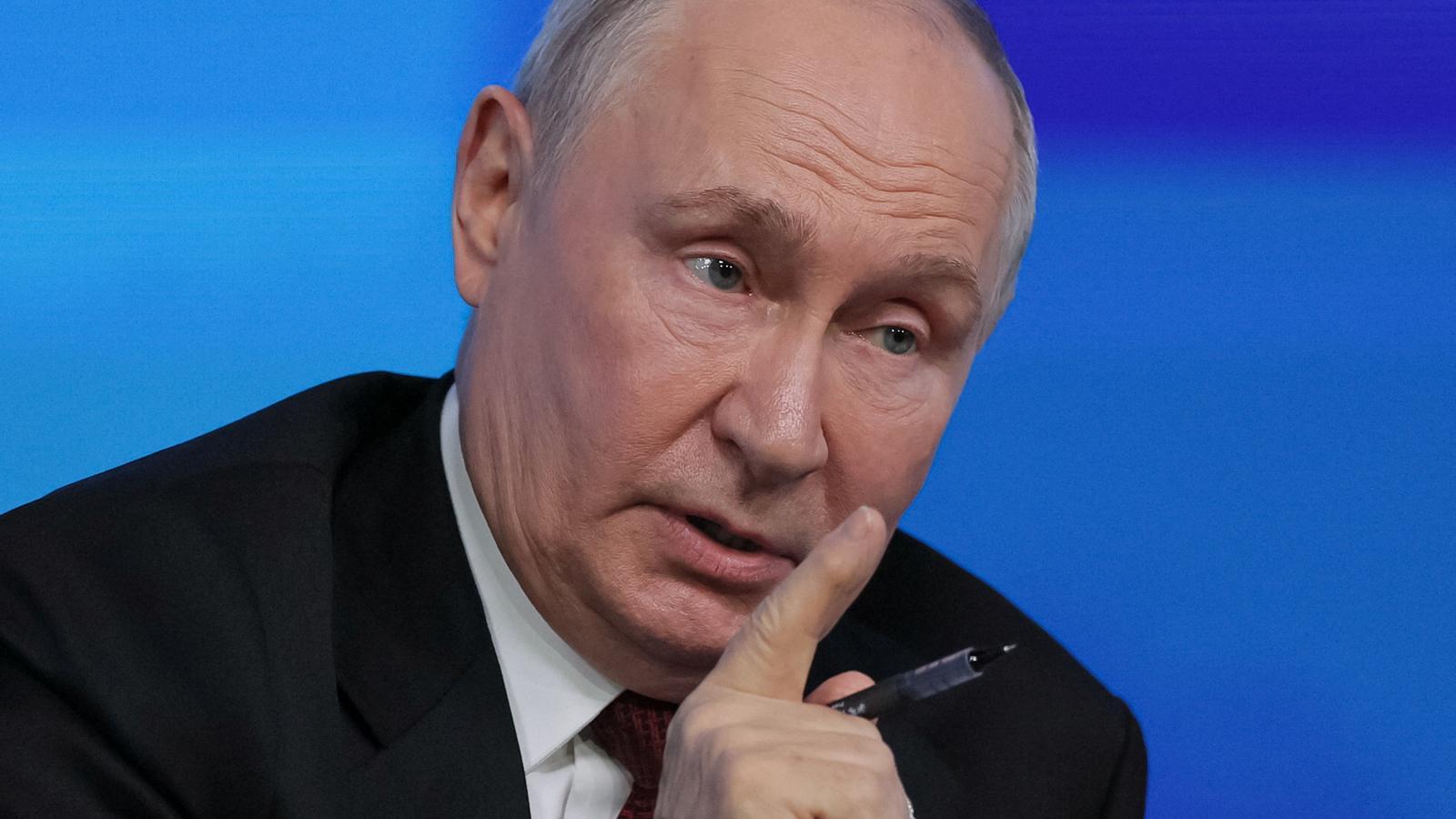

In 2007, at the Munich Security Conference, Vladimir Putin announced to the world his ambition to restructure the European security architecture and restore Moscow's control over its neighborhood. A speech that became the beginning of the end of post-Cold War cooperation with the West. Words were followed by actions: the partial invasion of Georgia in 2008, the annexation of Crimea and the intervention in the Donbas in 2014, and the full-scale war against Ukraine in 2022.
But Putin's obsession with restoring the old order now has the help of Donald Trump and a new opportunity: the entrenched front in Ukraine has become the dividing line of a continental vision. The future of European security is in the hands of the ramshackle leaders of the spheres of influence.
For this reason, the European Union was the great absentee in the photograph taken last November 10 and 11 in Abu Dhabi. Russians and Ukrainians negotiated face-to-face for the first time in nine months, with Washington as mediator, but with the delegations of the major European capitals, Brussels, and NATO relegated to the hallway. The Kremlin made it clear that there was no point in meeting with the EU given the absence of concrete European proposals.
The Twenty-Seven have been immersed in the umpteenth squabble over who should sit at the negotiating table. Once again, the EU is lost arguing about who should represent it without yet having clear shared objectives and consensual red lines that it should bring to the table of diplomacy.
Finally, at the European meeting in Dublin last week, EU leaders agreed on a team made up of Germany, France, Italy, Poland, and the United Kingdom, together with the European institutions. All of them have been invited by Donald Trump's envoys to join the next round of talks. The French and British have seats at the table because they lead the Coalition of Volunteers willing to deploy troops in the event of a hypothetical ceasefire; the Germans are the main financial contributors to both the EU budget and aid to Ukraine; and Italy has managed to enter this group thanks to Meloni's insistence. In contrast, no Nordic or Eastern European country, which are those that provide the most political support to Ukraine and feel directly threatened by Russia, will be part of the delegation.
There is a lot at stake. The talks in Abu Dhabi have shown that Russia wants more than just an agreement on Ukraine: it wants to reverse the last 35 years of the security order in Europe.
Moscow wants to put "a new Yalta and Potsdam" on the table, in the words of Vladimir Medinsky, the chief Russian negotiator. For this reason, Kremlin sources have already made their conditions known: not one more NATO expansion, no presence of threatening weapons next to the Russian border, and for the Atlantic Alliance to return to the 1997 deployment. In contrast, the head of European diplomacy, Kaja Kallas – questioned these days even by some European capitals for being considered too pro-Russian – defends the reverse order: first the ceasefire, then guarantees of lasting peace, and, only at the end, a debate on European security. But, for the Ukrainians, who are gambling with their own survival, the priority is, above all else, to obtain security guarantees.
The European Union is trapped in its own contradictions. Although the Twenty-seven repeat that they need a single voice in foreign policy to be relevant in the world, in every crisis the capitals' instincts to concentrate power in the short term, defend their own geopolitical interests, and erode the figure of the High Representative for Foreign and Security Policy emerge. Whoever happens to hold that position.
The EU is gambling the future of continental security from a position of division and dependency. Despite all the European rhetoric about isolating Moscow, many European countries, including France, Belgium, Spain, and the Netherlands, continue to buy Russian gas, according to a recent community report. Furthermore, despite the political commitment to Kyiv, several EU member states – Hungary, Slovakia, Czechia, and Bulgaria – continue to refuse to contribute to the financial aid to keep Ukraine capable of resisting.
Although it is becoming increasingly clear that, for Russia, Ukraine is not the final goal, but rather the path to a much broader security agreement, the immediate future of Europeans will be decided on this front line. The EU urgently needs to have a proposal and a vision of its own, instead of waiting for Moscow to set the guidelines for the debate on continental security. European weakness begins with the lack of consensus among the Twenty-seven.
