A PSOE and Sumar alliance in the Senate? "Electoral engineering" that the left can do to curb the right in the State
There is also the option of a special formula for the smaller constituencies in the Congressional elections


-
CAT -
CAST
MadridThere has been much talk of an alliance to the left of the PSOE, of everything that the Sumar space represents with the possibility of extending it to Podem and, even, to Gabriel Rufián. However, for now, this option is not materializing. Faced with this, within the PSOE there are already those who are thinking of other scenarios if the other left-wing parties finally run divided again. This is because there is a demographic reality that is difficult to appeal: if the PSOE does not currently have options to stay in Moncloa, it is not because it is collapsing, but because of the generalized decline of Sumar, Podem and the rest of the partners of the plurinational majority. It is enough to compare the 31 seats that Sumar won in 2023 with what the polls now predict for them: the latest CIS places them at just over 6% of the votes, half the support they had three years ago.
Faced with this reality, what "electoral engineering" options does the left have to maximize results? PSOE leaders are thinking about what formulas could be devised in a campaign that is expected to be highly polarized between the right-wing and left-wing blocs. Taking into account, yes, that until Sumar chooses a new leader in the autumn, there is no possibility of seriously discussing anything.
Senate
The Senate is composed of 266 senators, about sixty of whom are appointed by the autonomous communities. The rest are directly elected on the day of the general elections through a majoritarian system of limited voting with open lists. In 2023, the PP managed to surpass the absolute majority and, in the next elections, expects an even better result. For this reason, parliamentary sources interpret, they have stalled the renewal of the four members of the Constitutional Court, including the president, Cándido Conde-Pumpido. Their aspiration is to gather the three-fifths majority of the Senate – it should be taken into account that they also have many senators by autonomous designation – to be able to appoint them all and thus change the current progressive majority of the Constitutional Court once and for all.
One scenario to combat this possibility is an alliance between the PSOE and Sumar to try to maximize left-wing senators in the upper house. Since it is a majoritarian system, it rewards the concentration of votes on certain candidates. This is an experience that already worked in 2023 in Ibiza and Formentera, where the PSOE, Sumar, Esquerra Unida, and Ara Eivissa allied to gain representation. It is, in fact, the only senator obtained by the left-wing space outside the socialists.
Congress
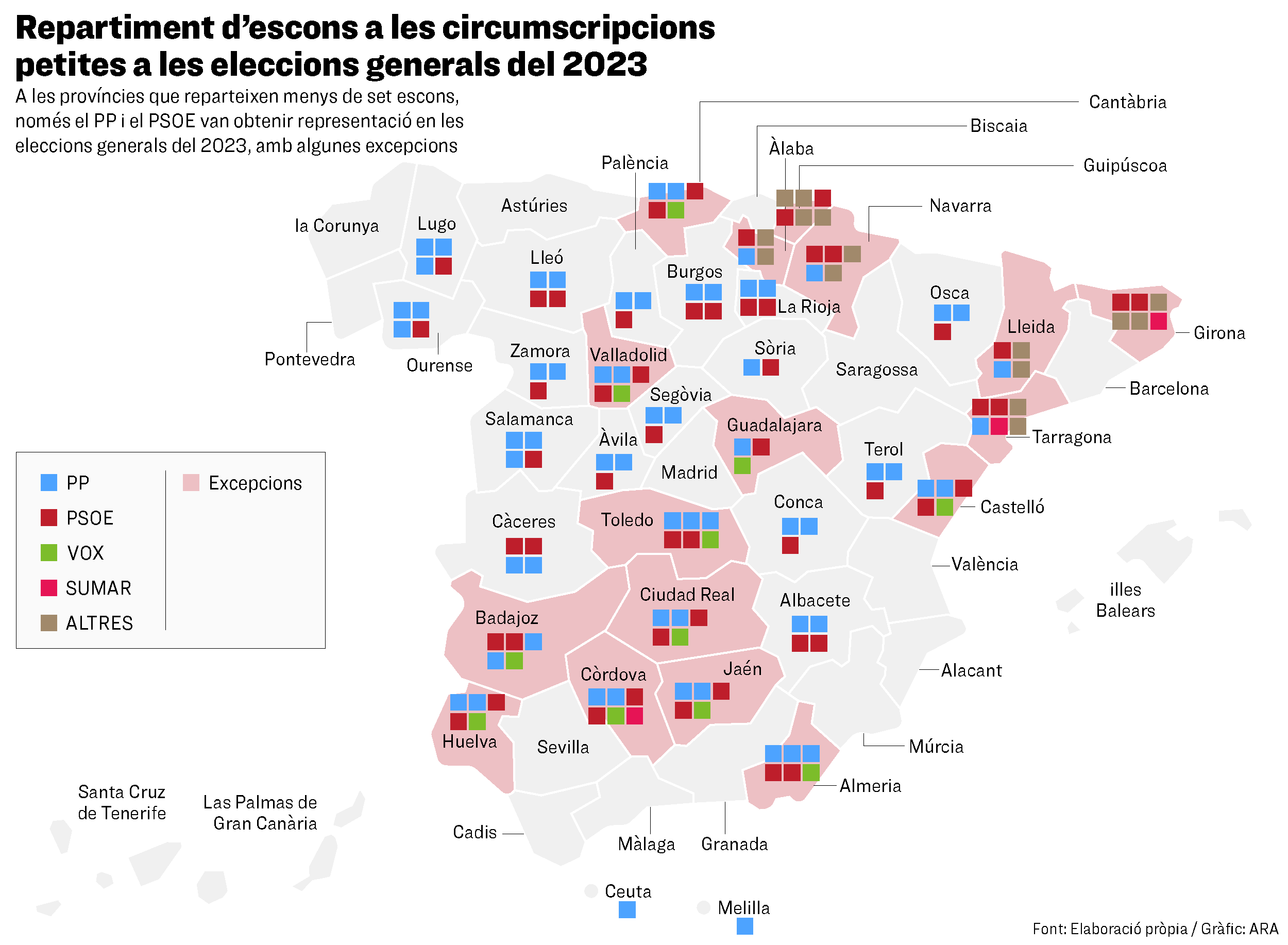
On the other hand, there are those who also advocate for doing "electoral engineering" in Congress, in districts where fewer than seven seats are allocated and the D'Hondt law system has majority effects: that is, it benefits large parties and makes representation for small ones almost impossible.

- If you want to investigate the graph in more detail, open the high-resolution version in another tab.
What would be the formula? One option, for example, would be for Sumar not to run in these constituencies and for its candidates to join the PSOE lists – without prejudice to them being included in the Sumar group later in Congress–. This would concentrate the vote on the left in these provinces with few seats against a division that the right would have with the PP and Vox. One only needs to look at the result of the last elections in rural Spain: of the 35 provinces with fewer than seven seats, Sumar only won one seat in Cordoba – taking into account that Comuns ran in Lleida and Tarragona–. This means that Sumar's votes were not leveraged in Congress by the left. Just like Vox's for the right, which also failed to win in a large part of the provinces.
The proponents of this formula argue that this would concentrate the left-wing vote against a right-wing divided between the PP and Vox. An option that would be competitive in both Castilles and would attack the main electoral base of the popular party, thanks to which they win a very important part of their seats and aspire to win the general elections.