What will we know today about Ceuta? The Spanish government declassifies the reports
The Moncloa explains that there are 40 documents related to the crisis between July 1 and August 1

MadridThe Council of Ministers agreed yesterday to declassify the documents related to the Ceuta crisis, and they will be made public throughout this Wednesday. According to La Moncloa, they will follow the same modus operandi that was used with the 23-F documents, which were all uploaded to the Spanish government's website and could be downloaded from there. Sources from the executive branch clarify that there will be a total of 40 documents, but they do not disclose what the content will be. What they do indicate is the period in which they were produced, from July 1st to August 1st, and that their content is being published because "there is no impact on national security" (if it were otherwise, they would have to be channeled through the Congressional Official Secrets Committee). La Moncloa has also promised to add any documentation that may appear regarding Ceuta later on, using the same criteria.
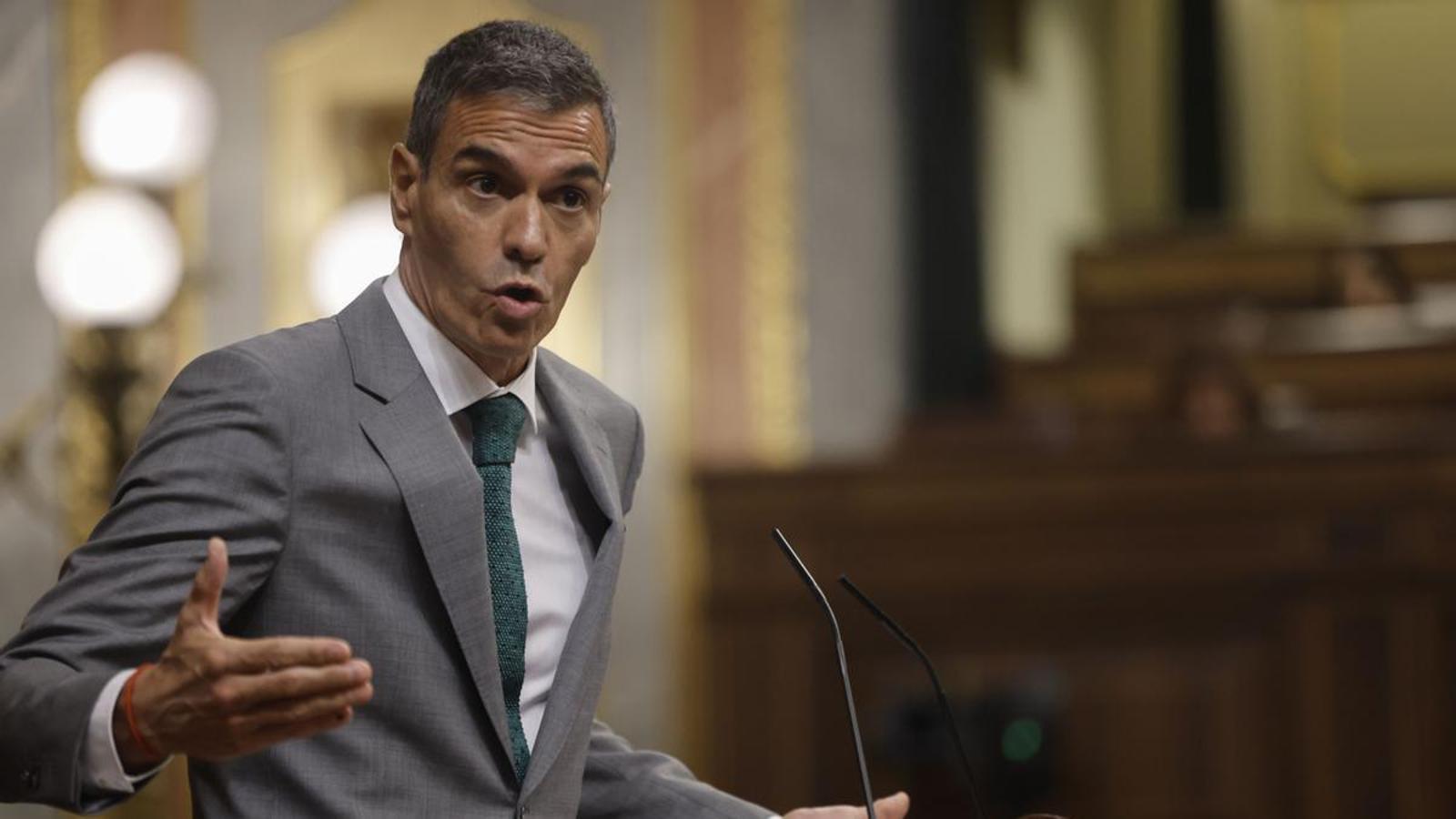
The decision to publish the documents was announced last week by Pedro Sánchez during his appearance before the Congress of Deputies. The move comes after the clash of versions within the executive branch regarding what was and was not known before the massive influx of migrants on July 30th, basically between the Ministry of Defense, which says that there were warnings, and the rest of the ministries, which claim they had no indication of the magnitude of the crisis. It is also to counter the criticism from the rest of the political groups, which accuse the PSOE and Sumar coalition of not taking enough measures to prevent what happened. They recall that in 2021 there was already a massive entry of migrants into Ceuta –sponsored by Morocco– and that, after the Supreme Court ruling in June rejecting hot returns, if they were entering by sea, they could have further reinforced security at the border with the Alawite country.

What does the Spanish government say in the face of these reproaches? Its defense thesis is that the massive entry was inevitable. "They had to choose between defending the border and human life, and they chose the second option," Sánchez said in the Congress of Deputies regarding the agents at the border. That is why it is relevant to see the reports this Wednesday on what the State's intelligence services did and did not warn about.
Until now only a report prior to the crisis from the National Center for Immigration and Borders (Cenif) of July 29th has emerged, which stated that there had been evidence of a “potential risk of irregular entries” and pointed out that entries by swimming combined with “coordinated fence jumps” had an “extreme risk” and a “medium-low probability”. “It cannot be ensured that this will occur, but when this type of activity has been detected, sometimes it has materialized,” it added. According to the Moncloa, these are warnings similar to those of previous years that did not set off alarms within the Spanish government.
The issue of Morocco
Beyond the warnings about what could happen in Ceuta, the other thesis that the Spanish government has defended is that it has "no evidence" that it was Morocco behind the massive entry of migrants, despite the fact that its partners and the opposition do point to the Alawite country. For this reason, another of the key issues this Wednesday in the declassified documents is to what extent Morocco is or is not mentioned.
In fact, Sánchez did not admit that its role had to be investigated until a report delivered to the National Court by the National Center for Immigration and Borders (Cenif), of the National Police, transpireda report delivered to the National Court by the National Center for Immigration and Borders (Cenif), of the National Police, which pointed out that the massive entry of migrants had the "active guidance of the crowd towards crossing points" by the forces and security bodies of Morocco. The Spanish government, in any case, maintains that there are no reports that allow establishing the involvement of "any government, service, agency or person" in the crisis of July 30th.
