The Supreme Court applies the amnesty to Ponsatí for the crime of disobedience
The court orders the archiving of the case of the former Minister of Education for her role in the 1-O
-
CAT -
CAST
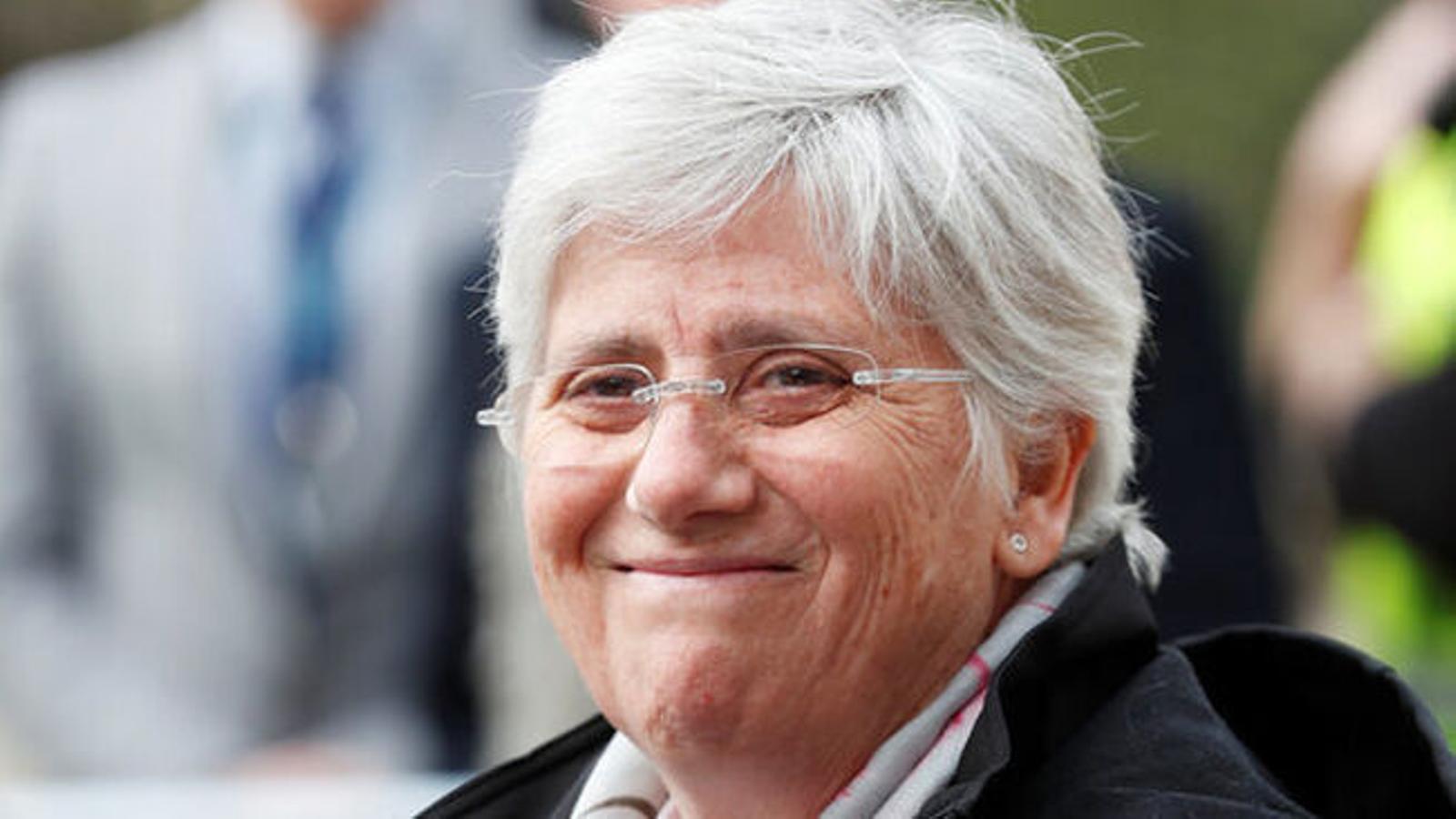
BarcelonaThe Supreme Court agreed this Thursday to apply the amnesty to the former Minister of Education Clara Ponsatí. In a court order, the high court has extinguished Ponsatí's criminal liability for the crime of disobedience for her role in the 1-O and has ordered the archiving of the case. The court made the decision after the Constitutional Court dismissed, on October 8 of last year, a large part of the question of unconstitutionality presented by the Supreme Court itself against the amnesty law. Also after the Court of Auditors had already granted amnesty to Ponsatí and about thirty other former government officials for the expenses of the Process.
The former minister thus puts an end to the judicial ordeal that led her into exile after 1-O. She was one of the members of the Government who, together with former president Carles Puigdemont, left for Belgium in October 2017. A large part of her time outside Catalonia, however, was spent in Scotland. And during the years of exile, she became a Member of the European Parliament for Junts. Highly critical of the fact that the pro-independence parties did not implement independence - later she would found the party Alhora alongside Jordi Graupera, a formation that will run in the next Spanish elections-, the former minister returned to Catalonia in March 2023. At that moment she was arrested and, after giving a statement, released on provisional liberty. It should be noted, in this sense, that disobedience does not imply prison sentences.
The resolution that the Supreme Court has now issued arrives with most of the members of the 1-O Government already amnestied and when only one step remains for the law to be applied to Carles Puigdemont. The investigating judge of the case against the former president and former ministers Toni Comín and Lluís Puig, Pablo Llarena, has taken in the last few hours the penultimate step that was missing to make it possible: revoke the prosecution he ordered in 2018, nine years ago now, and conclude the summary. Now it will be the criminal chamber so that it is Manuel Marchena who orders the final archiving of the case.

At the end of October, amnesty fully arrived for those convicted of embezzlement in the Procés trial. The court presided over by Marchena applied the law to four members of the October 1st Government who were disqualified until 2030 and 2031: Oriol Junqueras, Jordi Turull, Dolors Bassa, and Raül Romeva. A ruling that arrived a little over seven years after the Supreme Court's sentence and five years after they left prison thanks to pardons.
The first minister to be amnestied, last June, was Meritxell Serret, for the same crime of disobedience as Clara Ponsatí. In this case, the Supreme Court applied the law to her after she was sentenced by the High Court of Justice of Catalonia (TSJC) to one year of disqualification and a 12,000 euro fine for her participation in organizing the referendum.
