The verbal violence that we have normalized

There are certain expressions of violence that almost everyone knows how to recognize. If we talk about a punch, intentionally making someone fall, or hitting them with an object, for example, it is relatively easy for us to agree on its violent nature.
The same is not true, however, for other forms of violence that often go unnoticed, that we tolerate, and that we even justify. Moreover, because they are very present in our day-to-day life, we have ended up normalizing them. I am referring to verbal violence. Insults, humiliations, disqualifications, mockery, and denigrating comments are not simply “a way of speaking,” they are also manifestations of violence.
First of all, it must be said that, probably, most of us, hijacked by anger or indignation, will have let out some outburst or insult at some point. This simply reminds us that we are human and that, on that occasion, we did not know how to do it any other way. However, it is one thing to have a one-off slip-up in a moment when we have not been able to regulate ourselves emotionally, and quite another to turn insults, humiliation, and disqualification into a habitual way of communicating.
When verbal violence is used deliberately as a strategy to impose oneself, or simply as a habitual way of expressing our opinions, we cannot refer to it by saying that "they are just words" or that "it is a joke of no importance." And even less so when it comes from someone with public responsibility, or from media personalities who have an enormous capacity for influence. We who reproduce it also have responsibility. When we share videos with flagrant lack of respect and when we circulate humiliating messages because we find them funny or scandalous, we are contributing to giving them visibility.
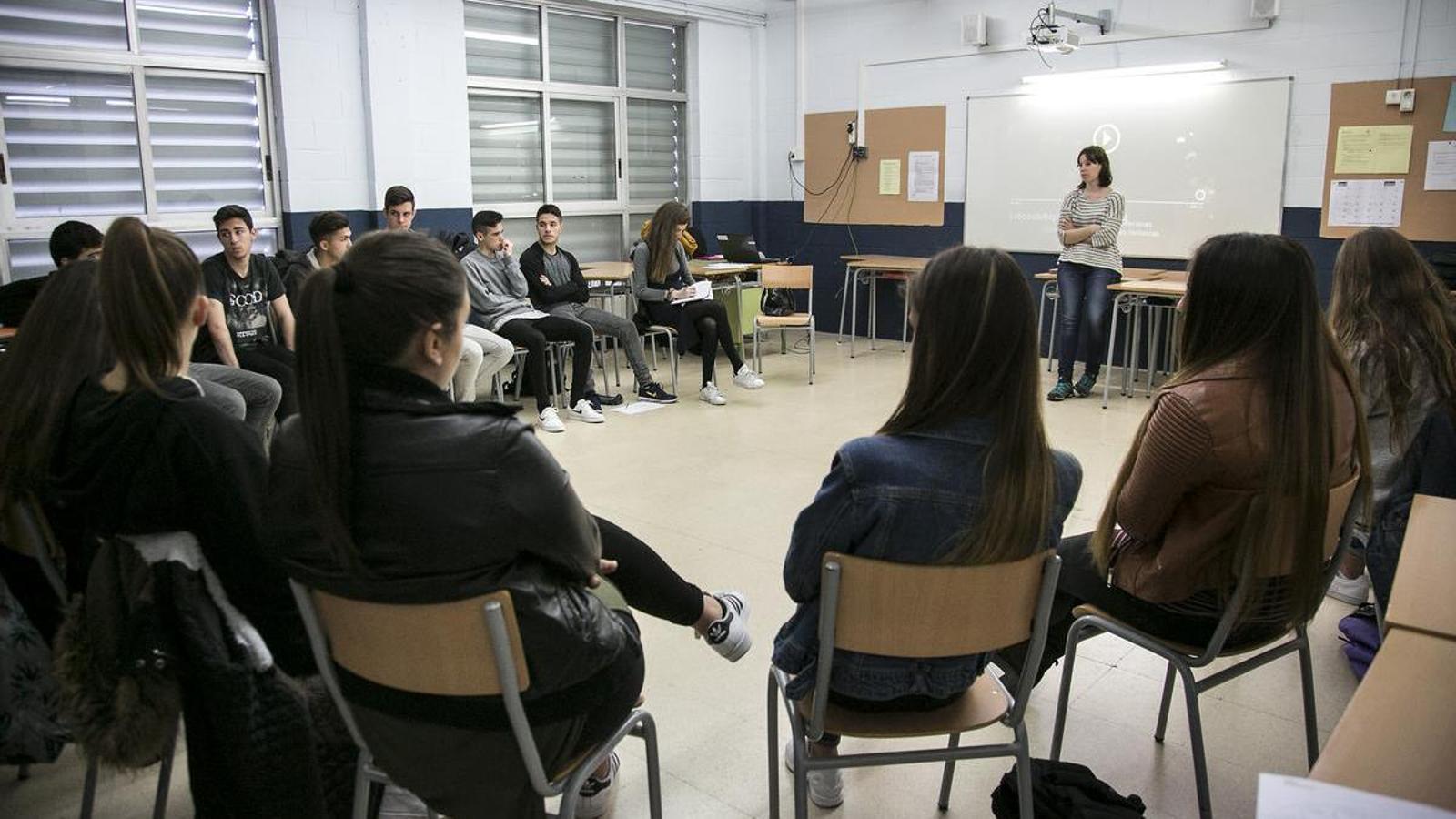
We can start putting a stop to it in many ways. At home, undoubtedly: by teaching children that feeling anger is legitimate, but that not everything goes when it comes to expressing it. In schools, by incorporating empathy and non-violent communication as daily learning. At work, by stopping the laughter at the jokes of whoever speaks the loudest. In public spaces, by trying not to add fuel to the fire with words in the various daily situations of tension between people. On the road, by measuring what we shout at whoever overtakes us; basically because the ones listening to us in amazement from behind the car are our children. On social media, by stopping the laughter at humiliations and confusing a lack of respect with a manifestation of supposed authority. Let's act, yes, let's defend ourselves firmly, but verbal violence is unnecessary: all it does is escalate the tension of the moment to destructive limits and generate a hostile climate.
I am convinced that if we gave all these instructions to artificial intelligence, it would give us the appropriate response for each occasion. Of course, it is not about turning ourselves into robots that always have the right word at the right time. We will make mistakes, fortunately; and this vulnerability is, among other aspects, what makes us human. But between relaxing the language and expressing ourselves spontaneously –taking the context into account–, and giving constant prominence to verbal violence, to the point of making it habitual and, therefore, acceptable, there is a great distance.
If faced with the instinct for physical violence, most of us are capable of activating an imaginary “handbrake” (and never has that been more aptly put), the question is: why don't we also activate a mouth-brake? We would save ourselves many troubles and contribute to a much more respectful society.
Let's not turn a blind eye to verbal violence. Let's not trivialize it, justify it, or share it. Let's set limits. It is not true that words are carried away by the wind. Often, they take root deep inside. The fact that they leave no visible scars does not mean they do not hurt. And the truth is that, however verbal it may be, violence is violence.
