Living longer without testicles: the surprising clue about male aging
Testicles could have harmful effects in the second half of life

-
CAT -
CAST
Female mammals live longer than males. Humans are no exception: the average life expectancy of women is about five years higher than that of men, who also age worse. Evolutionarily, it makes sense that natural selection has favored female longevity, as they are more valuable for the reproduction of the species: one male and ten females will produce much more offspring than one female and ten males. In addition, they are usually the ones who look after the survival of the offspring. But the biological mechanisms that determine this are still not entirely clear. What is evident is that hormones play an important role.
In fact, they are, possibly, the chemical compounds that have the most impact on the functioning of an organism. All animals manufacture them, as do plants, and they serve to communicate between different organs and thus coordinate all physiological processes. Some of those that have the most effects on humans are sexual ones: the female ones (estrogen and progesterone) and the male ones (androgens, mainly testosterone). They are what determine the differences between men and women, which is called sexual dimorphism. They are produced mainly in the gonads (ovaries and testicles) but also, to a lesser extent, in tissues such as the liver or fat.
We have known for a long time that these hormones play a role in aging. For example, when menopause arrives, women experience a drop in female hormone levels which, apart from all the associated symptomatology, leads to accelerated aging of tissues, according to measurements of various biomarkers. Thus, estrogen and progesterone seem to have a protective effect against the degeneration caused by the passage of time, which is why there is now a trend among some experts toprescribe hormone replacement therapy from menopause well into old age.

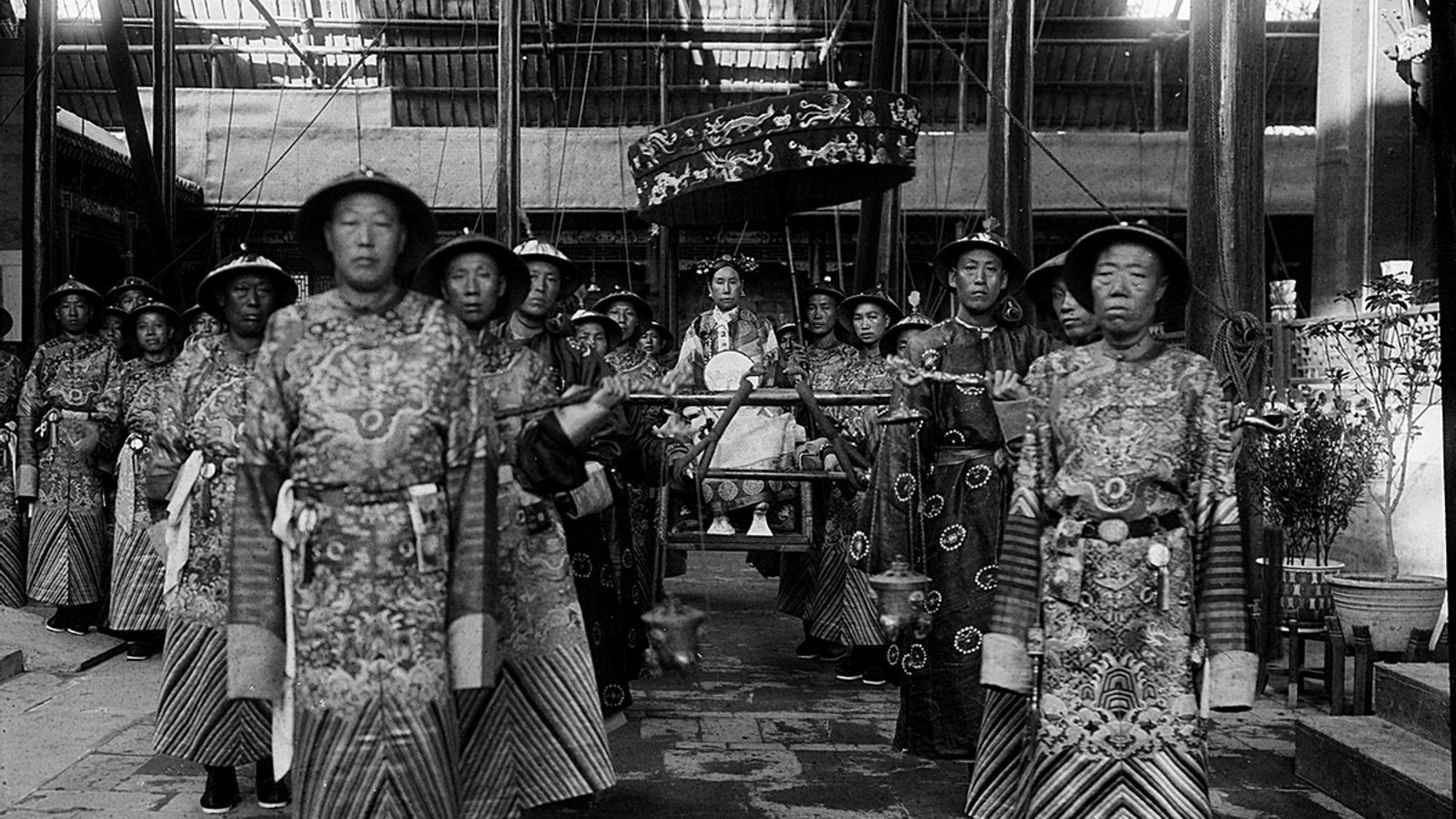
Androgens, on the other hand, would have the opposite effect. On one hand, they influence aggressive and risk-taking behaviors, which are responsible for higher mortality in men during youth, which lowers the average life expectancy. But, in addition, it is suspected that they could directly influence aging. Demographic data of eunuchs from the Korean court between the 16th and 19th centuries show that they lived almost 20 years longer than men of a similar socioeconomic level. Various studies in animals have corroborated these results experimentally: castration extends the life of vertebrates in general. These interventions are usually performed before puberty, to prevent testosterone from acting from the beginning and to better simulate what was done to eunuchs.
The group of Dr. James F. Nelson, from the University of Texas, decided to try a different approach. In an article published online preliminarily, they present data on mice castrated at different times in their lives. What they have seen is that the effect is more profound when done later: the animals lived 19% longer if they were castrated before puberty and 33% longer if it was done at an age equivalent to thirty years of a human. This result is surprising and challenges our intuition: if testosterone contributes to faster aging, it would make sense to wipe it off the map as soon as possible. But the new experiment seems to indicate that androgens would not cause any problems during the early stages, but rather that their harmful effects would begin after the peak of reproductive age.
The B-side of testosterone
Be that as it may, the relationship of androgens with aging is more complex than it seems. Perhaps they have a negative impact from the second half of life, as these studies suggest, but it is known that they also contribute to preventing the loss of muscle mass (or sarcopenia), one of the main problems in advanced ages. In fact, there are men who take androgens (illegally and not recommended) to “stay young.” This fits within the logic of thinking that if hormonal decline accelerates aging in women, it must also be the same for men, even if the decrease is not as abrupt as the one seen in menopause.
It should be kept in mind that castration not only reduces the production of androgens but also eliminates an entire organ. The testicles may have functions that we do not yet know well and that may influence in some way the biology of aging. Furthermore, androgens are not only manufactured in the testicles, and therefore they can never be completely eliminated.
It is unlikely that biohackers eager to try any intervention that could prolong their lives will now dedicate themselves to being castrated, so we will have to continue waiting for data from animal experiments to fully understand what happens. In humans, a more feasible line of research could be to study the effect of drugs that simulate castration, which already exist, especially in elderly people. In the meantime, the most prudent thing would be not to play with testosterone levels.
