The participation in the general elections climbs up to a historic 68% in the afternoon
Catalonia, with an increase of 17 points, and the Basque Country, with 16, lead the percentage increase at six in the afternoon in two key territories for the progressive vote

-
CAT -
CAST
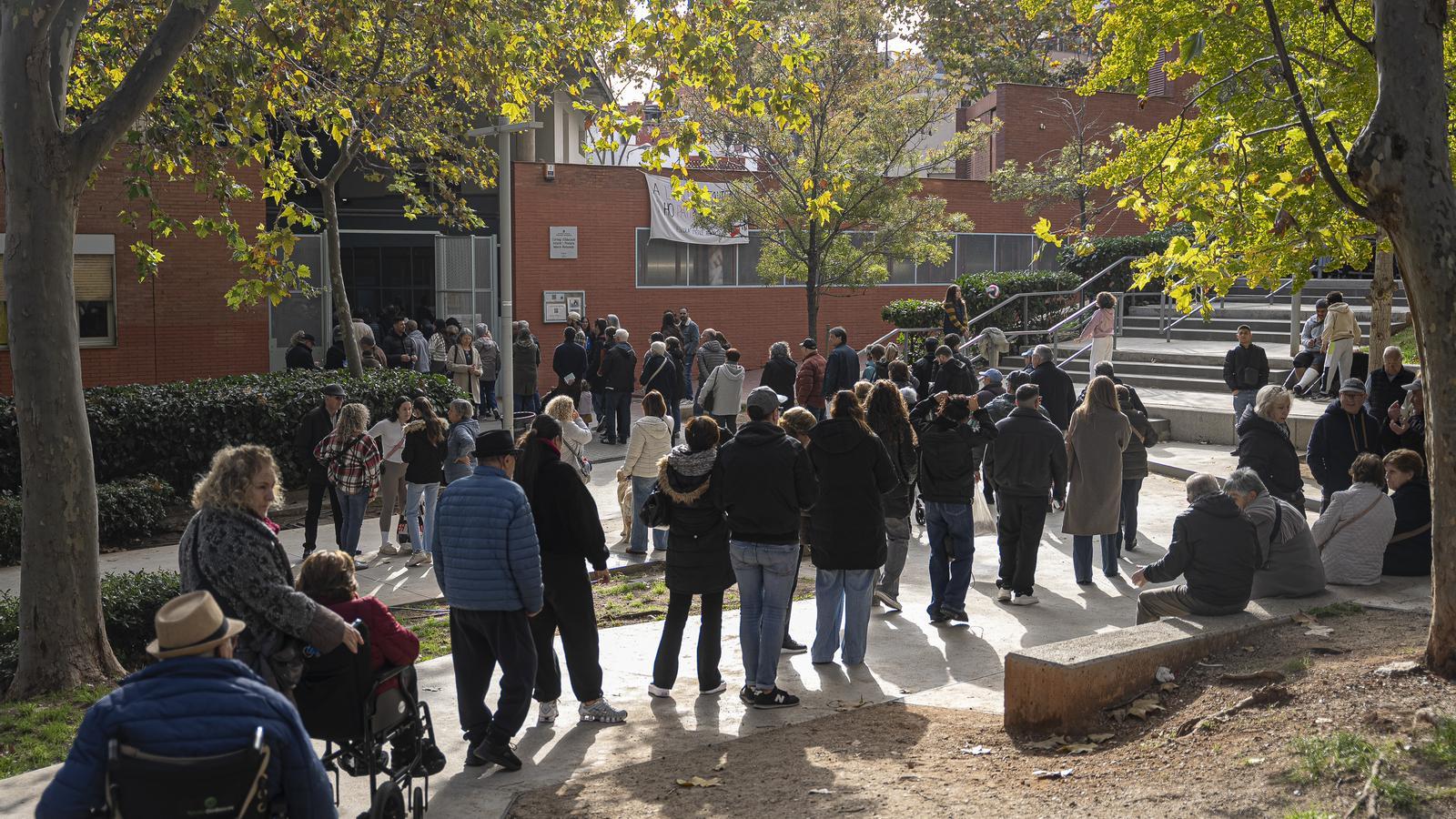
The turnout figures at six in the afternoon for the 2026 general elections are historic. After the record-breaking data at two in the afternoon, which exceeded 45%, by the afternoon the turnout in the country as a whole now stands at 68.15%, 15 percentage points higher than at the same time in the July 2023 elections. This is the highest figure recorded in a turnout update. In Catalonia, more than 3.7 million people have already gone to vote, with a percentage of 66.55%, 17.81 points more than three years ago.
The increase compared to the 2023 general elections is massive, especially in Catalonia, where up to 48 seats are distributed. It has also grown significantly in the Basque Country, where the increase has been up to 16.23 percentage points. A more than pronounced rise in turnout in two constituencies theoretically key for the progressive vote and which, in the final stretch of the day, feeds the climate of the comeback that the PSOE has made so much of in recent days. Where it has risen the most, however, has been in the autonomous cities of Ceuta and Melilla, marked by the migration crisis of recent months, with increases of 24 and 21.5 points, respectively, although their weight in the overall result is limited, since each only distributes one seat in Congress.
On the interactive map above these lines you can check the participation at a national scale by municipality, and on the one just after it, the participation rate in Catalonia by census sections, the most detailed administrative division that allows visualizing the data almost street by street, especially in urban areas. The map that opens this news item, at the very top, shows the variation in participation compared to 2023 and, further down, you will find another map that compares the participation figures with those of 2019. At the very bottom, the variation in participation in Barcelona by district compared to 2023.
In addition to establishing comparisons with 2023, it is necessary to compare the current figures with those of 2019 because the 2023 elections were held on July 23, in the middle of the summer season, a factor that conditioned the mobilization habits of the electorate and also the voting hours. In the 2019 elections, the turnout at 6:00 p.m. was 56.85% in the State, 11.28 points lower than the current one: a significant difference, but not as abysmal as with the 2023 count. In Catalonia, the rise with respect to the November 2019 elections is narrower, since the turnout at that time was 59.88%, so the current one, 66.53%, represents an increase of 6.65 percentage points.
These data already put the first political readings of the day on the table. Traditionally, a very high mobilization of the electorate has been associated with better prospects for left-wing parties, which tend to have more interest in activating voters who are less determined to go to the polls. In this election, furthermore, there are several seats that could end up being decided by very tight margins and which are especially relevant for the progressive bloc.
The PSOE, which has been narrowing the gap with the PP in recent weeks according to polls, aspires to contest these last seats and has recurrently appealed to the useful vote. There are nine constituencies (Cáceres, Las Palmas, Murcia, Barcelona, Cádiz, Lugo, Ourense, León, and Granada) where the left is less than five points away from a seat currently held by the right. Turnout at 6:00 PM has increased in all nine: Barcelona stands out in particular, with an increase of 18 percentage points compared to the 2023 elections, followed by Murcia, with an increase of 15 points, and Granada, with 14 more points. In Cádiz, the increase is 13 points; in Ourense, 13; in Las Palmas, 12; in Lugo, 12; in León, 12; and in Cáceres, 10 points.
However, higher turnout does not necessarily translate into better chances for the progressive bloc, since the right and the far-right, represented by the PP and Vox, have also demonstrated throughout the campaign the desire to mobilize their electorates. In fact, in Barcelona, for example, the most pronounced increases are concentrated in districts like Sarrià-Sant Gervasi, where it rises by up to 20 points, a neighborhood with traditionally more conservative electoral behavior. The scenario, therefore, remains wide open, awaiting the start of the vote count.

