The former mayor who had to become self-employed while the PSOE lost power
Sanchez returned the head of the PSC list to the political front line after almost a decade in the private world
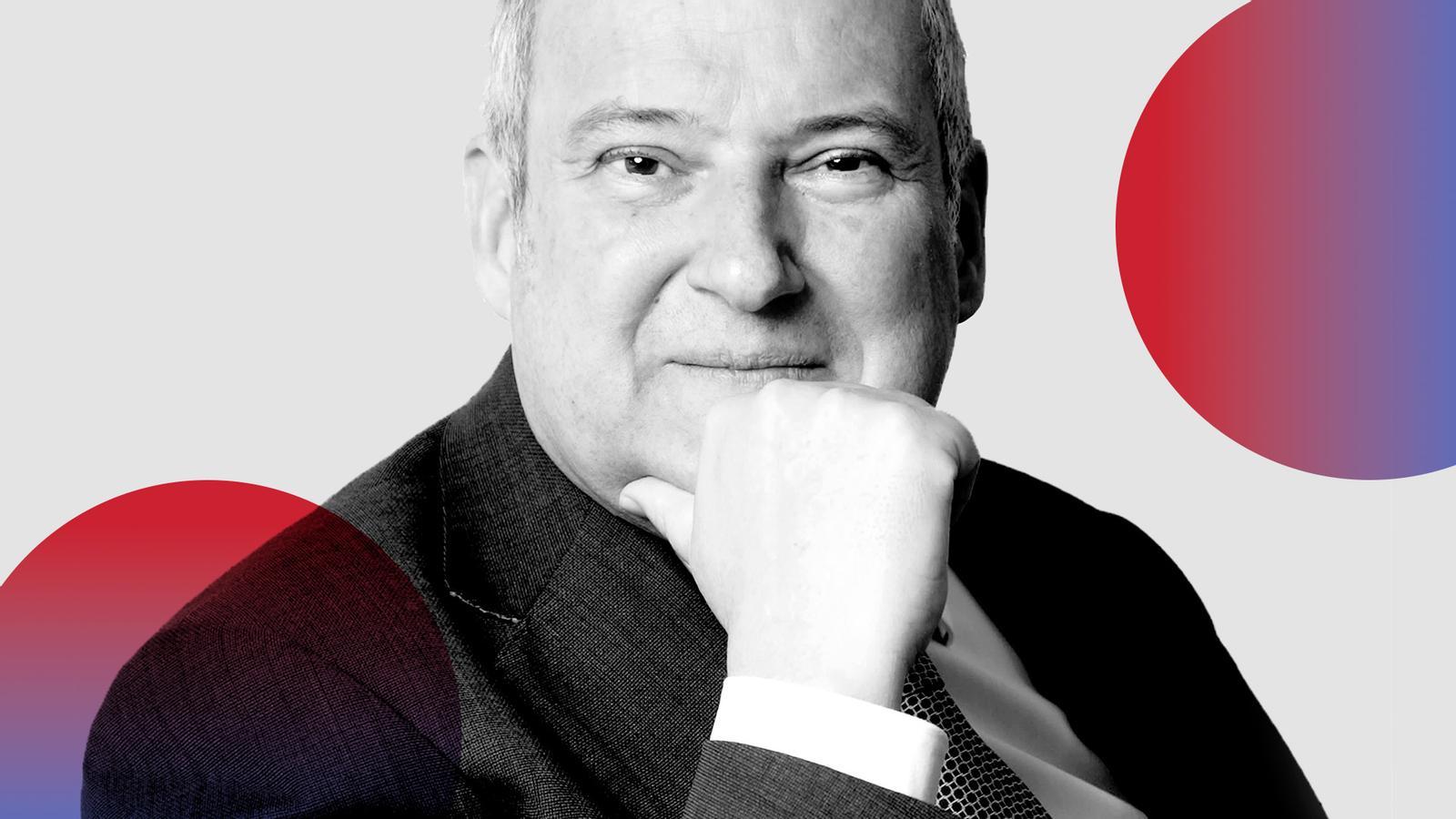

BarcelonaJordi Hereu (1965, Barcelona) lost the mayoralty of Barcelona to Xavier Trias after more than thirty years of socialist hegemony. This defeat led him to withdraw from institutional politics and enter the private sector. Nevertheless, he never cut his ties with the party and, twelve years later, Pedro Sánchez appointed him Minister of Industry and Tourism in 2023. This move represented his rebirth and his return to the political front line. Now, at 61 years old, he is campaigning again and polls place him as the front-runner in the next Spanish elections in Catalonia, albeit with a slight loss of support compared to previous elections.
At campaign rallies, socialist leaders insist that Hereu is not just a face from the past and claim that he has not lost his touch. "He continues with the same tone of voice," they ironize. In fact, the former mayor himself has joked about his vocal power and, between shouts, has used it as an example to state that he maintains the same drive. "What passion!", Salvador Illa highlighted at the first PSC campaign event. Hereu, however, is not only famous for raising spirits and livening up rallies, but his party colleagues also highlight his closeness to the residents. "He is made of mayoral material," they add.
Despite the talents highlighted by the PSC, Hereu was the first socialist candidate to lose a municipal election in Barcelona since the restoration of democracy. A historic former leader of the party disconnects this from his personality and attributes it to the wear and tear of decades of socialist governments. "This charisma thing is relative; it depends a lot on whether the wind is blowing in your favor or not," he notes. Also decisive was the decision he made, pressured by Esquerra, to bring the future of the tramway along the Diagonal to a public consultation. Beyond the organization of the referendum, which was a disaster, the option of not carrying out any kind of remodeling on the avenue won by an overwhelming majority – 80% of the votes. On the other hand, from his years as mayor, they highlight the mark he left on mobility – he created the blue and green parking zones and promoted Bicing – and the deployment of the 22@ technology complex in Poblenou.

It was in this context that Hereu lost the support of the party apparatus at the time, which wanted to avoid the defeat they already foresaw in the 2011 municipal elections. Even so, the current acting Minister of Industry and Tourism did not give in and defeated Montserrat Tura in a primary, the candidate who had the support of Nicaragua – the former PSC headquarters. Previously, he also managed to overturn the party leaders' bet to appoint Ferran Mascarell as a candidate in Barcelona.
The return
The head of the PSC list for Barcelona, who was educated at Esade and had worked as a marketing manager in logistics companies, already entered the Barcelona city council in 1997 with the banner of a technocrat and a good manager, which differentiated him from his predecessors forged during the final years of Francoism and the Transition. Nevertheless, the former mayor—like his family—asserts that he draws from the tradition of Socialist Regrouping and Josep Pallach. On the other hand, although he has historically not been part of the sovereignist and more pro-Catalan wing of the PSC, he is currently one of the few leaders in the socialist family who, for example, gives his speeches entirely in Catalan at campaign rallies.
Be that as it may, Hereu was one of the first prototypes of a leader who would later become mainstream in the socialist family. The current acting Minister of Industry and Tourism gradually climbed within the city council's administration and played almost every possible role: from manager of the Les Corts district to deputy mayor, as well as councilor for Security and Mobility and spokesperson for the municipal government. It was not until 2006 that the PSC bet on him to succeed Joan Clos and attempt to stop the hemorrhaging of votes predicted by the polls.
When he stepped away from political life in 2011 and went into the private sector, he launched several ventures in the consulting sector and tried his luck in companies that worked on developing the Barcelona brand and attracting technology companies. Interviewed a few years ago by ARA, he explained that he had become self-employed. “Either I reconnected with the private world at 46 years old or I would have ended up having many problems,” he said at the time. The socialists had not only lost power in Barcelona, but also in Catalonia and the State. Being self-employed lasted him the time it took for the PSOE to return to government. In 2019, he was designated a member of the board of directors of Aena, and from 2020 to 2023, he presided over Hispasat, the public telecommunications satellite company.
Socialist sources assure that his return to the political front line at the head of Industry —a position that other Catalan socialists such as Joan Majó, Joan Clos, and José Montilla have held— is due above all to his good relationship with Pedro Sánchez and Salvador Illa. Thus, they consider that it was "key" to having the PSOE leader's trust that Hereu was one of the first to support him during the primaries against Susana Díaz. "It must be admitted that it was a clear and brave bet," says a source who was on the other side. He also has a good relationship with the president of the Generalitat, whom he met during his time as mayor, when he appointed Illa as a member of the City Council's Economic Commission.
